PHOTO
(The opinions expressed here are those of the author, a columnist for Reuters.)
ORLANDO, Florida - The "Trump always chickens out" investment strategy - buying beaten-down stocks on the assumption that the U.S. president will ultimately back down from his more extreme policies - has, for the most part, been a profitable one. But the Iran war may change that.
The joint U.S.-Israeli attack on Iran on February 28 has sparked war across the Middle East, triggering the biggest energy shock since the 1970s and record volatility in oil and gas.
So far, U.S. equities have been remarkably calm, likely, in part, on the assumption that Trump will pull back if necessary. Since February 28, European, Asian and emerging stocks have lost 4-7%. The S&P 500 is down 1% and the Nasdaq is up 0.5%.
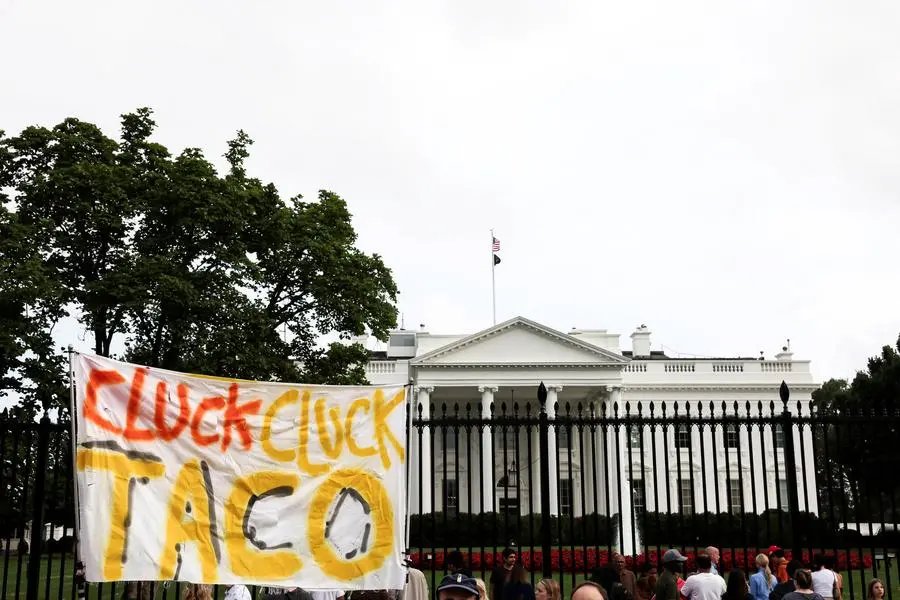
But this conflict may be a "TACO" too far.
Even if Trump were to declare an end to the war tomorrow, damage has been done that cannot be quickly reversed, least of all by him.
Shuttered oil production and refining capacity, bombed-out infrastructure, and the upending of global energy flows cannot be made right at the stroke of a pen – or a Truth Social post. It will take months, possibly years, to get everything back to its pre-war state.
Similarly, the unprecedented surge in the cost of shipping out of the Middle East and insuring vessels in the region is unlikely to return to "normal" levels any time soon, even after hostilities officially end.
"While global financial markets have been able to shake off the volatility and uncertainty caused by Trump's mercurial policies, the economic and geopolitical ramifications of the Iran war are likely to prove far more consequential," says Eswar Prasad, professor of economics at Cornell University.
This is the first time the Strait of Hormuz – the vital waterway through which 20% of the world's daily energy use passes – has effectively been closed. No previous conflict in the region, including the Iran-Iraq War of the 1980s, the first Gulf War in the early 1990s or the Iraq War of the 2000s, has brought oil tankers to a virtual standstill.
Even in the market's optimistic scenario, where the U.S. wraps up its attacks quickly, instability that is almost entirely beyond Trump's control would likely remain. And who knows how long that could persist, or how bad it could get.
THE 'TACO' PLAYBOOK
Trump's economic and geopolitical playbook during his second term has been to push the boundaries of accepted norms, rules and protocols to breaking point – or sometimes beyond – then wait and assess the market fallout. If investors barely blink, it's a green light to carry on, even accelerate. If markets crater, Trump steps back from the brink.
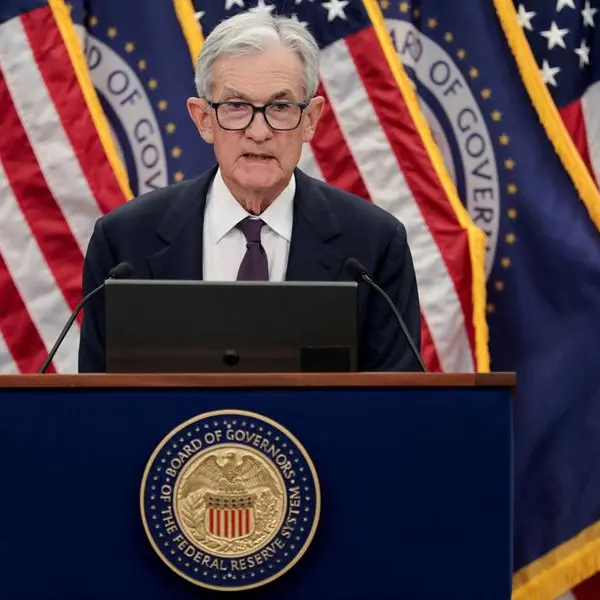
Since Trump returned to the White House 14 months ago, he has unraveled America's 80-year alliance with Europe, imperiled the existence of NATO, threatened to annex Greenland and Canada, deposed Venezuela's president, and threatened to fire Federal Reserve Chair Jerome Powell.
To varying degrees, markets wobbled in response to each of these episodes, forcing Trump to tone down the rhetoric. That, in turn, gave rise to the so-called "TACO trade."
Despite the geopolitical tumult of the last year, U.S. equities have continued to appreciate, volatility has mostly remained subdued, and risk premia have stayed relatively well-contained.
The biggest "TACO" of them all – at least until now – revolved around the "Liberation Day" tariffs last April. After trillions of dollars were wiped off U.S. stock markets in a couple of days, Trump backed down on the most punitive duties.
But today's conflict in the Middle East is different, and potentially riskier than anything seen in recent decades. If investors are looking for a historical precedent, the oil shock of 1973-74 may be a useful guide in terms of its lasting economic impact.
Oil prices are unlikely to quadruple, as they did then, especially now that the U.S. is the world's biggest energy producer and exporter. But bear in mind, although the OPEC oil embargo lasted only six months, the inflation it spawned haunted the U.S. and other industrialized economies for the rest of the decade and into the 1980s.
A persistent surge in energy prices and disrupted global supply chains could easily light the stagflationary fuse. Investors may now start asking whether this crisis is one Trump can't relieve, even if he does "chicken out."
(The opinions expressed here are those of Jamie McGeever, a columnist for Reuters)
Enjoying this column? Check out Reuters Open Interest (ROI), your essential new source for global financial commentary. Follow ROI on LinkedIn, and X.
And listen to the Morning Bid daily podcast on Apple, Spotify, or the Reuters app. Subscribe to hear Reuters journalists discuss the biggest news in markets and finance seven days a week.
(By Jamie McGeever; Editing by Marguerita Choy)