PHOTO
LONDON - Renewed worries about the Iran war and the Strait of Hormuz drove oil back toward $105 a barrel on Thursday, prompting a fall back in global share and bond prices and gains for the dollar.
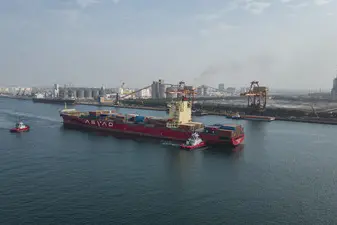
Concerns had returned after Iran on Wednesday seized two ships trying to exit the Strait,leaving investors wondering if the fragile ceasefire with the U.S. that has allowed markets to rebound in recent weeks will be able to hold.
Europe's main bourses fell between 0.2%-0.8% in early trading, leaving MSCI's 47-country world stocks index slipping away from last week's record highs after overnight drops in Asia and for Wall Street futures.
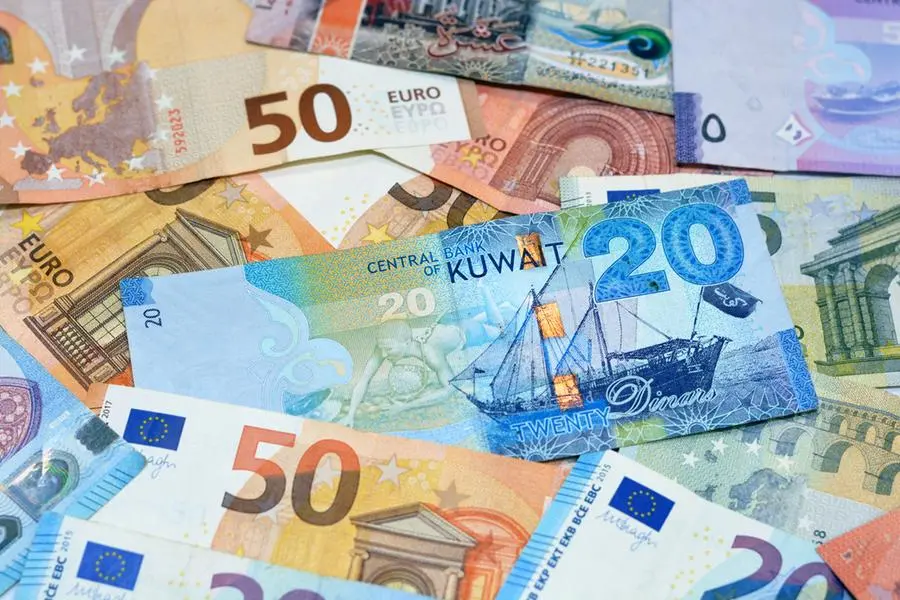
The euro was flat too with the economic impact of the war starting to become increasingly apparent for the region.
German data showed that its private sector shrank for the first time in almost a year and business activity in the euro zone as a whole suffered a surprise contraction.
In France, activity dropped at its fastest pace in 14 months and factory orders expanded for the first time in almost four years - a clear sign, analysts said, that firms are rushing to try and avoid shortages and price increases.
"The euro zone is facing deepening economic woes from the war in the Middle East, presenting a major headache for policymakers," said Chris Williamson, chief business economist at S&P Global, the firm that compiles the bloc's purchasing managers' index (PMI) data.
"Increasingly widespread supply shortages meanwhile threaten to dampen growth further while adding more upward pressure to prices in the coming weeks."
The jump in Brent oil prices in the commodity markets - and the read-across for inflation - meant the weak data didn't have the usual impact on bond markets.
Germany’s 10-year government bond yield rose 2.5 basis points to 3% and back toward the near 15-year high of 3.13% hit in late March.
HOT OIL, COOL CURRENCIES
Currencies were mostly calm, with the dollar holding onto small gains from overnight. The euro was steady at $1.17, just above a 10-day low of $1.1691, having lost 0.3% overnight.
The risk-sensitive Australian dollar, which had been pushing higher in recent weeks, also slipped 0.2% to $0.7147.
"We are slightly in limbo because the geopolitical story could take a significant turn at fairly short notice," Societe Generale's Kit Juckes said.
"Until we get some clarity," he added, "nobody is going to have the conviction to push things too far."
Wall Street futures also skidded 0.5% as traders waited to see the latest reaction of U.S. President Donald Trump to the developments in the Gulf.
On Wednesday, the S&P 500 had climbed 1% and the Nasdaq had jumped 1.6%, both notching fresh record-closing highs, helped by a strong start to the new earnings season.
Treasury yields - a proxy for the U.S. government's borrowing cost - rose with oil prices though. The two-year U.S. Treasury yield climbed to 3.81% in European trading, while the 10-year yield increased to 4.32%.
MSCI's broadest index of Asia-Pacific shares outside Japan had ended lower overnight despite briefly setting a new record high.
Japan's Nikkei had done the same and finished down 0.75%, as did the high-flying tech heavy markets in Taiwan and South Korea.
Higher oil prices were largely to blame, with Brent crude futures up 2.5% in London at nearly $105 a barrel, having jumped 3.5% on Wednesday too.
In addition to Iran's container ship seizures, the Washington Post had reported that the Pentagon had signalled it could take six months to clear the Strait of Hormuz of mines.
"Markets look very on edge here. We are still in a no-war, no-peace zone, and that means even an unverified scare of escalation can jolt oil and knock risk assets lower," Charu Chanana, chief investment strategist at Saxo, said.
(Additional reporting by Stella Qiu in Sydney; Editing by Andrew Heavens)