PHOTO
MSCI has raised new concerns about Indonesia's investability, citing limited visibility in shareholdings and coordinated trading behaviour, though investors expect the country to retain its emerging markets status in a high-stakes review next week.
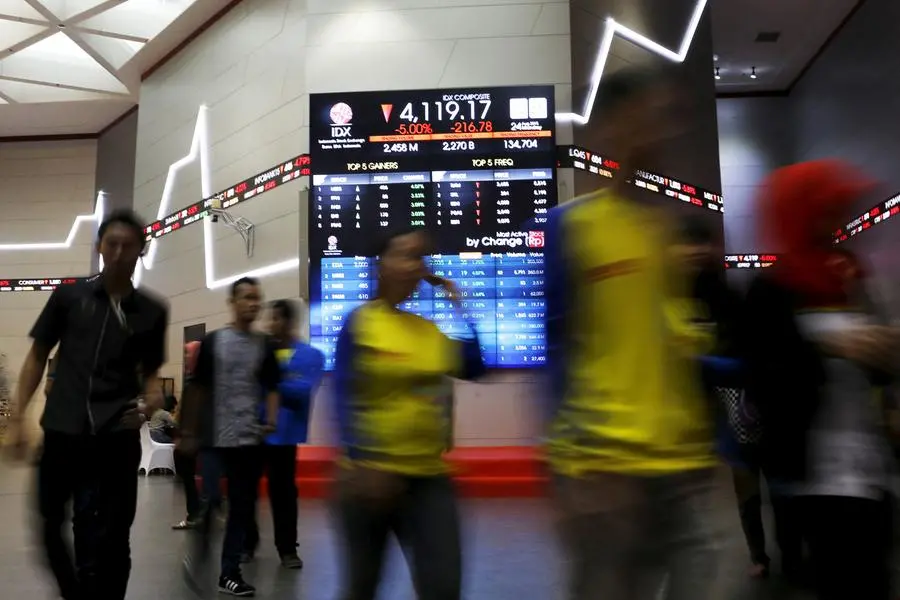
Indonesia's capital markets have plunged since MSCI in January flagged transparency issues and warned of a potential downgrade to frontier status, a move deemed unlikely but which could trigger outflows worth as much as $13 billion.
On Friday, Indonesian stocks swung between small gains and losses in early trading as investors assessed the implications of MSCI's market accessibility review, released overnight.
Jakarta's stock benchmark is down about 29% so far in 2026, making it the world's worst performing major equity market, with foreign investors having sold about $3.65 billion worth of Indonesian shares.
MSCI lowered Indonesia's information flow criterion to negative on Thursday, reflecting opacity in ownership data and market activity.
This undermines proper price formation and constrains global investors' ability to assess the true free float of companies, the index provider said.
However, Mohit Mirpuri, a fund manager at SGMC Capital in Singapore, said the review was more balanced than the headline concern suggested, noting only one accessibility measure deteriorated, while Indonesia continued to score well against peers including South Korea, China and India on several key criteria.
"The key point is that this was not a broad deterioration in Indonesia’s accessibility framework," he said. "Our base case remains that Indonesia retains its emerging market status."
MSCI's January warning spurred a slate of reform measures from authorities, including doubling the minimum free float for listed companies to 15% as the top executives of the exchange and regulatory body resigned in a single afternoon that month.
A downgrade by MSCI, one of the biggest providers of market indexes tracked by billions of dollars in passive investments, would force tracking funds to sell and pressure active managers benchmarked to MSCI indexes to reduce exposure.
Gary Tan, a Singapore-based portfolio manager at Allspring Global Investments, said the MSCI review reinforces that Indonesia's key challenge remains structural.
Tan also expects Indonesia to keep its emerging markets status, "with current pressures acting more as a catalyst for further market reforms than a near-term downgrade."
MSCI in April extended its review on Indonesian markets and in May removed six companies, most of which were tied to tycoons, from its indexes, leading to another sharp drop in stocks.
MSCI's scrutiny has exposed deeper anxieties about Indonesia under President Prabowo Subianto as his populist measures and fears over fiscal health have pushed the rupiah to record lows, spurring the central bank to hike interest rates in recent weeks to support the currency.
MSCI noted that Indonesia had no efficient offshore currency market while there are constraints on the onshore market.
Rating agencies Moody's and Fitch cut their debt rating outlooks for Indonesia to negative earlier this year, citing reduced policymaking credibility as the $1.4 trillion economy, once a market darling, grapples with sinking investor confidence.
Jeffrosenberg Chen Lim, head of research at Maybank in Indonesia, said MSCI's comments indicate that the focus has shifted from technical market access issues to trust and governance concerns, which are often more difficult and time-consuming to address.
"Indonesia may avoid a downgrade this year but could remain under scrutiny until regulators demonstrate meaningful improvements in transparency, disclosure standards, and market surveillance."
(Reporting by Roshan Thomas in Bengaluru, Ankur Banerjee, Rae Wee and Tom Westbrook in Singapore; Editing by Joyjeet Das, Leroy Leo, Sonali Paul and Kevin Buckland)