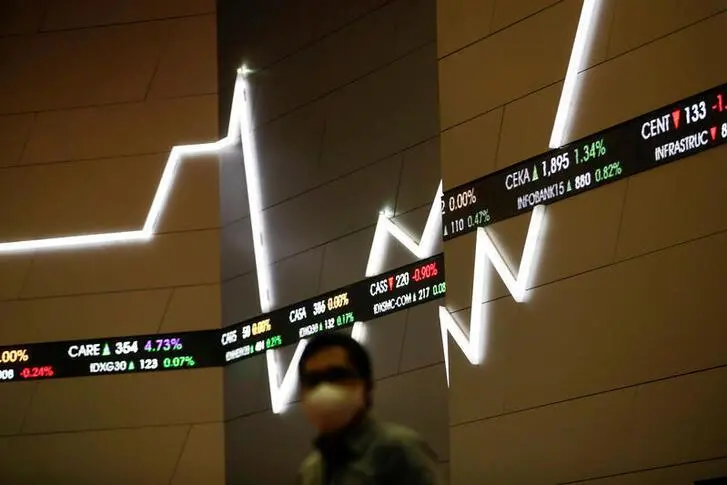
PHOTO
JAKARTA - Global index provider MSCI deferred a decision on a possible downgrade of Indonesia's equity market to frontier status until November, allowing the country to keep its emerging market designation for now.
It essentially hands Jakarta an additional five months to advance the slate of reform measures rolled out since January - when the downgrade was first mooted - to address concerns about market transparency.
WHAT ARE THE MAJOR REFORMS UNDERTAKEN BY INDONESIA?
To head off worries about the artificial inflation of Indonesian stock prices, Jakarta announced a policy to double the free float requirement for listed firms from 7.5% to 15%.
Free-floating shares are those openly available for public trading, not held by large core holders such as company officials, long-term investors or government bodies.
Market insiders are concerned stock prices have been pumped up by trading between related parties - a practice brokers have dubbed "goreng-goreng saham", or "stock frying".
The general idea is that increasing the free float - i.e. a higher number of openly available shares - makes such price manipulation harder. Jakarta has also mandated disclosure for shareholders with at least a 1% holding, down from a threshold of 5%, and expanded the classification of shareholder types. The exchange also released a list of stocks with high shareholder concentrations in April, in moves intended to shed light on potential coordinated trading. Minimum capital rules for securities and certain asset managers have also been tightened to reduce the risk of market manipulation.
Authorities also plan to speed up "demutualisation" of the stock exchange, which means making the exchange itself a public entity owned by shareholders, rather than the member-controlled, self-regulating organisation it is currently. This transition would bring it in line with regional peers and is expected to improve governance. To address management concerns, Indonesia has appointed a new head of the financial regulator and chief equity market supervisor, as well as a new chief executive of the stock exchange. MSCI's initial warning in January led to mass resignations of top officials.
WHY HAS MONITORING BEEN EXTENDED DESPITE REFORMS?
MSCI has said the reforms were a "step in the right direction", but consistent implementation and sustained effects of these measures are needed. Given the magnitude of the free float increase, Indonesian regulators have divided companies into three brackets in terms of the timelines for implementation - ranging from one to three years - to meet new minimum requirements, based on market capitalisation as of March 31.
This means implementation of the most important reform measure cannot be fully gauged until next year. Demutualisation will also take time. Success is also not guaranteed. Raising the free float requires companies to offer more shares, which may see limited uptake in a relatively shallow market and with foreign investment wary of President Prabowo Subianto's populist policies.
If no company chooses to delist, around 187 trillion rupiah ($10 billion) worth of shares must be offered to make all listed companies meet the 15% free float rule, according to Indonesia Stock Exchange (IDX) assessments as of end-2025.
WHY IS THIS CRITICAL FOR INDONESIA?
To help ensure buyers, Indonesia has allowed insurance firms and pension funds to increase equity market investments, while Prabowo's sovereign wealth fund Danantara Indonesia could also increase its investment in stocks and could become a shareholder of the bourse after demutualisation efforts.
But foreign inflows are critical for the $1.4 trillion G20 economy's growth targets and currency stabilisation.
A reclassification from emerging to frontier market would force selling from passive funds that track MSCI's benchmark indexes, as well as any funds where mandates restrict them from owning frontier market stocks.
It would also likely push active managers to reduce Indonesia exposure.
In all, outflows could amount to as much as $13 billion, Goldman Sachs estimates.
Already, since MSCI's January warning, about $370 billion in stock value has been lost on IDX, putting it among the world's worst-performing markets - a stark contrast to the previous, long-held perception of the country as a stable and reliable bet. The selloff deepened despite the reforms, partly because the plunging rupiah triggered even more outflows from Indonesian assets.
The rupiah has hit a series of record lows on concerns about the impact of the Middle East war on Indonesia's budget, which is already saddled with Prabowo's costly populist programmes and policy uncertainty.
($1 = 17,953.0000 rupiah)
(Reporting by Gibran Peshimam, Gayatri Suroyo and Stefanno Sulaiman; Editing by Kevin Buckland)