PHOTO
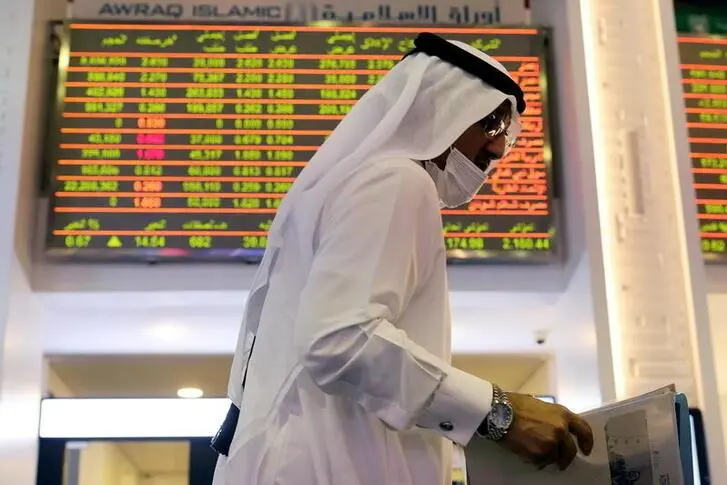
Most major stock markets in the Gulf fell in early trade on Monday after Washington announced a maritime blockade on traffic to and from Iranian ports after weekend talks with Tehran failed to reach a deal to end the war.
The U.S. move, aimed at putting pressure on Iran, leaves a fragile ceasefire hanging in the balance. The U.S. Central Command said U.S. forces would begin implementing the blockade of all maritime traffic entering and exiting Iranian ports at 10 a.m. ET (1400 GMT) on Monday.
Dubai's main share index dropped 1.8%, dragged by a 3.2% fall in top lender Emirates NBD and a 2.9% decrease in blue-chip developer Emaar Properties.
Among other stocks, budget airliner Air Arabia retreated 3.3%.
In Abu Dhabi, the index lost 1%, with Aldar Properties shedding 1.9%, while Abu Dhabi Ship Building was down 3.2%.
The Qatari index was down 0.3% in choppy trade, hit by a 1.3% fall in the Gulf's biggest lender by assets, Qatar National Bank.
Maritime transport company Qatar Gas Transport fell 0.6%.
The benchmark index in Saudi Arabia - which has been shielded from much of the regional disruption due to its ability to reroute oil exports - edged 0.1% higher, helped by a 0.7% rise in oil behemoth Saudi Aramco.
Brent crude futures were up 7.3% at $102 a barrel, gaining more than 40% since the war disrupted navigation through the Strait of Hormuz.
Saudi Arabia said on Sunday it had restored the East-West pipeline to its full pumping capacity of about 7 million barrels per day, days after assessing damage to energy infrastructure from attacks during the Iran conflict. A Reuters analysis showed the kingdom also benefited from firmer oil prices, with estimated March oil revenue rising year on year.
Egyptian bourse was closed for a public holiday.
(Reporting by Ateeq Shariff in Bengaluru; Editing by Sonia Cheema and Eileen Soreng)