PHOTO
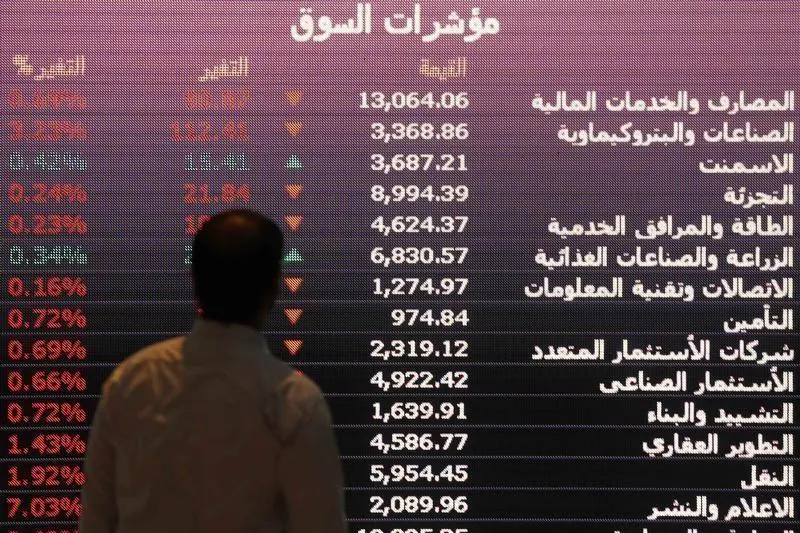
Most stock markets in the Gulf eased on Thursday, as weaker oil prices drove selling in thin volume trade as the Christmas holidays kept foreign investors away.
Oil, a driver for the Gulf's financial markets, settled marginally lower on Wednesday and was on course for the steepest annual decline since 2020 as investors weighed the implication for demand of U.S. economic growth and assessed the risk of supply disruptions from Venezuela and Russia. Lower crude prices and disruptions to oil exports affect the fiscal balances of oil-dependent countries.
Saudi Arabia's benchmark index fell 0.1%, weighed down by a 0.9% fall in the country's biggest lender, Saudi National Bank. Elsewhere, shares in oil giant Saudi Aramco were down 0.3%.
GCC stock markets were mostly negative on Thursday. Ahead of the year-end, liquidity could remain limited, said Daniel Takieddine Co-founder and CEO, Sky Links Capital Group. Markets are also expected to remain range-bound in the coming sessions.
Dubai's main share index dropped 0.3%, dragged down by a 1.4% fall in blue-chip developer Emaar Properties. In Abu Dhabi, the main index eased 0.1%. The Qatari benchmark gauge was down 0.3%, with Qatar Islamic Bank falling 0.7%. Outside the Gulf, Egypt's blue-chip index declined 0.6%, with Commercial International Bank losing 1.8%.
- Saudi Arabia eased 0.1% to 10,526
- Abu Dhabi lost 0.1% to 10,032
- Dubai dropped 0.4% to 6,142
- Qatar declined 0.3% to 10,801
- Egypt was down 0.6% to 41,253
- Bahrain was flat at 2,064
- Oman added 0.2% to 5,956
- Kuwait was up 0.2% to 9,596
(Reporting by Ateeq Shariff in Bengaluru; Editing by Emelia Sithole-Matarise and Barbara Lewis)