PHOTO
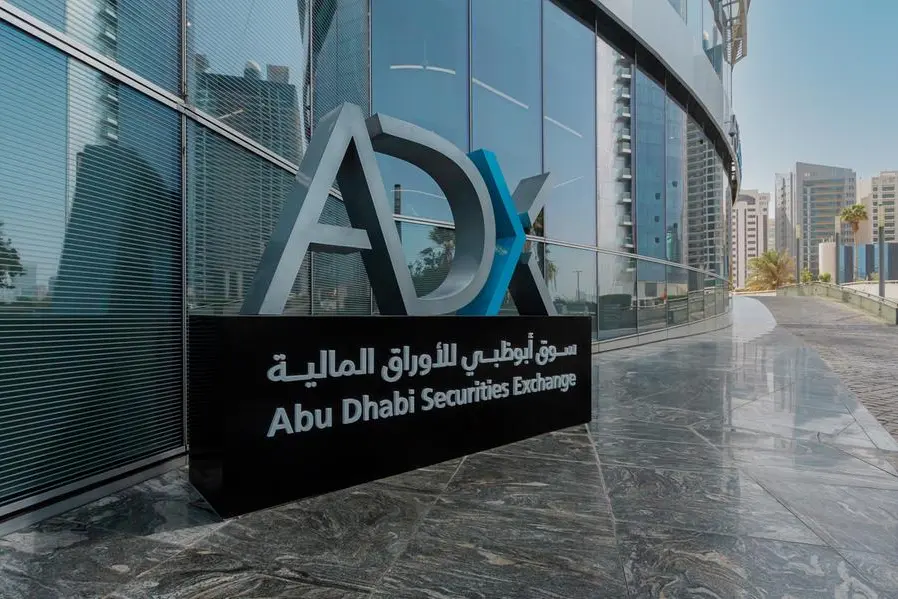
Gulf markets held steady on Tuesday after US President Donald Trump called off strikes on Iran, providing a much‑needed boost following Monday’s freefall. Energy stocks, one of the sectors hit hardest after International Energy Agency (IEA) chief Fatih Birol warned on Sunday that the situation in the Middle East is severe, made early gains on Tuesday on the Abu Dhabi Securities Exchange (ADX).
ADNOC Managing Director and Group CEO Sultan Al Jaber reassured investors that the oil giant had plans in place to circumvent supply chain disruptions as it “expanded the routes that connect supply to markets.”
ADNOC Gas saw its shares rise 0.92% in early trade on Tuesday after yesterday’s 2% decline. TAQA and NMDC were amongst the biggest gainers on ADX at 5.06% and 4.8%, respectively.
The gas subsidiary of ADNOC on Monday had said that it made temporary adjustments to its production of liquefied natural gas and export-traded liquids in response to ongoing shippingdisruption in the Strait of Hormuz.
ADNOC Gas’s Habshan gas processing complex, one of the world’s largest, saw its operations affected last week following a drone strike by Iran.
“The confirmation of continued business operations after last week’s attack on its asset base provides some relief, but investors still remain nervous about ongoing developments and a rising risk premium that might affect its share price,” Century Financial CIO Vijay Valecha said.
On the Dubai Financial Market, Dubai Electricity and Water Authority PJSC (DEWA), was also trading up close to AED 2.80 from yesterday’s close of AED 2.67 (+4.5%).
“However, it’s important to note that despite the US pulling back on its attacks, gas facilities in Isfahan, Iran, came under an attack yesterday, which means the threat on energy infrastructure in the region might have decreased, but it hasn’t completely subsided. Volatility in these names is likely to persist,” Valecha added.
In Saudi Arabia, the Tadawul (TASI) has continued to outperform its regional peers, supported by energy heavyweights lead by Aramco.
However, the latest remarks by IEA were priced in at Tuesday’s opening session. Upstream companies such as Aramco were affected by rising oil prices, whereas petrochemical firms such as SABIC, Yansab, and Kayan benefited.
“Saudi Aramco is trading 1.5% lower at the open, around SAR 27, while SABIC remains flat after declining 1% over the past week,” Valecha said, while stating that downstream companies like Yansab were up 5% in Tuesday’s trading session.
Valecha warned that near-term, volatility is likely to remain elevated across GCC energy stocks, with Qatar’s energy stocks seeing the most as investors respond to growing supply disruptions and infrastructure damage in the region.
“The situation is especially sensitive because Qatar relies heavily on LNG exports. About 17% of LNG capacity has been affected, with repairs expected to take 3 to 5 years. Disruptions at key facilities have raised supply risks and export uncertainty, making investor sentiment fragile,” he added.
(Reporting by Bindu Rai, editing by Seban Scaria)