PHOTO
Records in South Korea and Taiwan pushed emerging Asian market equities to an all-time high on Friday, as TSMC's robust earnings and annual forecast boosted optimism around AI, with a trade deal between the U.S. and Taiwan also helping.
The MSCI gauge of EM Asia equities <.MIMS00000PUS> climbed around 0.7% each to notch an all-time high. The index tracking EM Asia tech stocks <.MIMS0IT00PUS> jumped more than 2% to a record peak.
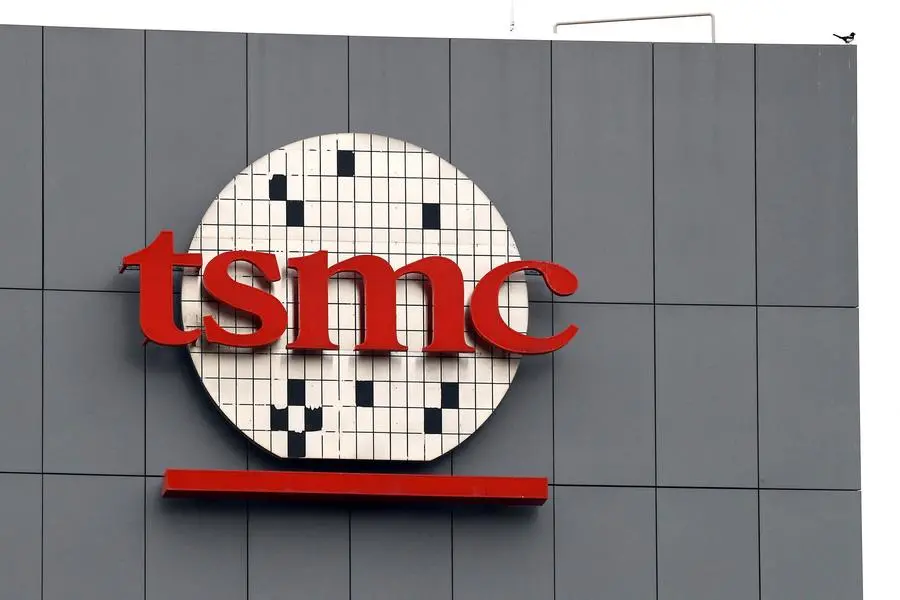
Stocks in Taiwan <.TWII> finished at a record closing level of 31,408.70 points, and above the 31,000-mark for the first time ever. TSMC <2330.TW> surged 3.6% to also finish at an all-time high.
On Thursday, the world's top contract chipmaker reported a estimate-beating 35% rise in quarterly profit and forecast revenue growth of about 30% in 2026 in U.S. dollar terms, reinforcing views that the global rally around artificial intelligence still has room to run.
A trade deal between Taiwan and the United States that lowers tariffs on many exports and promotes fresh investment into the U.S. tech sector further boosted equities.
"Solid results from TSMC stabilized the rotation out of tech without undermining the bid for cyclicals that has characterized the start of the year's trade," said Kyle Rodda, senior financial market analyst at Capital.com.
"The results implied a continued strong demand for chips and a robust sales pipeline, reflecting well on the overall artificial intelligence build-out."
The AI optimism spilled over to South Korea, where the tech-heavy KOSPI index <.KS11> also scaled a record close of 4,840.74 points, its 11th straight session of gains.
Chipmaker Samsung Electronics <005930.KS> soared as much as 3.9% to an all-time high.
The benchmark gauges in South Korea and Taiwan finished the week 5.6% and 3.7% higher, outpacing a 2.3% weekly gain in broader EM Asia stocks as well as marginal gains in an MSCI gauge tracking global tech stocks <.MIWD0IT00PUS>.
In Southeast Asia, Singapore stocks <.STI> traded a few points shy of their record high of 4,846.680 points, up for a sixth straight session. Thai stocks <SETI> rose around 0.5%.
Construction firm Italian Thai Development's <ITD.BK> shares sank 5% after two crane collapses at its project sites killed several people.
Among regional currencies, the South Korean won <KRW=KFTC> slipped as much as 0.4% to trade around 1,475.20 per dollar.
The won is down 2.3% so far this year, pressured by persistent retail outflows despite signs the central bank was done easing its monetary policy and taking efforts to shore up currency stability.
The Thai baht <THB=TH> inched higher for a third consecutive session, trading around 31.44 a dollar, setting it on track for a second weekly gain. The baht's strength continues to pose challenges to Thailand's export and tourism dependent economy.
Meanwhile, advance estimates showed Malaysia's economy expanded 5.7% in the fourth quarter, beating forecasts.
The Philippine peso <PHP=> inched higher after touching a lifetime low of 59.524 against the U.S. dollar in the previous session. Equities in Manila <.PSI> slipped 0.4%.
HIGHLIGHTS:
** South Korea ex-president Yoon found guilty of obstruction over martial law bid
** Yield on India's 10-year bonds <IN10YT=RR> jump to 6.669%** Malaysian economy grew 5.7% year-on-year in Q4 2025** Indonesia FDI growth flat in 2025, eyes pick-up in 2026
| Asia stock indexes and currencies at 0707 GMT |
|
|
|
|
|
|
| COUNTRY | FX RIC | FX DAILY % | FX YTD % | INDEX | STOCKS DAILY % | STOCKS YTD % |
| Japan | <JPY=> | +0.21 | -1.05 | <.N225> | -0.32 | 7.14 |
| China | <CNY=CFXS> | -0.01 | +0.28 | <.SSEC> | -0.37 | 3.24 |
| India | <INR=IN> | -0.43 | -0.90 | <.NSEI> | 0.55 | -1.23 |
| Indonesia | <IDR=> | - | -1.24 | <.JKSE> | - | 4.96 |
| Malaysia | <MYR=> | -0.10 | +0.00 | <.KLSE> | -0.34 | 1.74 |
| Philippines | <PHP=> | +0.09 | -0.96 | <.PSI> | -0.35 | 6.80 |
| S.Korea | <KRW=KFTC> | -0.24 | -2.25 | <.KS11> | 0.90 | 14.87 |
| Singapore | <SGD=> | +0.00 | -0.18 | <.STI> | 0.17 | 4.21 |
| Taiwan | <TWD=TP> | +0.09 | -0.40 | <.TWII> | 1.94 | 8.44 |
| Thailand | <THB=TH> | +0.08 | +0.27 | <.SETI> | 0.40 | 0.54 |
South Korea and Taiwan Stocks Surge on AI boom
(Reporting by Nichiket Sunil and Shivangi Lahiri in Bengaluru; Editing by Janane Venkatraman)