With investors and companies queuing up to set up shop, the Salalah Free Zone is all set to take off
Enquiries for investment worth over US$4.5bn-US$5bn, a host of companies vying to set up shop and being billed as one of the prime movers of Oman's economy. Welcome to the Salalah Free Zone (SFZ). The free zone has been generating a lot of interest, even before it has kicked off officially. Tony Restall, CEO, SFZ, says, "We are expecting a royal decree this month and will soon start registering firms."
With a host of industrial free zones like the Jebel Ali Free Zone, Dubai Airport Free Zone and the Suez Special Economic Zone (SSEZ) in the vicinity, what makes SFZ stand out? To start with, SFZ gives companies a tax-free lease for 50 years, which is renewable for another 50 years. Compare this to the SSEZ, which gives a tax free holiday of ten years and the reason behind companies making a beeline for SFZ becomes apparent. Moreover, companies in SFZ get 100 per cent ownership without the need for a local sponsor or partner. They are also free to repatriate profits and capital.
Locational advantage
The proximity to Salalah Port is the ace that SFZ is looking at capitalising on. The location of Salalah Port gives it a vantage position to exploit the maritime trade between the US and the Far East. Going back to the rationale of new ports and free zones, Restall says, "As maritime trends change, the decisions made some 20 years back (Jebel Ali started in 1985) need to be reconsidered as the number of ships and mari- time trade has increased by 400-500 per cent."
With the size of ships increasing manifold from 4,500 twenty foot equivalent (TFE) to 10,000 TFE, most large ships prefer to move from one super hub (large port) to another. With economies of scale being a function of a ship's speed and tonnage on board, it makes sense for a ship to move between large ports.
According to maritime trade routes, most ships sailing from the east coast (in the US) dock at ports in southern Europe. From there they sail to northern Europe and the Mediterranean, mainly through the Suez Canal. And from the Suez Canal they move to the Far East. It is on this route that ships look at availing port services in and around the Gulf region. The three available choices are Jeddah, Aden and Salalah.
Since none of these ports are directly on the sailing routes, docking at any of these ports will lead to a deviation. As Jeddah entails the maximum detour adding to the sailing time, the choice narrows down to Aden or Salalah. Anxieties over security concerns in Yemen make Aden a less than preferred destination. This makes Salalah Port an obvious choice. Restall is upbeat. "Salalah port with its quality service, gantry and key side cranes, competitive price structure and access to a variety of destinations is bound to emerge as a port of choice."
Salalah Port also boasts of some of the best-known names in the business. AP Moeller is the holding company for the port and MAERSK handles its management. It has a haulage capacity of 3.7mn containers a year and manages a maritime trade of 450mn freight tonnes annually.
Another factor in SFZ's favour is that if the European Union accepts Turkey's demand for a membership, according to the EU rules it will have to phase out its free zones. This will give SFZ an advantage as companies will look to alternate areas to relocate and SFZ will be a natural choice. Under WTO rules, Oman's free zones are exempted from such restrictions.
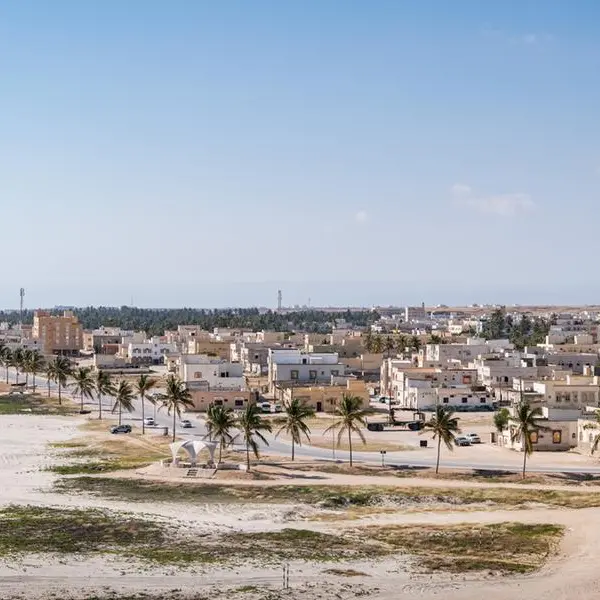
Spread over 2,800 hectares, SFZ is located opposite the Hilton Hotel in Salalah, with the port just a stone's throw from it. SFZ will be developed in various phases. Work on the first phase, which includes building the requisite infrastructure like roads, power, administrative buildings, factory units and warehouses, is in progress. The first company to come on board once SFZ is officially up and running will be the Salalah Methanol Company. A wholly owned company of Oman Oil, it will take up 51 hectares of land within the free zone.
Marketing strategy
About SFZ's strategies to attract companies Restall says, "We will be targeting companies which exploit and use mineral and the ones which value add to them." These companies can use the Salalah Port to transport raw materials by taking up a warehouse or establishing a full fledged manufacturing base in SFZ.
It is also looking at companies and markets from South Asia and East Africa. "Oman has had historic ties with East Africa and does not need to reinvent the wheel. But what is needed is to create an environment and trading operations with access to warehousing through our network and offices."
The free zone will work closely with the Port of Sohar and try to leverage synergies. For example, while Sohar is an industrial port, it lacks container capacity. But once the planned aluminium smelter or urea factory comes up, they will require large container capacity, which the Salalah Port will provide, with SFZ reaping the attendant benefits.
SFZ is well aware of its areas of weaknesses and will stay clear of such industries. Restall clarifies, "Since we do not have enough natural resources, we cannot go after industries which require a lot of resources - like a steel mill which will require lots of energy and will need to be subsidised to be profitable." The challenges for SFZ remain the same as in any other free zone, one of making available enough power, gas and electricity.
Restall says, "We will concentrate on our strengths. We have an efficient port, proximity to trade routes and the airport, an open land area, 100 per cent support from the government and encouragement from both the Salalah and Dhofar communities."
Attendant benefits
SFZ is expected to create a number of job opportunities in the Dhofar and Salalah region. In any free zone, the infrastructure and facilities in the surrounding areas plays a seminal role in attracting people.
Facilities like schools, shopping malls, recreational parks and grocery stores are crucial in luring people to a new area. Restall says, "People will come or stay away not just because of SFZ but because of the lifestyle and comforts that Salalah can provide. For every one job created in SFZ, three to four jobs will be created outside the free zone." SFZ is expected to trigger a number of ancillary businesses like car hire companies, furniture shops and grocery stores in the Salalah and Dhofar region.
On what he expects to be the gestation period of SFZ, Restall points out that any free zone takes anywhere between three to five years to take off and up to 15 years to establish itself. SFZ plans to complete its first phase billed as the 'development to learning stage' in three years. The second phase, still at a conception stage, will take off in earnest once the first phase is over and details of the available land and finances become clear.
The road ahead
But Restall is confident about the prospects of SFZ. "We have had international enquiries from the US, South Asia and Europe and that too, without any advertising and PR. So once we are up and running, the response can be imagined." A look at the existing free zones can be enlightening. In most of them, the number of projects approved are far fewer than the number of aspiring companies. Jebel Ali Free Zone has had 80,000 enquiries till date since it was set up in 1985, but only 5,000 of them have been given the permission to set up shop. SFZ is looking at bettering that record.
SFZ has chalked up aggressive marketing plans with a host of road shows in India, Pakistan and Europe. It will also work with industry bodies like the Chamber of Commerce and the concerned ministries in various countries to attract investments.
SFZ has had a chequered history. It was first mooted way back in 2000 as a joint venture between Salalah Port Services and Hillwood. Work on the free zone never took off due to differences between the two partners.
The free zone got a new lease of life in June 2004 when Public Enterprises of Industrial Estates (PEIE) put forward the idea of floating SFZ as a 100 per cent government owned company. It was felt that having a 100 per cent government owned free zone will help gain investor confidence.
SFZ currently operates out of two offices - one in Muscat with four executives and another in Salalah. Once the royal decree is in place the organisation plans to recruit more staff to deal with the steady flow of enquiries. Restall says, "It will be an opportunity for more people to come on board."
In a larger context, SFZ is tipped to play a crucial role in the diversification of the economy. A clear example of this is the UAE, which has moved from oil and gas dependence to an economy where 97 per cent of its revenue comes from other sources, with the Jebel Ali Free Zone and Dubai Airport Free Zone contributing to this goal in no uncertain measure. With the fundamentals in place, SFZ can now look forward to giving Oman a quantum leap.
By Mayank Singh
© businesstoday 2005