It must be a satisfying moment when the world's largest beverage company decides you are 'the real thing'. That's what happened in December last year to Aujan Industries, one of the largest independent beverage businesses in the Middle East, when The Coca-Cola Company shelled out $980 million, for what is effectively a half-share in its business.
The eye-catching deal capped the steady rise of a Saudi company that first started operations in 1905 and is today best known for its soft drink brands Rani and Barbican, and its Vimto cordial, which it produces in the region under licence.
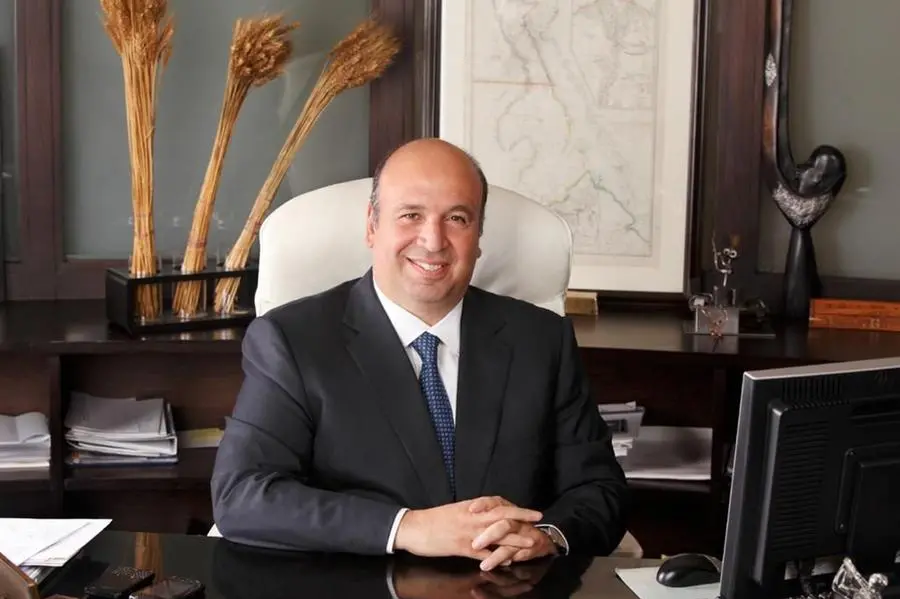
The firm's president and chief executive Kadir Gunduz knows all about the kind of high standards Coca-Cola will expect from the new partnership - prior to taking charge at Aujan he worked for the US giant, overseeing part of Asia. Gunduz is keen to stress that despite the deal "Aujan will continue to be in the driving seat as far as management is concerned".
However, he adds, the benefits of having Coca-Cola's muscle behind the firm, as it seeks to find new international markets, will be substantial. "Obviously with the research and development and the marketing capabilities that will come from the Coca-Cola side we will be in a much, much better competitive position outside of our region," he says.
Within the Middle East, the firm doesn't need much help - it is eyeing $1 billion of sales in 2012. Last year it managed $900 million, and sales of its Rani fruit juices were up 22 per cent. It also sold 30 million bottles of Vimto for the first time. Vimto has become synonymous with Ramadan in many parts of the region, and is a popular tipple as Muslims break their fast. No-one, Gunduz included, seems to know why a British soft drink first brought to sold by Aujan in 1928 has achieved this status, but the firm has done its bit in recent years by running Ramadan ad campaigns.
"It is sort of part of the heritage in this region," Gunduz says. Vimto was recently in the headlines after the drink was subject to a recall in the UAE, as inspectors sought to isolate a batch with evidence of mould.
Gunduz says Aujan moved quickly, and stresses the suspect batch accounted for less than 0.01 per cent of annual volumes. "We blocked all the stock, we knew only a small piece of it was contaminated, but despite that fact we stopped everything and immediately started co-operating with the local authorities," he says.
The firm has high hopes that Barbican - its non-alcoholic malt drink brand - will do well in the likes of Indonesia, Malaysia and Thailand. Meanwhile, Gunduz says the Rani fruit juices are already competing well against giants like Del Monte in the Middle East and he is confident they will do so elsewhere. Just as Coke guards its 'secret recipe', Gunduz says his drinks have their "own formula, percentages, and mixing instructions so each has its own unique way of preparation".
Unlike Coca-Cola and its global nemesis Pepsi, however, he says there is "no animosity" between his firm and other rival regional drinks firms. In fact, they all share a responsibility to try and grow a soft drink market where consumption substantially lags the likes of the US and Europe. To do so, they will have to understand the region's various tastes, Gunduz says.
"For instance, while orange is quite a popular flavour in the GCC, pineapple and mango are more popular in Egypt. Sour cherry is a very popular seasonal drink in Iran, but is not known in most of the other countries in the region, so yes there are these kind of differences that we try to capitalise on," he says.
After several decades in the beverage business, Gunduz still seems 'juiced' about the challenges that lie ahead.
LIVE AND LEARN
Name: KADIR GUNDUZ
Firm: AUJAN INDUSTRIES
Position: PRESIDENT & CEO
Q WHAT WAS YOUR FIRST JOB?
A My professional first job was as a paid supervisor at a beverage company back in Turkey.
Q WHO HAS BEEN THE BIGGEST INFLUENCE ON YOUR CAREER?
A It really is difficult to mention names, but I learned a lot from lots of different people I worked with. I am open to learn from everybody. When you are open to learn from anyone then you don't underestimate anyone and you would be surprised that you can learn a lot from lots of different people that you might not expect.
Q WHAT WAS THE BEST DAY OF YOUR CAREER?
A I have had lots of good days and lots of great days in my career - business achievements, promotions, and so on, but I am open to the fact that there are lots of great days in the future as well. So I would like to think that the best day of my career is ahead of me.
Q LOOKING BACK, WOULD YOU DO ANYTHING DIFFERENTLY?
A Obviously I have made lots of mistakes in my career, no doubt about that - and I guarantee that I will continue to make mistakes in the future as well. But I don't think I have any regrets, and those things that I consider mistakes today most probably were not mistakes when I did them.
Q HOW DO YOU RELAX?
A I don't think that I can say I do relax - I try to take exercise a few days a week. Relaxation for me is to drink coffee as much as I can!
Q WHAT ARE YOUR REMAINING CAREER GOALS?
A I don't think I am in the position to say these are my remaining goals. I believe there is a lot to be achieved in the future. My short-term goal is to achieve our $1 billion revenue target for 2012.
Q WHAT ADVICE DO YOU HAVE FOR SOMEONE JUST STARTING OUT IN YOUR INDUSTRY?
A To me what is important is always going the extra mile, ready to go for this extra mile. Because I believe that extra mile in most cases is when you make the difference. Also, always take ownership and responsibility and run with any challenges that are thrown at you.
© 7Days 2012