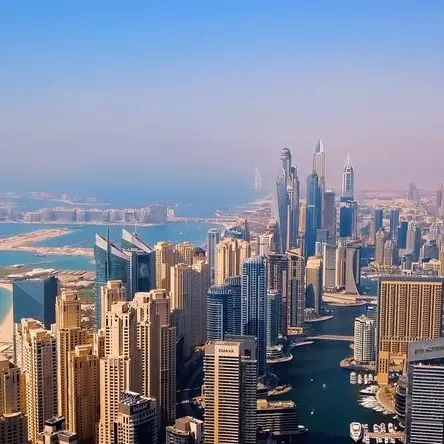
Saudi authorities intend to turn Riyadh into a major centre for financial services on a global level. Officials are thinking big? Comparing the planned project to that of Canary Wharf, London's business and baking district. Known as the King Abdullah Financial District, the project would be developed in the heart of Riyadh, with easy access from the central business district and airport.
Officials concealed some details of the ambitious project during a conference on future development held in Riyadh last week. Minister of finance Ebrahim Al-Assaf revealed that Saudi authorities had been developing ideas for the project over the past two years. Still, the master plan is expected to be ready by year-end, with construction getting under way sometime in 2007.
Upon completion, the King Abdullah Financial District would house all state entities dealing with financial matters. Certainly, these include the Capital Market Authority and the Stock Exchange (Tadawul).
Ambitious
Additionally, financial institutions operating in the capital would most likely relocate or at least open branches in the new financial district.
Likewise, support providers such as accountants, auditors, analysts, consultants and other related activities are expected to operate from the district.
Undoubtedly, King Abdullah Financial District would be a mega project by international standards by virtue of its size. The authorities intend to develop the project on a 1.6 million square metre site. By comparison, London's Canary Wharf is built over an area of 345,000 square metres. Authorities are promising to develop the project with modern infrastructure in terms of road networks to information technology standards.
Opportunities
Additionally, an academy dedicated to offering degrees in financial services would be set up in the district.
Other schemes include purpose-built conference halls. Eventually, the authorities expect the King Abdullah Financial District to emerge as the place Saudi nationals would turn to when seeking new job opportunities.
Currently, finding jobs for locals is a daunting challenge in the kingdom. The economy has to generate some 160,000 annually for nationals to cope with demand.
The move to turn Riyadh into a major financial district could not be timelier. Already, Saudi Arabia was admitted to the World Trade Organisation last December.
Under WTO accession terms, the Saudi government agreed to allow 60 per cent foreign equity shareholding for joint ventures in banking. Also, Riyadh agreed to permit foreign banks in the form of a locally incorporated joint stock company or as a branch of an international bank.
The writer is assistant professor, College of Business Administration, University of Bahrain.
© Gulf News 2006