For your information from Lebanon and the Middle East
Egyptian reshuffling
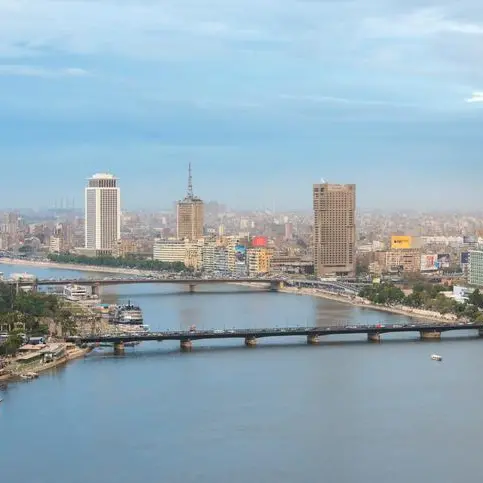
Unrest in the Arab world has halted real estate projects for Egyptian resort developers Amer Group Holdings and Palm Hills, causing them to return 2.6 million square meters and 9.3 million square meters of land, respectively, to the Egyptian government, according to a May 6 press release. On May 1, Amer Group announced that they had ceased a land buying agreement with the governorate of Matrouh. The company said they were doing so "in order to reduce its exposure on the north coast as it foresees a possibility of lower demand for second homes in Egypt in the near term." Amer spokesman, Riad Rifaat, claimed the company is currently studying the market before making any new decisions about prospective projects, funding for which could be supplied by the $40 million revenues from the returned land. In North Egypt, Amer Group owns two hotel and resort projects in the Porto Marina. Syrian unrest had caused a standstill in sales of Porto Tartous -- Amer Group's first hotel and residential project outside Egypt -- in mid-April, after reaching $22 million [AED80.81 million] in March, though Rifaat claims construction is ongoing, and the company will formally announce a housing development in Saudi Arabia called Porto Jeddah.
Turkish payday
Turkish contractors took part in a total of 517 projects worldwide in 48 different countries in 2010, 142 of which were built within the Middle East. The total value of these deals reached $20.3 billion, of which $6.71 billion was spent on projects in the MENA region. According to a May 2 report by the Turkish Contractors Association (TCA), Turkmenistan netted $4.25 billion [AED15.6 billion] worth of project deals, while projects in Libya totaled $2.46 billion [AED9.03 billion], with Iraq following at $1.19 billion [AED4.37 billion]. Iran, Oman and Qatar also provided sizeable projects for the contractors, as deals within those countries reached $1.11 billion [AED4.07 billion], $979 million [AED3.59 billion] and $882 million [AED3.23 billion] respectively. The TCA report said that in 2010, 12.6 percent of construction was spent on highways, bridges and tunnels, 12.4 percent on housing projects, 10.8 percent on sports facilities and 7.1 percent on energy projects. Between 1972 and 2010, Turkish contractors garnered $26.43 billion [AED97.07 billion] in Libya, $20.72 billion [AED76.1 billion] in Turkmenistan, $13 billion [AED47.75 billion] in Kazakhstan and $10.66 billion [AED39.15 billion] in Iraq.
Property guru turns to African mines
In a May 8 interview with Arabian Business, Mohammad Alabbar, chairman of Dubai property firm Emaar Properties, discussed his gradual sway over the last two years away from the property business and into his new mining venture in eight African nations. He now devotes around 20 percent of his time to his mining empire, in addition to running Emaar. His joint venture Africa Middle East Resources (AMER), in partnership with Malaysian businessman Tan Sri Syed Mokhtar al-Bukhary, includes a $1.6 billion [AED5.87 billion] joint venture to develop an aluminum smelting plant in Malaysia with state-owned investment management and holding company Aluminum Corporation of China (CHINALCO). With regards to capitalizing on his investments, Alabbar said, "I would say give me three years to create a $10 billion company," (Alabbar multiplied production capacity by three when he headed DUBAL -- Dubai Aluminum Company -- from 1992 to 2003).
First quarter woes
The first quarter hasn't been kind to UAE property developers and their balance sheets. Contractor Arabtec's profits slipped 80 percent to $7 million [AED25.71 million], while Emaar profits fell by 45 percent in the first quarter, from $826 million [AED3.03 billion] (in 2010) down to $115 million [AED422.4 million], with revenue declining 31 percent down to $540 million [AED1.98 billion]. On May 8, Emaar announced that a team of consultants from McKinsey would help set up a new five-year plan to study and take advantage of "current market realities, evolution of new markets [and] potential growth opportunities", the company said in a statement. Chairman Mohammad Alabbar added: "It is extremely important that we review our corporate growth strategy in line with the prevailing global market trends and the socio-political landscape."
Meanwhile, Union Properties, the third largest developer in the country and half-owned by Emirates NBD bank, saw net profits increase 64 percent to $22 million, mostly due to the completion and subsequent sale of properties near Dubai International Financial Centre, namely the Index Tower and Limestone House. Drake & Scull International, the Dubai-based contracting giant, said first-quarter net profit jumped 21 percent (with a 67 percent jump in revenues) to $13.8 million [AED51 million]. Saudi Arabia's largest property developer, Dar al-Arkan, reported a 31.5 percent decline to $72.8 million [AED267.39 million] in net profits for the quarter, as revealed on May 11. The developer owns $6.13 billion [AED22.5 billion] in assets. Perhaps no other GCC real estate company enjoyed announcing their first quarter results more than Qatar's largest, Barwa, which achieved a 161 percent increase in profits over this period last year, reaching $150.5 million [AED550.94 million] due to higher revenues from sales of properties and rents in the country, according to a May 1 press release.
Damac denies corruption
On May 17, Chairman of Damac Properties, Hussain Sajwani, fired back at a ruling by an interim court in Egypt, which found him guilty in absentia of criminal property dealings in Egypt related to the 2006 acquisition of the 30 million square meter Gamsha Bay resort, which he allegedly acquired for an unfair market price through a mutually beneficial deal with Mubarak's former minister of tourism, Mohamed Zoheir Garranah. The court, under the new military regime following the January uprising, handed down a May 10 sentence on Sajwani, (as well as other property developers and former Egyptian ministers) that includes a $40.5 million [AED148.75 million] fine and a five-year prison term, while the accused claimed that he had not even been informed that he was being sued, only learning of the charges through the general media. The press release from the UAE firm announced an international arbitration filing against Egypt, claiming that the charges are fraudulent and will impact the group's investments in Egypt, including four additional projects in the capital. Referring to the judgment as "guilt by association" and a "sham", Damac's legal counsel at King & Spalding, Ken Fleuriet, said "Damac was entitled to rely upon the price charged by the government at the time. It was an arms' length transaction that was fully vetted by the appropriate Egyptian officials at the time of purchase." According to a May 16 article in Asharq al-Awsat, Egyptian media advisor Ahmed al-Samman cleared up investor fears, saying, "The Egyptian Ministry of Justice began two weeks ago to prepare a new law designed to absolve investors who illegally received land or assets from the state [during the Mubarak regime] from any criminal liability."
North Africa's $23 billion
Some $23 billion [AED84.47 billion] out of $150 billion [AED550.94 billion] worth of projects in North Africa have been halted due to the civil unrest in the Arab world, according to a May 4 article from Zawya on first quarter results. Dubai company Damac's $16.3 billion [AED59.86 billion] luxury residential and tourism development project on the Red Sea coast of Egypt, Gamsha Bay, has been stalled (see below), as have plans to extend southern Libya's Sabha Airport, a $500 million [AED1.836 billion] venture between Greece's Consolidated Contractors and Turkey's TAV. In addition to pausing four projects in Algeria, UAE developer Emaar Properties is putting on hold the $100 million [AED367.295] Sheikh Khalifa bin Zayed City project in Egypt by subsidiary Emaar Misr, for which they partnered with the Abu Dhabi Municipality and Egypt's housing ministry. According to analysts, the stalemate in these real estate projects is temporary, and construction is expected to resume shortly after political stability returns. According to real estate analyst with Nomura Investment Bank in Dubai, Chet Riley, "The fundamentals of these places haven't changed and neither can demand for real estate in the long run."
Hold on Latakia
Mass protests and domestic unrest in Syria have caused investment company Qatari Diar, the real estate arm of the Qatari Investment Authority sovereign wealth fund, to temporarily cease its projects in the country, including the $350 million Ibn Hani Bay Resort project in the city of Latakia, according to a May 8 press release. Construction on the resort began in January 2010 and covers more than 244,000 square meters along the Syrian seaport. Qatari Diar's Chief Executive Officer Mohammed bin Ali al-Hedfa, told Doha's Al Arab daily newspaper on May 5 that the company remains committed to its projects and plans to resume production on the resort and its commercial and residential real estate project in Damascus once the situation stabilizes. Meanwhile, United Arab Emirates retail builder Majid al-Futtaim told Executive in a May 19 email that the first phase of its fully-owned, $1 billion investment in Khams Shamat, its largest project in the region, is still due in 2014 after breaking ground late last year, and that, "The master plan is being approved by the ministry of tourism and all staff and consultants have been chosen." The hospitality section of the project will include the Kempinski Hotel, Crowne Plaza and Novotel Hotel.
Illegal construction crackdown continues
On May 5, Military prosecutor, Judge Saqr Saqr, charged 12 individuals with obstructing the police after they responded "violently" to a police campaign to curb illegal construction on public property in the southern Beirut suburb of Ouzai. According to Agence France-Presse, 130 illegal constructions had been demolished in Beirut's southern suburbs and further south of the city by May 10. Particular focus has been put on the area that borders on Rafiq Hariri International Airport. Caretaker Interior Minister Ziad Baroud told An Nahar that illegal construction by the airport constitutes an "encroachment on aviation safety". Hezbollah and Amal officials have publicly supported efforts to curb illegal construction, despite the fact that the majority of targeted areas are within their political strongholds. Caretaker Speaker of Parliament and Amal official Nabih Berri told As Safir newspaper on May 3, "As long as I am alive, building violations won't be legalized anywhere. The issue can't be solved through a settlement or compromise."
Seafront and BCD in demand
Property advisory firm RAMCO's May 1 report announced that 22 new residential buildings are being constructed on the Beirut seafront, extending from Ain Mreisseh to Ramlet El Baida, with a total sale expectation of $850 million. The individual apartments average 525 square meters (sqm) in size, with the smallest at 310 sqm. Prices on the first floor start at $7,000 per sqm and increase to $10,000 per sqm on upper floors, with 65 percent of projects already sold. In the Beirut Central District (BCD), five sizeable projects are being built at a value of $1.7 billion and are slated to start delivery in 2014. The report noted that the gap in prices between the BCD and other in-demand locations in Beirut has decreased due to strenuous competition between the suppliers of residential units.
Saraya still building in Jordan
In May 4 press release and a follow up telephone conversation with EXECUTIVE, Dimah Khalili, senior manager of corporate public relations and investor relations at Saraya Holdings' Jordan office, refuted an article published by Al Bawaba the day before which claimed that the company's subsidiary, Saraya Jordan, had dismissed all its staff and would discontinue operations, including its 634,000 square meter tourist and mixed-use project, Saraya Aqaba. She confirmed that Saraya Holdings would complete its projects in Jordan and Oman, after shelving other developments in Sochi, Russia and Ras Al Khaimah in the United Arab Emirates, in the last two years. Khalili said: "The company has undertaken additional measures aimed at ensuring its continuity under prevailing conditions, including the re-organization of the company's operations and the reduction of its operating expenses." However, the initial completion date of the first quarter of 2011 has passed and a new date is yet to be announced. Saraya Jordan signed an agreement in 2005 with the Social Security Corporation, Arab Bank and the Aqaba Development Corporation to build the touristic project. Ali Kolaghassi is the chairman of Saraya Jordan, while Lebanese caretaker Prime Minister Saad Hariri is the chairman of Saraya Holdings and the Hariri family firm, Saudi Oger, is the EPC turnkey contractor at the Saraya Aqaba project.
Toward the sky
Lebanon-based construction giant MAN Enterprises officially signed the main construction contract, worth over $100 million, to build what will become Lebanon's highest residential tower, Sama Beirut, developed by Antonios Projects. Chairman of MAN Enterprises, Michel Abi Nader told Executive that there were 10 other firms involved in the tender, most of which were Lebanese along with four from the United Arab Emirates. He predicts construction will take 33 months. At the May 17 press conference announcing the contract, founder of Prime Consult Massaad Fares said that the 50-story, $200 million mixed-use tower has already sold a fourth of its units, though there were no sales in the last three months. For financing, Prime Consult has partnered with BBAC to provide loans, but so far none of the buyers have utilized a home loan on the offered apartments, which range in price from $5,600 to $9,000 per square meter.
Humbling indicators
Confirming the salon-chatter around town that real estate has taken a u-turn since its skyward rise in the last two years, the number of transactions in the first quarter showed a 21 percent fall compared to the same period last year, to 17,373 sales. Sales to foreigners, the backbone of the luxury residential component, have fallen more than 30 percent in the first quarter, which many attribute to civil unrest in the region and the lack of a government in Lebanon. The figures released by the General Directorate of Real Estate Registry and Cadaster, and published in a Bank Audi report, show that the value of sales fell only 14.5 percent. The price-stickiness is largely due to the fact that developers keep prices high even if demand withers, in order to cover the high cost of land, especially as the number of available plots diminishes. On the supply side, contractors seem to be ordering less cement, as deliveries fell 6.7 percent in the first quarter of the year compared to the same period last year, reducing tonnage to 1,035,000, according to figures from Banque du Liban, Lebanon's central bank.
CCC ordered to pay up, again
In the latest installment in the largest and longest contempt of court procedure in the Commercial Court at Brick Court Chambers in London, a final judgment was handed down on May 5, whereby $75 million was ordered to be paid to Jordanian businessman Munib Masri by Athens-based construction giant Consolidated Contractors Company (CCC). Masri had accused CCC and its majority-owner, Palestinian billionaire Said Khoury, of failing to deliver his portion of an oil concession in Yemen that the two parties were involved in. Litigation has also been ongoing in Lebanon, where CCC is incorporated. CCC has attracted controversy since a British high court labeled it a "complete disgrace" for failing to pay court-ordered fines in 2010. Marwan Salloum, vice president of CCC and a close associate of Saif al-Qadhafi, son of the embattled Libyan leader, was also scrutinized in a May 15 article in the Daily Telegraph for controversial business dealings on behalf of CCC. In related news, Masri revealed on May 16 that his grandson, Munib Masri Jr, a 22-year old student at the American University of Beirut, had been shot and injured during the Nakba (catastrophe) day clashes between Israeli forces and Palestinian protestors at the border in Maroun Al Ras the day before. Six unarmed demonstrators were confirmed killed by Israeli forces and more than 100 others were wounded.
© Executive 2011