Middle East and North Africa (MENA) countries sold a total of USD 12.4 billion of conventional bonds in 2Q12, up 17% from 1Q12. The number of issues increased by 25% from the previous quarter.
The lower-than-expected increase in bond issuance reflects a combination of a momentarily neutral Eurozone crisis and a status quo on the Arab Spring, although some nations continue to witness unrest. These factors are delaying any remarkable surge of action in the MENA bonds market.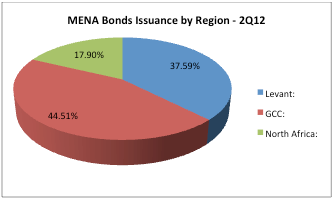
Source: Zawya Bonds Monitor
Jordan was the largest issuer in 2Q12 with USD 2.68 billion or 36% of the total number of issues, followed by Kuwait. The entire GCC combined issued the same number of bonds (24) as Jordan. However, the overall value of GCC bonds was higher, topping the region. This was helped by Oman's return to the market with three issues - the OAB Bond 2017, the AOFS Bond 2017 and the Oman Development Bond 40. The two Omani corporate bonds were considerably oversubscribed and the sovereign issue received overwhelming response.
North Africa gradually re-entered the bond market with 12 issues. Tunisia took the lion's share with seven. However, the reopening of previously issued Egyptian treasury bonds, which led to the upsize of several issuances, made Egypt the most influential North African debt player. Egypt's total bond value of almost USD 2 billion made it the top issuer by value in North Africa.
According to Zawya 's MENA Bonds Quarterly Bulletin 2Q12, the average size of a MENA conventional bond in 2Q12 was USD 186 million. The Bahrain Sovereign Bond 2022 was the largest. Oversubscribed four times, the sovereign bond was met by fierce investor demand despite volatile market conditions.
According to the Central Bank of Bahrain, 350 investors participated in the transaction, with an order book of USD 6.3 billion. The distribution was 38% asset managers and hedge funds, 35% banks, 12% insurance companies and pension funds, 8% central banks, and 7% private banks.
Bonds issued in 2Q12 had tenors ranging from one to 13 years with two-year tenor bonds being the most frequent, followed by five-year bonds.
Overall, MENA issuers sold 62% of their bonds in domestic markets in 2Q12. About 12 issuers tapped the international markets for their debt sales.
Quasi sovereign bonds reemerged for the first time this year through Tunisia's Arab International Lease via two tranches worth TND 30 million.
Financial services firms and governmental institutions remained the pillars of bond issuance in the MENA region. However, this quarter witnessed the comeback of the power and utilities sector via Jordan's National Electric Power Company. Two issues worth JOD 150 million each were the largest in the history of the government-owned firm.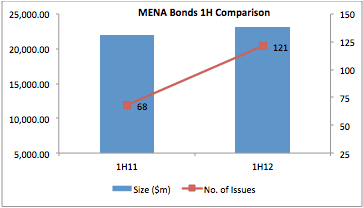
Source: Zawya Bonds Monitor
When comparing the first six months of 2012 to 2011, it's clear that the number of issues vaulted by a massive 53, but the value of bonds that came to market increase by only 5%.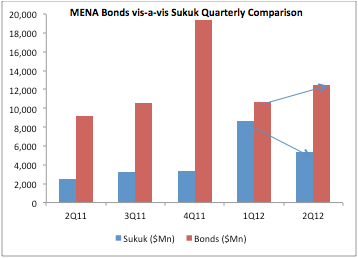
Sources: Zawya Bonds Monitor; Zawya Sukuk Monitor
The gap between the value of conventional and Islamic bonds narrowed considerably in the first half of 2012. Despite an increased hunger for sukuk, especially from the GCC, the difference between MENA conventional bonds and MENA Islamic bonds tripled from 1Q12.
Zawya estimates show that the MENA region has about 98 issues worth USD 15 billion of conventional bonds maturing in the second half of 2012, and about half that amount coming to maturity in the first quarter of 2013. The Tunisia Sovereign Bond, CIMAT Bond and Renaissance Services Bond will mature in the next three months, possibly igniting debt activity in the forthcoming quarters.
Joey Geadah is bonds analyst at Zawya and can be contacted at joeyg@zawya.com.
Zawya 2012