Friday, Oct 22, 2010
Gulf News
the market for initial public offerings is on the rebound — good news for dubai
Dubai London Stock Exchange Group (LSE) operates a broad range of international equity, bond and derivatives markets, including London Stock Exchange; Borsa Italiana; MTS, Europe’s leading fixed income market; and Turquoise, offering pan-European and US lit and dark equity trading.
Through its markets, the group offers international business access to Europe’s capital markets.
The group is a leading developer of high performance trading platforms and capital markets software. It also offers customers around the world an extensive range of real-time and reference data products as well as post-trade services.
Borse Dubai, the Dubai owned holding company along with Qatar Investment Authority, owns nearly 36 per cent in LSE Group.
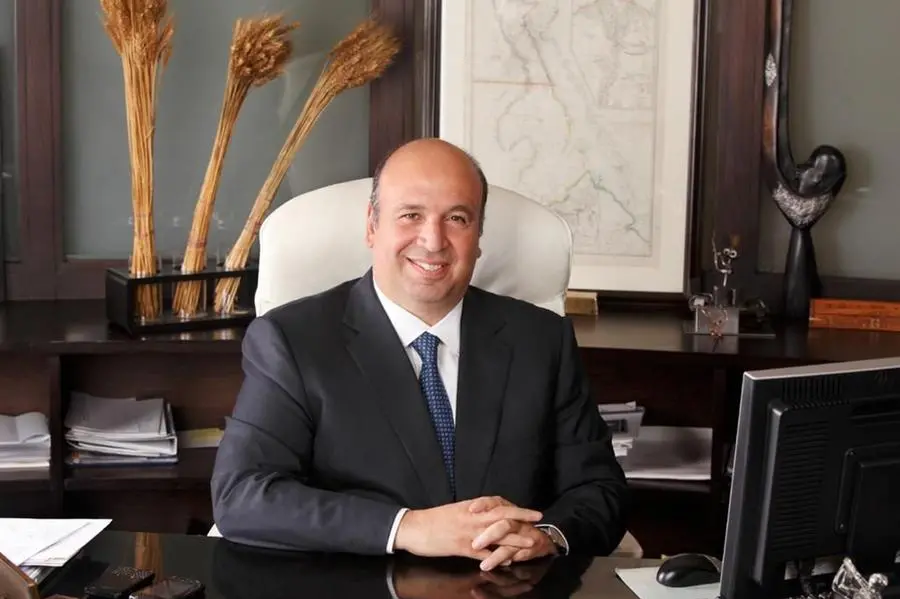
Xavier Rolet, Chief Executive of LSE Group on a recent visit to Dubai, spoke to Gulf News in an exclusive interview. He discussed the exchange’s relations with two key investors from the region, the future role of LSE in Dubai and the Gulf, the scope of global exchange consolidation and the action plan of LSE Group in the face of rising competition from high speed alternate trading venues.
Gulf News: Prior to the financial crisis, Gulf investors played a big role in the stock exchange consolidation in Europe, eventually acquiring significant stakes exchanges such as LSE and Nasdaq OMX Group. In the case of LSE, both Qatar Investment Authority and Borse Dubai are significant shareholders. Other than being strategic investors what is the role of these two big investors? Do you see any role for them in further exchanges consolidation in the future?
Xavier Rolet: Dubai and Qatar are very significant shareholders in LSE. They together own close to 36 per cent of the exchange. I think they are very savvy long-term investors. They both understand the importance of financial services infrastructure in their own countries.
We are certainly looking beyond the pure shareholding relationship. We are looking at establishing commercial relationship with both these investors.
In the case of Qatar we have already done this. In the case of Dubai, they have such a relationship with one of our competitors. But we will certainly look at opportunities where we can co-operate.
To put the relevance of this relationship in a broader context, in the post-crisis world, the Middle East Asia and Africa are emerging fast growing regions. Additionally, after the crisis, there is growing consensus on the need for a commonly accepted global regulatory system.
In this context, the role of these strategic relationships are very important to build global distribution networks involving joint ventures, alliances and other forms of market participation.
These types of alliances should be instrumental in making it possible for investors form the Middle East, Asia and Africa to trade in core bench marks and asset classes from their own respective regions 24 hours a day, seven days a week. We are not quiet there yet. Over the years these opportunities will arise.
What Dubai has achieved in terms of financial services infrastructure is remarkable. Although the debt overhang has been an issue, I understand there has been a significant progress on resolving it. And this is not a situation that is specific to the Gulf or Dubai.
We are having similar issues across the Europe and the US. I am very confident that in the medium term Dubai is going to emerge much stronger from this crisis and will continue to attract international capital. For us, the partnership Dubai is one of choice.
There has been on and off speculation that Dubai has plans to sell the stake in LSE to raise cash. Additionally Dubai has a strong partnership and shareholding in Nasdaq OMX Group. In this context do you see Dubai’s exit from LSE as a strong possibility?
This speculation has been there for quite a while, for almost a year. Although it is not for us to comment on the official policy of Dubai whether or not to remain invested in LSE, we as a partner are very close to Dubai, the ICD and the Borse Dubai.
I believe there is [a] strong base for a long-term partnership with Dubai. I personally think there isn’t any truth in those rumours. Dubai is in a significantly better position today in terms of rebalancing its long term international assets and its debt obligations. And I think the basis of our relationship is much longer than many people think. And frankly speaking, LSE is not a huge multinational company. We are medium cap. We have a market capitalization of about £2 billion (Dh11.58 billion). So this is not where a significant amount of money can be raised. I am very optimistic about Dubai and the overall situation in the financial markets across the world. The debt markets are already active. Once the liquidity begins to flow, I think a lot of worry about debts will disappear. There are clear signs that the confidence is returning to the market.
Prior to the financial crisis, there was a wave of global financial exchanges consolidation involving stock exchanges, derivative exchanges and commodities exchanges. We saw mega-deals involving transcontinental deals. Such mega-deals have come to a halt. Do you see potential for further consolidation?
Markets never stop. One way or the other deals will happen. Over all 2010 has been a disappointing year. There are early indications of improvement in valuations which might indicate a return of the IPO markets.
There are lots of transactions. But there is strong pipeline of IPOs. If there is stabilisation of markets we could see a return of IPOs with more liquidity coming into the primary market, which will be good for companies to raise finance through long term equity rather than through debt.
The world is at a deleveraging mode at the moment. Additionally a lot of work needs to be done on harmonisation of market regulations. There needs to be cost synergies and revenue synergies to push forward a deal. Additionally, there should be availability of funding through leverage and or equity.
Until a higher level of confidence and growth returns to the market I don’t think any major consolidation is happening.
Alternate trading venues such as BATS Global Markets and Chi-X Europe are becoming major competition to established exchanges like the LSE, trading much larger volumes in at lower costs and higher speeds. How do you face up to this?
We have already started to deal with it in a very effective manner. Obviously, when you have competition the first thing one needs to be mindful of is the costs. We have brought down costs substantially and will endeavor to work on it.
Historically, conventional exchanges have not been very efficient in terms of costs. To be more competitive on that front we need to retire our old trading platforms. It is going to take about a year. We have about ten platforms to migrate. When that process is complete the old technology will be retired and we will move on to a much leaner data centre and we will be able to make substantial cost savings. Currently some of our competitors operate data centers with 20 or 30 people.
We have acquired a software company Millennium IT in Sri Lanka. Two weeks ago we launched a new platform called Turquoise. We are also in the process of launching one on our derivatives market probably next week.
And in November we have plans to launch another one but we haven’t announced the date yet. This platform is the fastest in the world. In terms of modernisation we are now good if not better compared to most in the game. We are about two and half times faster than our nearest competitor which is BATS.
You have gone ahead with building your own platforms to meet the competition from alternate trading venues. There have been reports that exchanges like the Nasdaq is likely to acquire Chi-X in a bid to meet the challenge. So do you see consolidation happening in that segment of the market?
I can’t really comment for Nasdaq and Chi-X. Obviously, when the competition builds up, there could be acquisitions.
Do you expect to see more listings from the Middle East?
We have seen there is growing interest to list on LSE and AIM from the Middle East region. We understand DP World is keen to go ahead with its secondary listing on LSE. We are certainly witnessing a huge demand for listings from China, India, Russia and the CIS republics.
Do you see a recovery in markets this year with fresh fund raising through IPOs?
The IPO market has started to recover over the last six months. We have raised £161 billion at the LSE this year. Last six months we have dome 23 IPOs in AIM [Alternate Investment Market] our junior market. That compares well with the £200 billion the Bank of England injected into the market through quantitative easing. It is evident that the power of equity financing is very important in deleveraging the financial services industry.
You just touched upon the quantitative easing. The UK government has just announced a massive spending cut. There are also talks that a second round of quantitative easing happening. What will be the potential outcome of fiscal tightening on the one hand and monetary loosening on the other on financial markets?
I think the UK government is doing a very smart thing. When the credit cruch hit they bit the bullet. They forced a massive deleveraging in the banking sector. That was very, very painful, but that was a very disciplined approach with lots of up front payment.
If you look at our bank balance sheets many of them are cleaner than that of our European counterparts. With cleaner balance sheets they are in a better position to lend.
Three quarters of investment in the UK and Europe are driven by bank lending. Clearly the policy is smart in the sense it is reducing the government spending on the one hand and is reducing corporate income tax to facilitate business. And through a potential further easing of monetary policy and making money available for businesses.
I am very bullish about the recovery in the UK but not so about Europe with the exception of Germany which emerging very competitive and is focusing on exports. By the end of 2011 Germany’s trade with China will be more important it could be more than Germany’s trade with France.
If you look at the UK and Germany and with the other Nordic markets we have the basis for growth in the next couple of years. Next year we could expect a 2 per cent growth in UK and 3 per cent Germany.
However, if you look at the southern Europe, the situation is different. Banks continue to have highly leveraged balance sheets. Governments have not taken steps to really reduce their debts. Their reforms have been very moderate. Clearly it is not enough to make a difference.
Karen Dias/Gulf News
International access
Xavier Rolet, CEO, London Stock Exchange, said strategic relationships are very important to build global distribution networks
XAVIER ROLET: CHIEF EXECUTIVE, LSE GROUP
By Babu Das Augustine?Deputy Business Editor
Gulf News 2010. All rights reserved.