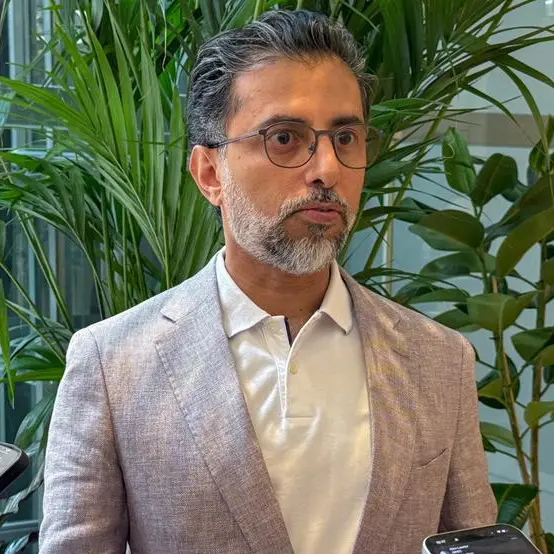
ABU DHABI, 31st October 2013 (WAM)-- The 'International Conference on the Safety and Security of Radioactive Sources: Maintaining Continuous Control of Sources throughout Their Life Cycle', which concluded today in Abu Dhabi, has enabled participating states to reflect on the significant achievements which have been recorded since the approval of the Code of Conduct in 2003, according to Ambassador Hamad Al Kaabi, the U.A.E.'s permanent representative to the International Atomic Energy Agency (IAEA), and the president of the conference, in his closing remarks.
The said conference was held in Abu Dhabi at the invitation of the Government of the U.A.E., through the Federal Authority for Nuclear Regulation and in cooperation with the International Criminal Police Organization, the International Commission on Radiological Protection, the International Source Suppliers and Producers Association and the World Institute for Nuclear Security. The timing of the conference coincided with the 10th anniversary of the endorsement of the Code of Conduct on the Safety and Security of Radioactive Sources by the general conference, said Al Kaabi. 320 participants from 87 IAEA member states, one non-member state and six International Organizations attended the conference whose purpose was to review the current success and challenges in ensuring the safety and security of radioactive sources and to identify means to maintain the highest level of safety and security throughout their lifecycle, from manufacture to disposal. The conference in Abu Dhabi enabled states to reflect on the significant achievements which have been recorded since the approval of the Code of Conduct in 2003, said Al Kaabi adding "To date, 119 states have made a political commitment with regard to the Code of Conduct on the Safety and Security of Radioactive Sources thereby reflecting a wide acceptance of the Code as the primary instrument for the safety and security of radioactive sources. National regulatory infrastructures have been strengthened and, in many cases where they previously did not exist, they have now been developed. As a result, the number of accidents leading to serious radiation exposure has notably declined," added Al Kaabi. "The formalized process, established in 2006, for states to report their progress in implementing the principles in the Code is a useful mechanism for states to assess their continuing progress in implementing the provisions of the Code and to identify their further needs. According to this process a total of 68 Member states submitted national reports for the conference. Bilateral, regional and multilateral cooperation programmes have been established to strengthen safety and security of radioactive sources; Many states have implemented strategies for regaining control over orphan sources; Post-graduate educational programmes on the safety of radioactive sources and on nuclear security now exist in a number of states in different regions of the world and training programmes for various professional groups involved in safety and security have been established with the aim of developing and maintaining the appropriate competences; Some states have established bilateral administrative arrangements to exchange information consistent with the supplementary Guidance on the Import and Export of Radioactive Sources;The IAEA?s role in supporting states efforts to improve safety and security was commended," Ambassador Al Kaabi said. As well as recording these achievements, the conference noted that a number of important areas remain to be addressed:"Not all states have made a political commitment to the Code and some states which have done so have not made progress in implementing its provisions;While the legal and regulatory framework addresses safety in many states, there are often inadequate arrangements for the security of radioactive sources. Some progress has been made, but more needs to be done. National infrastructures for safety and security of sources still exhibit several weaknesses, especially for the long term management of disused sources.Management of scrap metal contaminated with radioactive material continues to be a problem, despite some progress in the area.
Transport of recovered orphan sources or old radioactive sources to the country of origin or to a storage facility may be difficult because of the absence of certified Type "B" transport containers; Financial and other liabilities have not yet been established for dealing with orphan and legacy sources, and also with incidents and accidents involving radioactive sources."Three major topics have been discussed this week and I would like to look at each in turn: The first topic concerned the merits of a non-legally binding Code of Conduct versus a legally binding Convention. The conference discussed at some length whether a legally binding international instrument should be developed on the safety and security of radioactive sources. Whilst recognizing the many advantages which might accrue from having such an instrument participants nevertheless acknowledged that the existing voluntary arrangements had been recognized by 119 member states and that significant progress had been made in improving the safety and security of radioactive sources as a result. Many participants considered that this achievement should not be undermined, particularly since there was no guarantee that a convention would include the same provisions as the current Code of Conduct; or that it would attract a similar number of Member states to those currently supporting the Code of Conduct. Furthermore, it was felt that the development and eventual ratification of such a convention and the implementation of its requirements would take much more time than was the case with the Code of Conduct. Participants also expressed concern about how a convention might be introduced in parallel with the existing Code of Conduct and whether there would be conflicts in requirements which could dilute the effectiveness of existing safety and security provisions. The recommendation to emerge from this discussion was that:The IAEA should convene a working group to assess the merits of developing a Convention on the safety and security of radioactive sources, and to make recommendations. This would enable an informed decision to be made with regard either to continue with the extant ?Code of Conduct? or to seek Member State support for the development of a legally binding ?Convention?. The second major topic was the long-term management of disused sources:The conference discussed various options for the management of radioactive sources at the end of their useful lives. These options include: oincreasing the recommended working life; oreturn to supplier/manufacturer; orecycling; olong-term storage; oor disposal. The Recommendations to emerge were:oAdditional guidance at the international level for the long-term management of disused radioactive sources should be developed and should make recommendations with regard to the development of a national policy (including the establishment of interim storages and disposals), the organization of the return to suppliers (including related financial arrangements) and the interface with transport and waste regulations. This gap could be addressed in an IAEA guidance document, possibly even in supplementary guidance to the Code of Conduct. The conference therefore recommended that the IAEA set up exploratory discussions to determine the appropriate way in which to address the issues. oMember states are strongly encouraged to ratify the Joint Convention, as it addresses the management of disused sources. The IAEA is further encouraged to continue efforts to promote the ratification of the Joint Convention by every Member State. The third major topic was the Inter-relationship of safety and security. Participants acknowledged that safety and security measures have in common the aim of protecting people, society and the environment and this has been explicitly recognized by the General Conference, the Nuclear Safety Fundamentals and the Nuclear Security Fundamentals. The conference called upon the IAEA?s Secretariat to continue its efforts to ensure coordination of its activities in nuclear safety and nuclear security and to encourage the implementation of a process to reconcile the interfaces between the publications of the Nuclear Security Series and the IAEA Safety Standards. The conference noted recent developments at the IAEA which have significantly raised the profile of nuclear security. In particular, the formation of the Nuclear Security Guidance Committee (NSGC) the establishment of the associated Interface Group , the approval of the Nuclear Security Fundamentals document (Nuclear Security Series Number 20) by the Board of Governors and the upgrade of the Office of Nuclear Security to a Division. Participants acknowledged these recent positive changes within the IAEA with regard to the relationship between nuclear security and nuclear safety. There was an implicit expectation that these changes would apply equally to matters relating to the safety and security of radioactive sources. The following recommendation emerged from the discussion:In well-established practices where there is no confusion over the responsibilities and obligations for safety and security, for example industrial radiography, nuclear gauges and well logging, the Agency should consider publishing integrated guidance which addresses both safety and security. Beyond these major topics of interest, the following conclusions and recommendations were made. With regard to Adherence to the Code of Conduct and supplementary Guidance, the conference considered that the IAEA and all states who have made a commitment to follow the Code of Conduct should encourage those states who have not made such a commitment to do so. In addition, the conference recommended that all states should persevere with their efforts to implement the principles given in the Code and the supplementary Guidance. With a view to this, the conference recommended that the IAEA continue to arrange meetings, both regional and international, to review progress and encourage further development of national arrangements to implement the principles. With regard to Information exchange, the conference discussed how the voluntary mechanism for reporting on the implementation of the Code and the supplementary Guidance might be improved and recommended that the IAEA, within the existing formalized process and in association with States, should develop more prescriptive guidance for states to self-assess their level of implementation of all provisions of the Code and to prepare their national reports. In addition, all states that have committed to following the principles in the Code should fully complete their national reports in preparation for each review meeting. With regard to Liabilities and financial issues, liability with respect to incidents and accidents involving radioactive sources, as well as management of legacy sources, is a question that remains unanswered. It is clear that further consideration of this complex issue is required and the conference recommended that it should be examined further by the IAEA. One possible solution would be for the IAEA to request INLEX to take up this issue. With regard to Regional cooperation, the conference considered that the regional cooperation programmes that had taken place over the last years were highly successful in helping states develop their infrastructures for the safety and security of radioactive sources. It therefore felt that these should, where feasible, continue although it recognized the current difficulties due to the global economic situation. With regard to Scrap metal inadvertently containing radioactive material, the conference noted that the recommendation of the Tarragona conference in 2009 that an international agreement between governments to unify the approach to trans-border issues concerning scrap metal containing radioactive material had not been realized and recommended that further attempts should be made to act on this recommendation. With regard to orphan source search programmes, and noting that many countries had successfully undertaken search programmes for orphan sources, the conference recommended that such programmes should be continued. Those states that had not already started such programmes should be encouraged to do so. With regard to sustainability, many states have benefited from the technical support provided by the IAEA and others over many years. The purpose of these support programmes has been to build up the infrastructures within states with the ultimate goal of the states becoming self-sufficient in dealing with radiation safety, and more recently, nuclear security. The conference recommended that the states which had been recipients of this support should work towards this goal and the IAEA should focus on providing peer review services in order to identify strengths and areas for improvement. states are recommended to make use of these peer review services for improving their safety and security infrastructure. oThe conference recommended that states should ensure that the physical protection upgrades at facilities in which category 1 and 2 sources are located, including those for disused sources, are appropriately maintained. oPost-graduate courses in radiation safety and nuclear security have now been established throughout the world and the support for these provided by the IAEA should be maintained. states should ensure that training programmes for professionals should continue to be developed, with the support, as necessary, of the IAEA, and consideration should be given to the formal recognition of experts for radiation safety and nuclear security specialists working with radioactive sources. These human resource development initiatives might also be complemented by the establishment of national professional associations, recognized by the State, for radiation safety and nuclear security specialists. With regard to Events involving radioactive sources, the conference noted that the IAEA produced many reports of accidents that had occurred with radioactive sources with the purpose of sharing the lessons to be drawn from them. Accidents continue to occur and the conference therefore recommended that the IAEA should continue to produce such reports. With regard to further guidance on security, participants recognised the importance of the guidance included in Nuclear Security Series No. 11 for the development of national regulations and requirements for the security of radioactive sources. The view was that NSS No. 11 remained broadly current but guidance on insider threats and trustworthiness were identified as gaps needing further development and recommended that the Secretariat speed-up the process to address them.With regard to strategies for communication with the general public on safety and security of radioactive sources, the conference noted the importance of involving stakeholders in the planning phase of any communication strategy, to use all means available and to remain motivated and engaged regardless of initial or negative feedback.
Copyright Emirates News Agency (WAM) 2013.