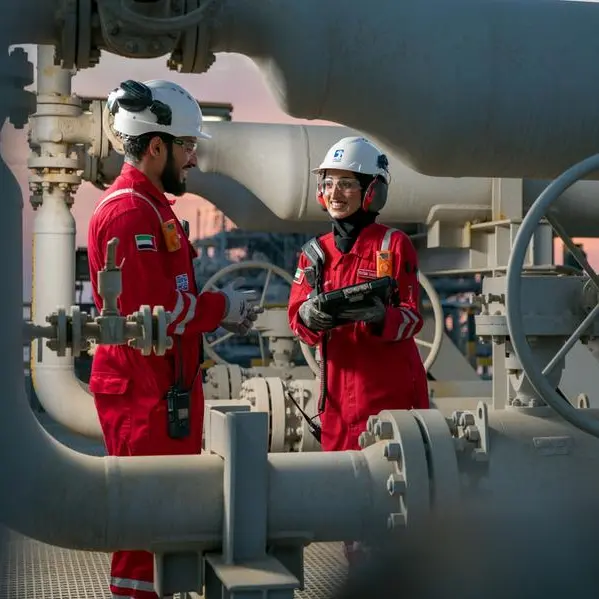
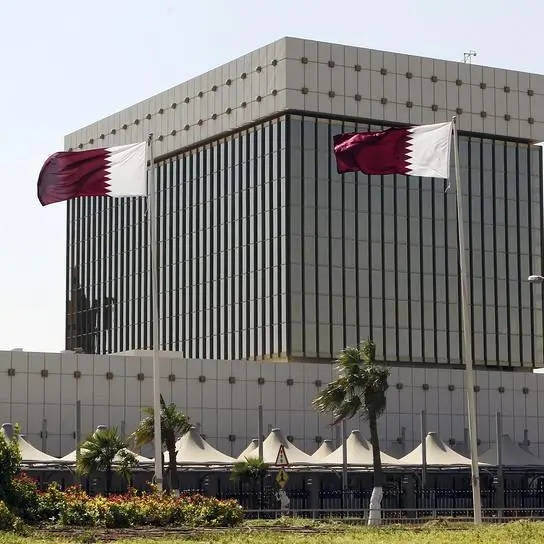
Gas-to-liquids (GTL) technology has taken a number of major strides towards full commercialization in 2006. While GTL is nearing the point where it can be said to be an established alternative for gas utilization, it still has some way to go before it lives up to its early promise. Although small-scale GTL plants have been producing for more than a decade in Borneo and South Africa, the first full-scale commercial operation will occur when Qatars Oryx GTL plant comes on-stream in the near future. The Gas-To-Liquids 2006 conference, organized by SMi Group in London on 23-24 October, heard progress reports on Qatars Oryx GTL and Pearl GTL projects, and on Algerias plans to widen its gas exports options through the Tinrhert Integrated GTL project. And while GTL schemes are still viewed as the province of large companies only, the conference heard how smaller firms might find a niche as the market matures.
Peter Cook, New Business manager at Oryx GTL, said first products from the project were now expected to be delivered in 1Q07, after delays during commissioning. There were some problems with the supporting utilities, he said. These resulted in delays, but repairs have been completed now and the start-up program is under way. Optimization of the plant had begun, and the plant start-up previously expected in 2Q06 would represent the dawn of commercial GTL. The success with Oryx is now to be mirrored in a sister project under construction in Nigeria, the Sasol Chevron/NNPC Escravos GTL plant, for which a $1.7bn development budget compares with the $1bn final cost expected for Oryx.
The Oryx GTL project is owned 49% by South Africas Sasol and 51% by Qatar Petroleum (QP), and was built on the massive complex at Ras Laffan which is being developed to utilize gas from the offshore North Field. The Oryx plant will take 330mn cfd of dry gas as feedstock, for conversion into 24,000 b/d of diesel, 9,000 b/d of naphtha and 1,000 b/d of LPG. The Oryx GTL plant also incorporates technology from Sasols GTL joint venture partner Chevron. The Sasol Chevron version of the three-stage GTL process comprises: the Haldor-Topsoe natural gas reforming process for the production of synthesis gas; Sasols Fischer-Tropsch process technology for conversion into liquid hydrocarbons; and Chevrons refining technology for product upgrading.
Oryx GTL Targets Blendstock Market
Mr Cook said that the Oryx GTL marketing strategy was to target the European market for sales of diesel and Asia for naphtha: Our main targets are refiners for blending applications. In the longer term we would expect to see the development of pure GTL product markets and niche applications such as urban transport fleets. The targeting of blendstock applications is a recognition that there would not be enough GTL volume availability at first to meet pure GTL liquids needs successfully, but that GTL products can enable refiners to improve product quality in the meantime as fuel specifications continue tightening.
Malcolm Wells, Communications Manager for Sasol Chevron, said a key achievement of the Oryx GTL development had been to prove the commerciality of the technology to the financial markets. Now GTL could be viewed as a viable alternative to pipeline and LNG for gas monetization by gas producing countries, and not just as an option for stranded gas exploitation. However, he added, GTL is currently a big boys game, and this is a function of where both the technology and the industry as a whole have progressed. The industry is still developing both markets and technology, so that there will be niche opportunities for smaller players as costs come down.
Pearl GTL Represents Major Scale-Up
Shell has been operating the Bintulu GTL plant in Borneo since 1993. This plant has capacity of only 14,700 b/d, but the Shell Middle Distillate Synthesis (SMDS) technology on which it is based is being scaled up for Pearl GTL. Robert Kretzers, Pearl GTL Project Director, said Shell and QP had recently taken the final investment decision on an integrated upstream/GTL project for which 1.6bn cfd of wellhead gas from the north Field would be used to produce 140,000 b/d of GTL products (diesel and naphtha) and 120,000 b/d of conventional hydrocarbons (ethane, LPG, condensate, paraffins and base oils). He envisaged start-up at the end of the decade, with development being undertaken in two phases. The official cost estimate for Pearl GTL is $4-5bn, although some Qatari officials have recently suggested the delivered cost may be as high as $10bn because of rising materials costs and the global shortfall of contracting capacity (MEES , 22 May).
Mr Kretzers said the offshore part of the upstream development would require the installation of two wellhead platforms in 30ms of water, each with 15 well slots and linked by pipeline (56km and 68km) to the shore plant. Initially 22 wells would be brought into production, and the drilling program would require two jack-up rigs. The onshore plant would comprise two 70,000 b/d capacity GTL trains and six other process plants with a total of 54 process units, along with export facilities. Utilities will be built between the two GTL units. The Pearl GTL plant will be built at Ras Laffan industrial city. A major consideration during the project planning was the fact that also under construction at Ras Laffan would be Oryx GTL, six LNG plants and a number of gas processing plants.
Although the final investment decision has only recently been taken, a considerable amount of work has already been done since the development and production-sharing agreement in 2004. Pearl GTL faces many challenges, said Mr Kretzers. Construction is a sellers market; there are record low base metals stocks; fabrication shops are full; and contractors are offering shorter bid validity and extended schedules. Our plan was to start early, and to take many decisions before the final project sanction. In 2005 we completed front-end engineering design, EPC tendering, ordering of Fischer-Tropsch reactors, and the award of development drilling contracts. In 2006 QP approved the development plan, and we completed the major lump-sump construction
contracts. We have started on site preparation and the construction of the offloading facility. By the end of 2006 we aim to have 90% of the projects value committed. Beside global construction capacity constraints, Pearl GTL had to compete with a bow wave of project activity at Ras Laffan: We had to schedule Pearl GTL behind the peak activity levels of the other projects to avoid this bow wave.
Tinrhert GTL Offers Gas Monetization Option To Pipeline And LNG
Algeria sees GTL as a way of diversifying its options for gas monetization, following the countrys development of numerous LNG plants and export pipelines, and views its well established gas production infrastructure as an opportunity to gain access to GTL technology. Abdelhakim Benaouda, Tinrhert Integrated GTL Project Manager for Sonatrach, said the project would include: development of 21 gas discoveries on Tinrhert block, exploration and development of deep formations on the license area, the optimization of oil recovery in seven mature fields, and the construction of a GTL plant. Sonatrach estimates Tinrhert block resources at: 220 bcm of gas in place in the 21 discoveries; 35mn cu ms of oil in place in seven undeveloped oil reservoir among the 21 gasfields; and 3mn cu ms of remaining oil in seven mature oilfields.
Sonatrachs base case plan envisages the production of 10mn cmd of sales gas, 5,000 cmd of NGLs and 4,000 cmd of oil, for which a 34,000 b/d capacity GTL plant would be developed. The base case would utilize existing pipeline facilities for export of oil and liquids and transfer of the gas. A higher case option for a 70,000 b/d GTL plant would require the installation of new gas and oil handling capacity. Tinrhert integrated upstream/GTL project was opened to tender in April 2005, and technical bids were submitted in September 2005. Three bidders have qualified for commercial bidding, due to take place in 1Q07: a consortium of PetroSA, Statoil and BHP Billiton; Sasol Chevron; and Shell. Mr Benaouda said that the commercial bids would be judged according to their incremental work programs, the gas transfer price to the GTL plant, and the opportunities for technology transfer. Sonatrach was looking for start-up of the GTL plant in 2012.
Whats Ahead
First production from the Oryx GTL plant will be a major milestone for the GTL industry. Pearl GTL shows how the technology can be scaled up even further, while the Tinrhert plans show how gas producers can find a place for GTL among their pipeline gas and LNG export plans. However, while the conference was keen to mark the commercialization of GTL, there was an awareness that there are more hurdles to leap before GTL becomes a fully-fledged global industry. Despite current high oil prices, many of the questions at the conference related to project economics. GTL has come so far because companies have been able to reduce costs per unit of built processing capacity to below the $20,000 per b/d level; but changes outside the GTL sector mean that economics remains a major challenge.
Projects in the near future will have to contend with much higher materials costs and an overloaded construction sector and still make the economics work, before new plans will be given the go-ahead. It is significant that, while most of the major international oil companies now claim to have a developed GTL technology, the two leading players Sasol and Shell are the ones which have been committed to GTL from the outset. Given that it will take at least four or five full-scale GTL developments before the industry can be said to be fully established, GTLs progress to maturity may take longer than the undoubted attractions of the technology initially suggested.