PHOTO
28 August 2017
The market for main contractors in the UAE has proved to be tough for the past three years, as a reduction in government spending in Abu Dhabi coincided with a decline in real estate prices in Dubai, causing many developers to either delay or postpone planned projects. Contractors have found themselves competing much more fiercely to win work, often at the expense of profit margins. At least two major international firms have also pulled back from the market as a result of competitive pressures.
Despite this, Kareem Farah, the chief executive of Dubai-based Engineering Contracting Company (ECC) argues that the best firms will soon have their pick of projects as more schemes related to Expo 2020 and the huge Dubai Creek Harbour project are tendered.
“We always like to be positive about the UAE,” says Farah. “It’s had its ups and its downs. But it’s always bounced back.”
He says that contracting is “a tough industry”, and argues that many firms were driven out of business in the wake of the global financial crisis. But, he said, a number of these were “cowboy contractors” out to make a quick buck.
“During the crisis, it [the industry] was cleaned and you were left with some of the very good contractors in town,” he says.
“For sure, there is always going to be competition. It’s never good to have a monopoly. I think there is enough work out there for everyone. I think there may even be too much work out there for the good contractors, between Expo, Dubai Creek Harbour and Sheikh Mohammed Bin Rashid City.
“I think when you talk about the good contractors, there is an abundance of work. And I think now the clients are starting to realise who the good contractors are and who they are wanting to do their business with.”
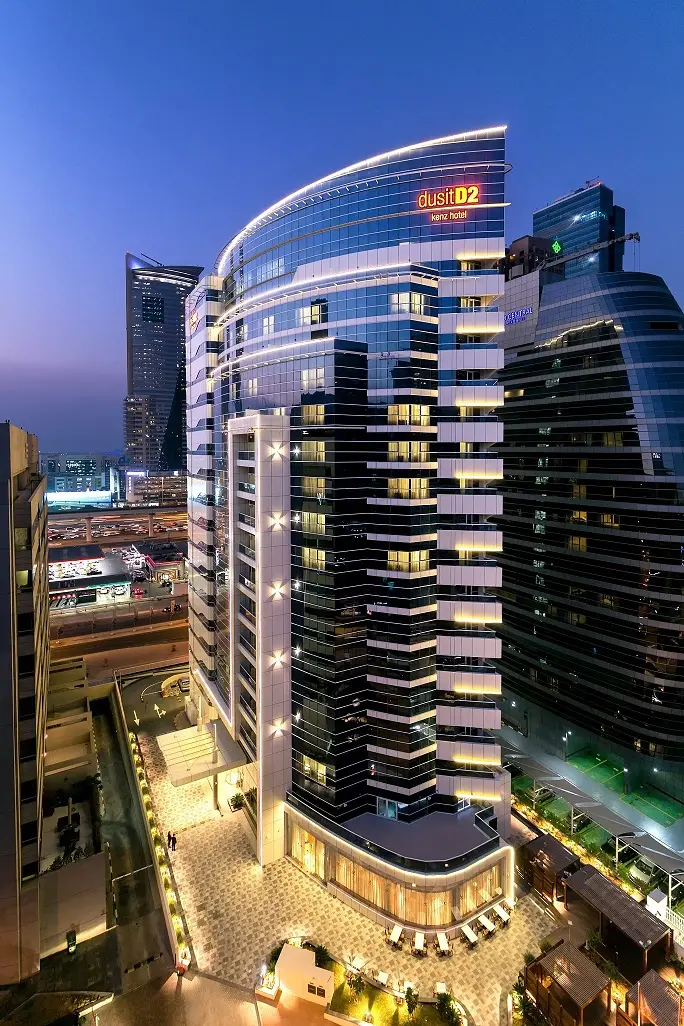
Dusit D2 Kenz hotel, Barsha Heights, image supplied by ECC
However, even with a busier workload, Farah does not believe that contractors have much scope for pushing up profits.
“I don’t think margins are going to improve. I think that the competition is still there,” he says.
A UAE Construction Intelligence Report produced last month by Faithful + Gould stated that about $22 billion worth of contracts were awarded in the first half of 2017, and that the market is on track for $45 billion to be awarded throughout 2017. This is only marginally ahead of the $43 billion of deals awarded last year, which was the most difficult year for the market since 2012, it said.
The report also said that tender price pressure “is still being exerted in the UAE even though the market for awards has improved”. It said there was “continued evidence of unsustainable low tender pricing.”
“The prices are known in the market,” says Farah. “You can’t really go and push your prices up too much. Plus, you don’t want to be seen as one of those contractors who took advantage of the client and gets too greedy,” he adds.
“Clients know roughly how much it costs to build a building and we always like to show that we can do it to the costs that they require. We still make our margin at the end of it, otherwise what’s the point of being in this business? But we’re happy with it.”
Farah says that his father, Hatem, who founded the company in 1975 and still heads the business as chairman, has preached the importance of trust.
“He's always saying that it takes a long time to build a reputation, [but] you can destroy it in two seconds.”
He says that his father built the business, which now employs about 8,000 people within different group companies, carefully by only taking on projects that he was confident of delivering.
“That has helped with creating the reputation we have in the market,” says Farah. “We have our clients who always come back to us and always give us repeat projects.”
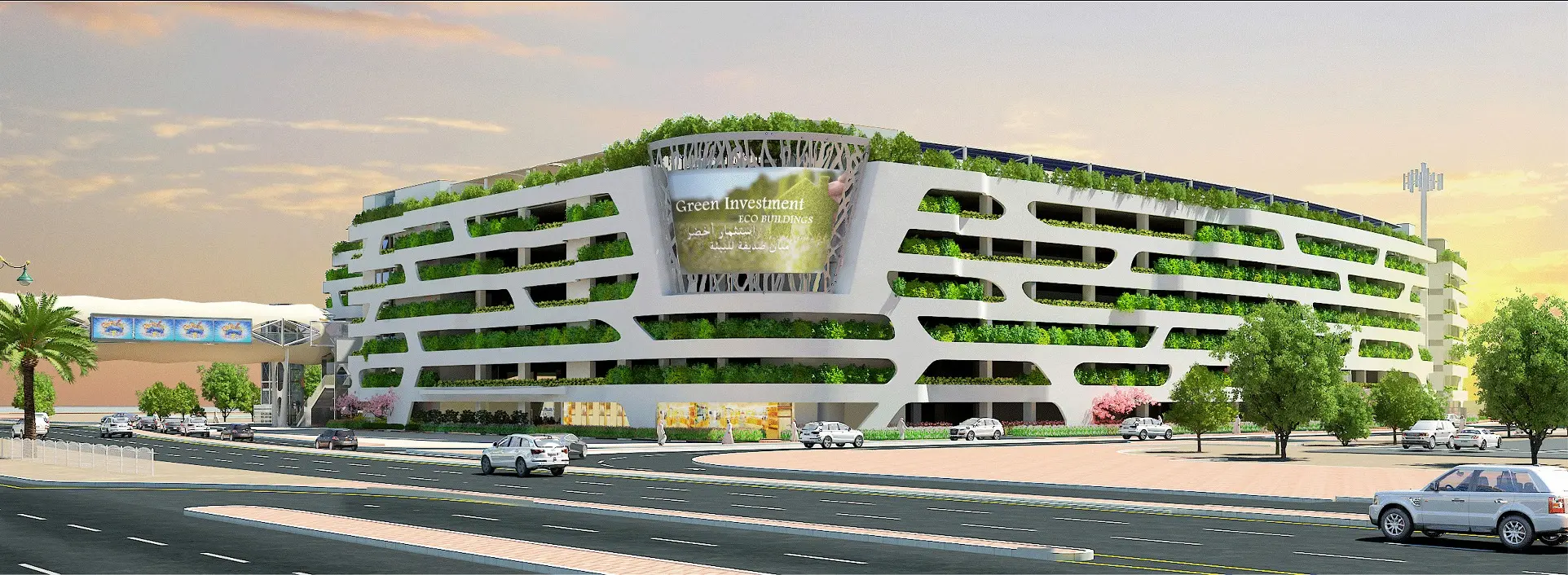
Image of the new DWTC car park being built by a joint venture between ECC and McLaren Group, supplied by ECC
Coming back for more
Emaar Properties is an example of this. ECC has carried out lots of past projects for the UAE’s biggest developer and is currently on site at its Dubai Hills joint venture with Meraas Holding. It has also built several projects for other prominent Dubai developers including Dubai Properties, Deyaar Development and Union Properties.
“We have a very good reputation with Emaar,” says Farah. “We did 1,300 villas in The Springs, we did the first eight buildings in the Greens.
“Emaar is a tough client, but they’re a great client,” he says. “They want their project on time and to the quality they expect. Timing is essential to them.”
The bulk of its current workload revolves around residential and hotel projects.
“We love a challenge,” says Farah. A project which is different and challenging that needs innovation… this is what we thrive off and that’s how we see ourselves as being different to the market as well.”
One current project which fits this bill is a contract that began in March to build a new multi-storey car park at Dubai World Trade Centre in a joint venture with UK-based contractor McLaren Group. The fast-track project to create more than 2,800 parking spaces in an 89,000 square metre structure is difficult, Farah explains, because access to the site is tricky and there are restrictions on the hours during which trucks can use Sheikh Zayed Road at the front of the centre. It also needs to be built within 12 months.
Similarly, the company faced issues in the delivery of the new Dusit D2 Kentz hotel in Barsha Heights, which was handed over to its client in May.
Farah says that building the 17 storey, 240 room hotel was difficult because work was taking place on a site where all of the buildings around it were already developed.
“We were sandwiched between two buildings. So having to handle the logistics, the sound – we didn’t want to disturb residents – and having to deliver on time and to the quality the client expects was quite challenging,” he says.
One method the company has of ensuring control over delivery is the fact that for many jobs, ECC is relying on subcontractors from within its own group of companies. These include metal fabrication company Prime Metal Industries, joinery and fit-out division Abanos and its mechanical, electrical and plumbing contracting arm United Masters Electromechanical.
“Having all of those groups of companies under one roof gives a better communication between all of the subcontractors, and ensures you have that co-ordination,” he says.
Talent trio
Abanos is run by Kareem’s older brother, Kamal, and younger brother Cian runs a property development arm known as Aurora.
“So my youngest brother is the client, I am his contractor and my oldest brother is my subcontractor. We joke about it, but at the end of the day we all sit and make decisions together.”
Farah says that the group grew revenue by 8 per cent last year and it expects to top that this year. Each of the divisions carries out external work for other contractors, and ECC invites external subcontractors to bid on its projects as well.
“If an outside subcontractor comes in with a better price than our subcontractors, then by all means we will go with them,” he says. “It’s always good to have good relationships with other subcontractors.”
In a note published last week, BMI Research said that although it was downgrading its 2017 forecast for the UAE to 2.2 percent GDP growth – from 2.8 percent previously, it expects Dubai’s economy to grow by 3.2 per cent as “the construction sector will continue expanding strongly” in the run-up to Expo 2020.
© Zawya 2017