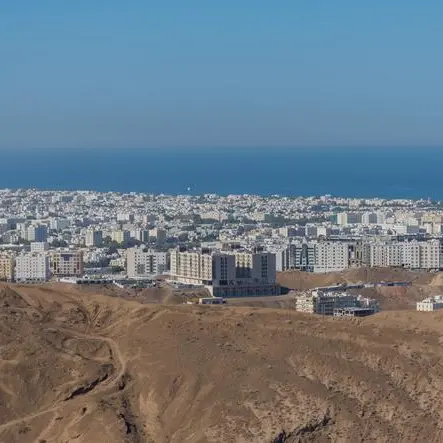
Kazakhstan was the unlikely host country for negotiations between Iran and Western states. While the talks were an utter failure, the event raised capital Almaty's international profile and helped president Nursultan Nazarbayev cultivate his country's reputation as a regional peace broker and power center.
The event management exercise will likely come in handy as the country prepares to host International Expo 2017 in Astana. The government plans to invest USD 1.5 billion on the event and showcase Central Asia's largest country as an economy with a global outlook and modern infrastructure.
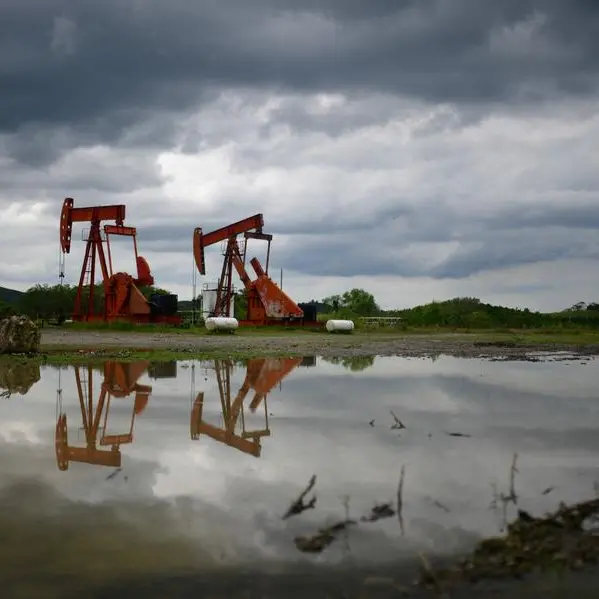
Expo 2017's theme is 'Energy for the Future' which is apt given Kazakhstan's hydrocarbon riches. The country's average daily crude output stood at 1.6 million barrels per day and sits on 3% of the world's proven oil reserves.
The offshore Kashagan and Kurmangazy oil fields in the Caspian Sea contain 14 billion barrels, with Kashagan accounting for around nine billion barrels - said to be the largest concentration of oil in a single field outside the Middle East.
National oil company KazMunaiGas, Italy's Eni, US ExxonMobil, Royal Dutch Shell and French company Total SpA each hold 16.8% in the Kashagan development, while ConocoPhillips has an 8.4% stake and Inpex holds 7.56% of the project.
Last week, China - a strategic accumulator of energy assets - also expressed an interest in buying ConocoPhillips' stake.
The development, which was expected to start production last year, will now begin the first phase of 110,000 bpd later this year, slowly ramping up to 406,000 bpd by 2020.
Petrodollar flow to rise
"Kazakhstan's exports likely will expand in the coming years, as new fields, particularly Kashagan, come online," said the US Department of Energy in a report. "However, the rapid growth of oil production and exports will require an expansion of export capacity."
Crude exports are the largest pillar in the Kazakhstan economy and the government will be keen to feed the sector and improve its infrastructure. National Fund of the Republic of Kazakhstan (NFRK), the country's sovereign wealth fund, plans to lend USD 1.5 billion to KMG this year and another USD 2.5 billion in 2014 to build the necessary facilities and keep the country's crude sector well-funded.
The continued investment in the oil industry has already paid dividends for the economy. The NFRK has amassed USD 57.8 billion in assets, excluding the USD 28.3 billion of international reserves held by the central bank.
"GDP is forecast to grow by 5.2% in 2013 and 5.6% in 2014, largely reflecting higher domestic demand, including investment spending under the industrialization program and the more active investment of NFRK assets," said the Asian Development Bank (ADB) in its latest report.
"Reserves are expected to remain largely unchanged from the end 2012, while higher oil prices further build NFRK assets, now projected to reach USD 75 billion, or 30% of GDP, in 2014."
Courting private investors
Of course, much will also depend on commodity prices and the economic performance of China, the European Union and Russia - Kazakhstan's key trading partners.
The country's GDP grew 4.5% in the first quarter of 2013, according to the country's statistical agency, which suggests economic growth will need to accelerate further to remain above the 5% mark.
A number of developments are under way to help reach that goal. Construction and development for Kazakhstan's Expo 2017 show will help expand government investment.
Meanwhile, the authorities adopted an agricultural program which will require USD 20 billion of public support till 2020. The ADB estimates that the initiative could attract three times as much in private investment. The government is also reforming public-private partnership rules to facilitate the financing of social and infrastructure programs.
A customs union agreement with Belarus and Russia, however, has not borne the fruits that were promised, especially as Kazakhstan stands to lose customs duties revenues on oil and gas exports.
In early March, deputy prime minister Kairat Kelimbetov told Russian officials that "lack of progress on the energy front could make the whole integration project unattractive for Kazakhstan, with domestic consumers already measuring the overall negative impact of the Customs Union on their purchasing power."
Georgiy Voloshin, an analyst at Jamestown Foundation, said "Kazakhstan is also dissatisfied with Russia's continued subsidies of the Belarusian economy, insisting on the necessity of fair mutual treatment and equal economic opportunities."
Kazakhstan has also threatened to divert its crude for processing to China rather than Moscow as it may secure a better deal with Beijing.
Vulnerable financial sector
The country's banking sector also came under considerable pressure since the global financial crisis and it has not entirely shaken off the weakness.
However, banks have benefited from the growing economy, which has enabled them to rebalance funding bases towards domestic sources, notes Fitch Ratings agency.
Banks' funding bases have benefited from continued inflow of retail deposits (up by 24% in 2012), which has helped to offset some volatility in corporate balances.
"At the same time, funding at some banks (in particular, Kazkommertsbank, Halyk Bank and BTA Bank) is weakened by significant reliance on concentrated corporate deposits placed by state-controlled entities."
Banking will be an area that the country will need to focus on, especially as the country plans to raise project financing for the numerous projects under way.
© alifarabia.com 2013