An intellectual autopsy of global banking disasters will surely provide the captains and kings of Gulf banking with real world lessons that should trigger risk management introspections in the broadest strategic perspective
There has been a quantum increase in the scale of global banking disasters that is not entirely uncorrelated with the trillion dollar daisy chains of leveraged hot money that define the international capital markets. The rogues gallery of international finance - Barings, Continental Illinois Bank, BCCI, LTCM, Morgan Grenfell, Bankers Trust, Lloyds of London - were not mutant offspring of new age casino finance but banks whose risk management systems were either flawed, anachronistic or nonexistent. Global banking disasters in modern times have stemmed from FX trading losses, speculation in real estate, mismanagement of the balance sheet, political interference in bank board rooms, outright fraud, rogue CEOs, client lawsuits and inability to manage hyper growth. An intellectual autopsy of these Euromarkets banking cadavers will surely provide the captains and kings of Gulf banking with real world lessons that should trigger risk management introspections in the broadest strategic perspective.
As a financial futures executive with Chase Manhattan Bank in New York (Ironically, Chase was Baring's clearing bank in Singapore) at the time of the Baring Brothers disaster, I still do not believe the collapse of the venerable, 190 years old London merchant bank should be attributed to a 28 year old rogue trader with two "0" levels, named Nick Leeson. Sure, Leeson was guilty of outright deceit, colossal bad judgment and even fraudulent behaviour as Baring's chief dealer on the Singapore International Monetary Exchange (SIMEX). But the fault, dear Brutus, for Baring's downfall lay not in the stars or Leeson's notorious 88888 error account but in the clubby aristocratic yet incompetent management culture of a family-owned bank with Stone Age risk management systems which totally failed to arrest Leeson's fatal plunge into financial Armageddon.
Sir Peter Baring, the bank's blue blood chairman and a product of Eton, Oxbridge, and the sort of old-fashioned nepotism rampant in family owned Gulf banks, was unable to assert any leadership in the age of complex, high tech finance. He allowed Leeson control over both the trading and settlements function at Barings, violating a cardinal rule of capital markets risk control. He failed to hire executives with the skill set or intellect to supervise a complex, multi-billion dollar equity derivatives trading empire half a world away in the Pacific Rim. In fact, the merchant bankers who ran Baring Brothers knew nothing about trading, even though Leeson's Singapore office suddenly began to show hundreds of millions in paper profits from a supposedly low risk, matched book arbitrage operation between the Nikkei Dow contracts in SIMEX and Osaka. It is inconceivable to me that Baring senior management was unable to distinguish between the unlimited risk potential of a naked short straddle and a low risk stock index arbitrage. A short straddle will generate option premium 'earnings' when markets are stable but ruinous losses when volatility in the capital markets spikes higher.
The lessons of Barings for Gulf bankers?
Rogue traders can hit profits but incompetent senior management and rogue CEOs can bankrupt a bank. Has a Barings happened in Gulf banking? Absolutely. For instance, a rogue CEO decided to speculate in Internet shares during the tech bubbles of 1999 and led to the collapse of a Bahraini bank. A Sharjah bank's capital was wiped out in 1992 after untold millions were lost punting on sterling amid allegations of fraud and payoffs to brokers. It is not as if the interbank market in the UAE was unaware that something bizarre was going on in the obscure Sharjah bank - its chief forex trader boasted that he was nick named "the Bank of England" in the Gulf money markets for the sheer size of his sterling trades. I was horrified to learn, during a mercifully short stint as chief dealer with a UAE bank, that the CEO's short straddle (the Leeson strategy) trades on the SP500 index futures contract were a taboo for discussion in either ALCO or with central bank auditors who rightly questioned the size and rationale of his trades. As a chief dealer in a UAE bank treasury with no power to restrain a CEO enamored of short straddle SP500 futures speculation, I decided I did not want to share the fate of Nick Leeson's bosses as Barings and promptly jumped ship to a non-bank job in Dubai.
I doubt if senior executives in Gulf banking, often retail commercial bankers or government appointed CEOs reporting to rubber stamp boards, understand the multidimensional complexities of global capital markets and securities trading.
This is particularly so in Islamic finance, where there is no central bank lender of the last resort or hedging instruments available in the interbank money market. For instance, are Gulf banks really marking to market all the billions in leveraged LIBOR accrual notes that they are selling to investors? Do the Gulf banks, which invest depositor funds in hedge funds, really conduct on site due diligence in an area of finance where domain expertise is nonexistent in our region or is it just "name investing" with the hope that the next LTCM blowup does not happen on your watch?
The near collapse of Credit Lyonnais in the 1990s demonstrates the extent to which state owned banks are vulnerable to political interference, a phenomenon not unknown across the Arab world. Credit Lyonnais and its megalomaniac CEO, Jean-Yves Haberer, were financial time bombs for the Elysee Palace. France's elite corps of bureaucrats and government ministers, all cronies of the CEO were unable to restrain his disastrous expansion into international lending, Haberer bank rolled some of the sleaziest, high risk ventures in global finance - Hollywood movies, London's Canary Wharf, politicized real estate loans in France, equity stakes in companies owned by President Mitterrand (the CEO's patron) & cronies, junk bond deals in California financed by offshore slush funds, even loans to Italian Mafiosi film financiers. Within five years of taking over as CEO, Haberer had placed the savings of eight million depositors and the prestige of France in the international financial markets at grave risk. Credit Lyonnais was crippled in the 1990s and triggered a 100 billion French Franc bailout. Strangely, a succession of fires in the bank's trading room, Paris head office and Le Havre depots destroyed countless documents related to the bank's worst property deals. All through the 1990s, the Banque de France, whose boss was current ECB President Jean Claude Trichet, glossed over the scale of Credit Lyonnais losses, misreported its precarious financial condition to conceal their own failure to supervise and regulate and generally protected French political elite from the global fallout of the bank's failure.
The lessons of the Credit Lyonnais fiasco for Gulf banking are obvious enough. Banks with 'godfather' corporate cultures, an imperial CEO who runs a one-man show, are a definite recipe for disaster. BCCI's Agha Hassan Abedi, NCB's Khalid Bin Mahfouz and NBO's Aubyn Hill were autocratic. CEOs who led the banks they ran into terminal ruin. State-owned banks where the government appoints the CEO, controls a rubber stamp board and acquiesces in a meek central bank regulatory umbrella are an all too common phenomenon in Gulf banking. The basic lesson of the Credit Lyonnais scandal is that property is one of the riskiest investments a banker can make. When property booms go bust, as they inevitably do, banks are loaded with illiquid collateral of dubious value.
After all, when the UAE real estate market crashed in the mid-1990, it resulted in the forced merger of several private banks amid massive government bailouts. The Emirates Bank, for instance, was formed out of the remnants of Dubai Bank, Union Bank of Middle East and Middle East Bank - banks once founded and controlled by the A.R. Galadari, A.W. Galadari and Al Futtaim business groups. The current property boom in the Gulf has magnified the scale of banking exposure to the sector. Unlike Credit Lyonnais, Gulf banks are too small to even claim a globally diversified property portfolio and sector concentration risk is dangerously high. It is all too easy to gloss over property lending risk when the interest rates are low and bankers are swimming profitably in the credit bubble land. But what happens when the music stops? What happens when oversupply and rising interest rates trigger a property demand shock, as happened in the US and Britain in 1991 or Hong Kong in 1997 or even right here in the UAE back in the 1980s? What kind of world class risk management systems are we to expect from bankers who provided ten times leverage on phantom IPOs, floated new issues with five-page disclosure documents or bet their entire credit book on name lending at razor thin LIBOR spreads to corporates which often refuse to disclose their balance sheets?
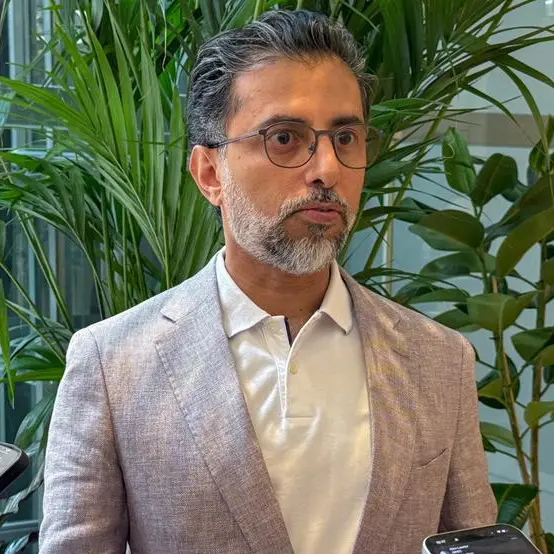
I am a Wharton MBA, a derivative and emerging market veteran with Wall Street banks and hedge funds. Risk is my lifeblood and my livelihood. However, some of the risk management lapses I see in Gulf banking make a chill run up my spine. The lessons of Baring Brothers, Credit Lyonnais, BCCI and even Bankers Trust are not ivory tower cerebral games, even though I have now acquired a professional incarnation to complement my other careers as an investment banker and a financial journalist. Gulf bank CEOs may do well to heed the words of banking legend
Prof. Matein Khalid
© Bankers Digest 2005