PHOTO
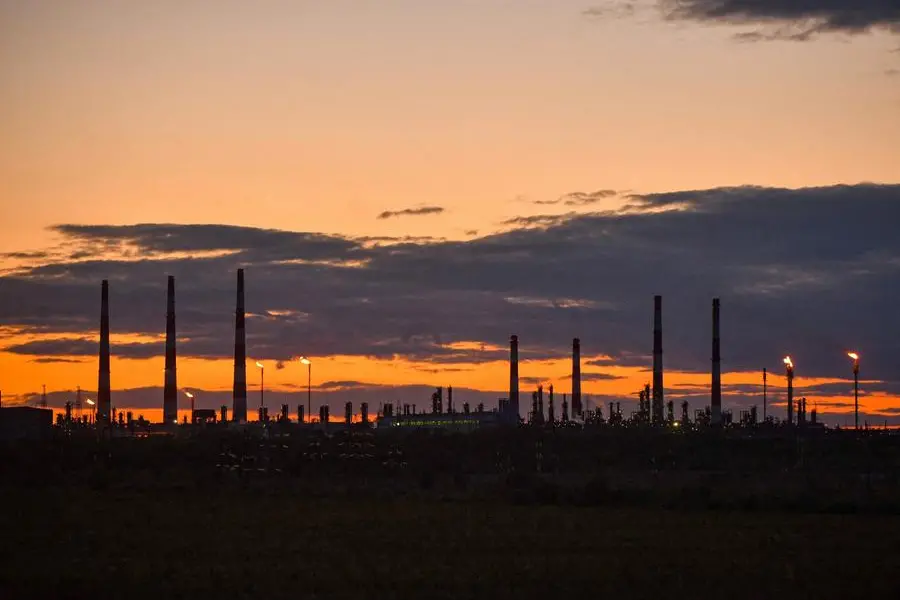
ALMATY/ASTANA - Oil majors, including Chevron and Shell, have reduced oil and gas output at a top Kazakhstan field after a Ukrainian drone strike damaged a gas processing plant in Russia that supports their operations, the companies said on Tuesday.
The strike on the Orenburg gas plant, located about 1,700 km (1,056 miles) east of Ukraine, marks the first known incident in Kyiv's campaign against Russian energy infrastructure to disrupt the operations of Western oil majors abroad.
Kazakhstan's energy minister, Erlan Akkenzhenov, said on Tuesday the Karachaganak oil and gas condensate field had reduced daily production by between 8,500 metric tons (66,810 barrels) and 9,000 tons following the strike.
He added that he hoped restrictions on production would be lifted within three days.
Speaking to journalists in the Kazakh capital Astana, Akkenzhenov said that restrictions on shipping Kazakh gas to the Orenburg plant would have "a certain economic impact", but that it would not affect the domestic fuel market.
Raw gas from Karachaganak is usually delivered across the border to the Orenburg processing plant. Oil and gas output at Karachaganak is closely linked, meaning the field is not able to produce much oil if its gas production is down.
PRODUCTION CUTS HIT MAJOR OILFIELD
Karachaganak is operated by a consortium comprising U.S. major Chevron, which holds 18%, and European energy firms Shell and Eni, which both own 29.25% each.
Russia's Lukoil and Kazakhstan's KazMunayGaz also hold stakes of 13.5% and 10%, respectively.
Energy and minerals giant Kazakhstan accounts for around 2% of global oil production, most of which is shipped to world markets via Russia.
The operator of the Karachaganak oil and gas condensate field told Reuters earlier on Tuesday that it cut production volumes following "an incident" at Russia's Orenburg plant.
On Monday, two industry sources told Reuters that a Ukrainian drone attack on the Orenburg gas processing plant, one of the world's largest, forced neighbouring Kazakhstan to reduce production at the Karachaganak field by 25% to 30%.
KARACHAGANAK FIELD SLASHES DAILY OUTPUT
Output at Karachaganak on Monday fell to between 25,000 metric tons (196,500 barrels per day) and 28,000 tons from the usual level of 35,000-35,500 tons, according to two sources who spoke on condition of anonymity due to the sensitivity of the situation.
Ukraine, which has stepped up strikes on Russia's energy facilities in recent months, confirmed on Monday that it hit a gas plant in the Orenburg region and an oil refinery in the Samara region.
Kazakhstan's energy ministry also said on Monday that Karachaganak trimmed production. The operator did not provide production data.
The ministry said production at Karachaganak was expected to return to normal once operations at the Orenburg plant, with gas reception at the facility anticipated soon.
Kazakhstan introduced sweeping price controls on fuel and utility tariffs last week, amid accelerating inflation which was at 12.9% in September amid fallout from the Ukraine war.
In February, a separate Ukrainian drone strike on a pumping station serving the CPC briefly disrupted oil loadings at Novorossiisk, underlining the vulnerability of regional energy infrastructure to the widening conflict.
(Reporting by Mariya Gordeyeva in Almaty and Tamara Waal in Astana; Writing by Lidia Kelly in Melbourne and Vladimir Soldatkin; Editing by Lincoln Feast and Louise Heavens)