Early iftar and delayed suhour is the way to a healthy eating regime in Ramadan, according to one expert.
As part of a campaign to promote healthy and safe dietary habits during the holy month, Dr Abdulla A Fayyad, American Board Certified in Gastroenterology and Hepatology, and a member of the American College of Gastroenterology and American Gastroenterological Association, says longer time between the two meals is the best way to approach Ramadan.
"Hastening the Iftar and delaying Suhoor will enable the fasting person to have two meals a day, which is the basis for eating healthily during Ramadan," says Dr Fayyad, who practises at the American Hospital Dubai.
During the holy month, Muslims perform more religious rituals, including prayers, fasting and night prayers, and it is also a very social time when families watch TV, meet friends and relatives, and spend evenings together.
According to Dr Fayyad, there are some simple basic rules to follow during Ramadan, which include slowly breaking the fast at iftar, with a balanced meal and no dessert, eating enough to fill the stomach but not over-eating.
"When feeling full, it is advisable either to clear the dining table of food, or to move away from the table, so there is no temptation to overeat," he says.
Suhoor is an essential meal in terms of health, according to Dr Fayyad: "The body needs this meal because having only one meal (Iftar) for the whole day is not a healthy habit. For people who are used to sleeping early and waking up early, it is better to have Suhoor on waking up.
For those who are used to sleeping late, waking up at dawn for Suhoor and then going back to sleep, it is advised to have a relatively light meal at Suhoor."
Suhoor should be a rich meal, he says, to replace breakfast, and should include carbohydrates (such as bread) and protein. It is also better to avoid basic sugars (such as sugar) and desserts, which lead to feeling hungry again, a few hours after eating.
The doctor stresses the importance of the family at Suhoor: "Eating Suhoor together as a family helps the family bond and makes the children more excited about fasting. It is better not to let the children have Suhoor alone (in terms of health and psychology) as they may be more likely to skip this important meal."
Certain foods and drinks are avoided during Ramadan, and Dr Fayyad adds a note of caution for those special medical conditions: "People who suffer from diabetes, high blood pressure or heart conditions should consult with their physicians before fasting, to ensure they protect their health during Ramadan."
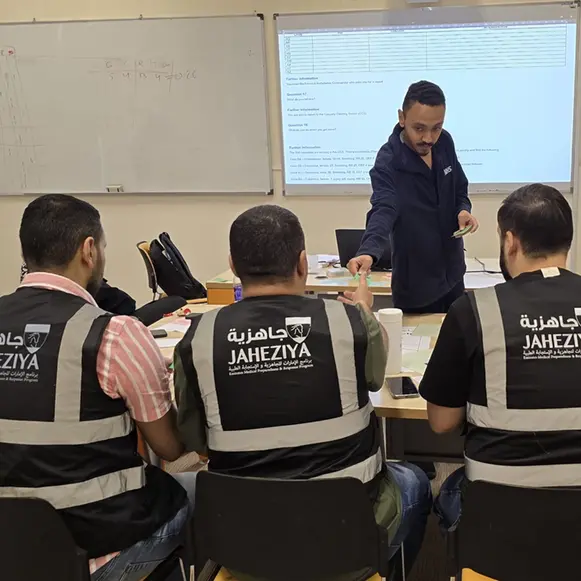
Dr Fayyad has already begun a series of presentations on 'healthy eating during Ramadan'.
The first presentation was held recently for staff at the head office of the Roads and Transport Authority (RTA) in Dubai, and further presentations are planned for the Dubai Chamber of Commerce & Industry, and Petrofac Dubai.
By Staff
© Emirates Business 24/7 2010