PHOTO
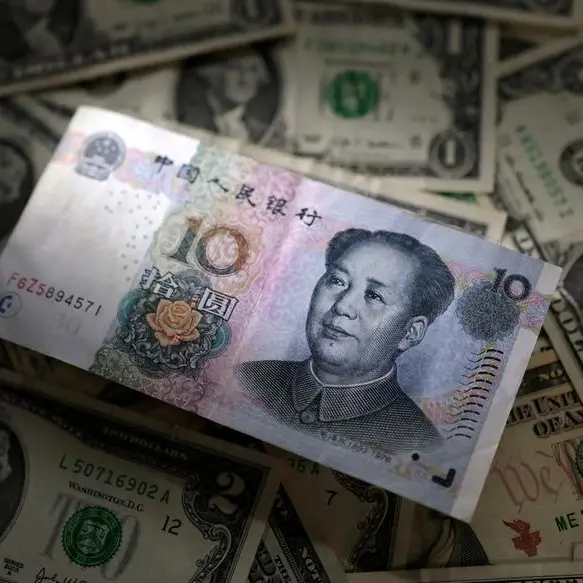
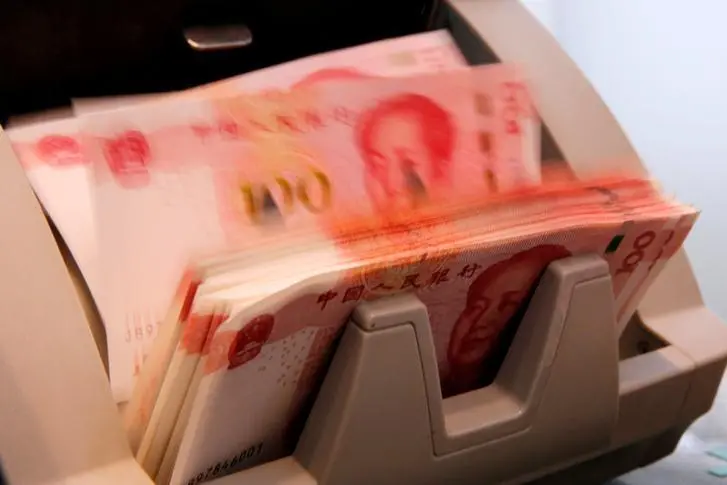
China's yuan climbed to a 15-month high against a weakening U.S. dollar on Tuesday, even as the central bank signalled rising unease over the currency's recent rally via its official guidance fix.
The onshore yuan ended the domestic trading session at 7.0287 per dollar, the strongest such close since September 30, 2024.
Its offshore counterpart fetched 7.0181 around 0830 GMT.
The Chinese yuan has gained more than 3.8% so far this year and looked set to book the biggest annual rise since 2020, supported by broad dollar weakness, easing trade tensions with the United States and resilient Chinese exports.
Global investment houses expect the yuan's upward momentum to extend into the new year and test the psychologically important 7-per-dollar mark, less than half a percent from the current level. Most forecast only a modest appreciation.
"I think China will allow the yuan to appreciate at a measured pace but it won't allow big shifts to avoid one-way bets and casting instability," said Kelvin Lam, senior economist at Pantheon Macroeconomics.
"Instability in the face of a weakening of the Chinese economy is the last thing you want," Lam said, predicting the yuan will finish 2026 at 6.95.
Prior to market open, the People's Bank of China set its yuan midpoint rate at 7.0523 a dollar, the strongest since September 30, 2024 though weaker than a Reuters estimate of 7.0267.
The gap between the official midpoint and Reuters' market-based estimate represented the largest weak-side deviation since data became available in 2022.
Currency traders interpreted the softer-than-expected guidance as an attempt to rein in a yuan rally.
Strength in the currency was also underpinned by heavier seasonal demand, traders said, as exporters usually convert more of foreign exchange receipts into the local currency to meet various payments, including administrative requirements and for employees, toward the year-end.
Major state-owned banks were seen buying dollars and selling yuan in the onshore spot market to slow yuan gains, people with knowledge of the matter said.
China's trade surplus topped $1 trillion for the first time in the first 11 months of this year. However, other indicators point to the world's second-largest economy stalling in November, with factory output and retail sales growth slowing as a lingering property crisis weighs on consumer and business sentiment.
(Reporting by Shanghai Newsroom; Editing by Christopher Cushing and Tomasz Janowski)