PHOTO
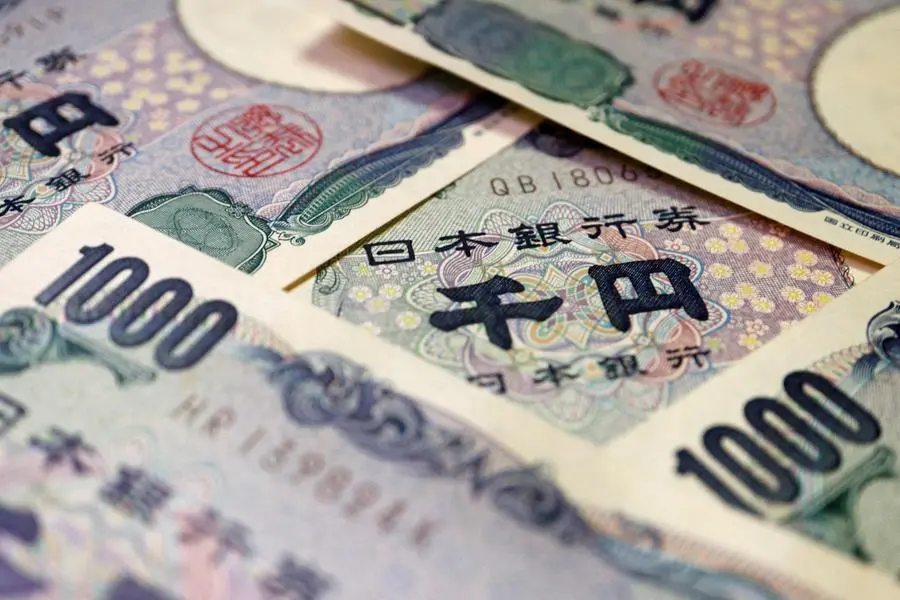
SINGAPORE - The yen surged on Wednesday as investors bet that Prime Minister Sanae Takaichi's landslide election victory puts her in a strong position to control fiscal policy going forward.
Elsewhere, the Aussie broke above $0.71 for the first time in three years.
The dollar was left wobbling in the face of yen strength ahead of the key U.S. non-farm payrolls report due later in the day, with weaker-than-expected economic data released on Tuesday adding to downward pressure on the greenback.
The yen jumped nearly 1% against the dollar to 152.94 in Asia, building on a 1% rise in the previous session that also saw it rally against other currencies.
The euro fell 0.7% to 182.27 yen after a 1.2% drop on Tuesday, while sterling extended the previous day's 1.3% fall against the Japanese currency to be down 0.73% at 209.04 .
Trading was thinned in Asia due partly to a holiday in Japan.
"Such a sweeping victory hands the Takaichi regime better control over the JGB-bearish and the yen-bearish aspects of the so-called Takaichi trade," said Vishnu Varathan, Mizuho's head of macro research for Asia ex-Japan.
"She can have a more coherent fiscal policy... she's definitely got a plan which is going to make numeric sense, so there should be less doubt around that. What she needed was the political capital to pull it off, without having to make multiple compromises to many parties who want to do more (stimulus)."
The yen and Japanese government bonds have risen in the wake of Takaichi's resounding win while investors have also poured into Japanese stocks in anticipation of stimulus flowing to consumers and Japan Inc.
Foreign inflows into Japanese equities increase demand for the yen.
"There are positive signals that more market-friendly policies may be on the horizon," said strategists at Deutsche Bank in a note, adding that they have closed a bet against the yen and are now neutral on the currency.
"Since Davos, and especially post the election, the government has been reactive to market moves and attempted to calm JGB markets. There may also be a delay of the promised consumption tax cut."
HAWKISH OUTLOOK
The Australian dollar broke above $0.71 for the first time since February 2023. It last traded 0.53% higher at $0.7112.
Reserve Bank of Australia Deputy Governor Andrew Hauser said on Wednesday inflation was too high and policymakers were committed to doing whatever was necessary to bring it to heel.
"We have upgraded our Aussie dollar view... the end-year forecast is $0.73 from $0.69," said Moh Siong Sim, a currency strategist at OCBC.
He noted the RBA's rate hike last week to 3.85% was the first in the G10 outside of Japan and "that hawkish hike will put additional focus on whether the RBA would follow with more hikes down the road."
Markets imply around a 70% chance rates will rise to 4.10% at the RBA's May meeting, following the release of first-quarter inflation figures.
Across the Tasman Sea, the New Zealand dollar was up 0.3% at $0.6061.
WAITING ON PAYROLLS
Going forward, U.S. jobs data is the main market focus on Wednesday, with expectations non-farm payrolls rose 70,000 in January. The unemployment rate is seen holding steady at 4.4%.
Ahead of the release, the dollar was on the back foot, with the euro trading 0.16% higher at $1.1914 while sterling similarly rose 0.13% to $1.3658.
Against a basket of currencies, the greenback was down 0.33% at 96.60.
Overnight, the U.S. posted slower-than-expected retail sales in December, while a separate report showed growth in U.S. labour costs unexpectedly slowed in the fourth quarter.
"Tonight's non-farm payrolls for January will be more important for the FOMC policy outlook," Carol Kong, a currency strategist at Commonwealth Bank of Australia, said in a note.
"We expect the run of below consensus payrolls to continue and weigh on the USD."
White House economic adviser Kevin Hassett said on Monday that Americans could see smaller job growth numbers in the coming months due to lower population figures and higher productivity.
Markets are now pricing in about 60 basis points worth of easing from the Federal Reserve by December, even as some policymakers said rates could remain on hold for some time.
(Reporting by Rae Wee Editing by Shri Navaratnam and Neil Fullick)