by Laurent Lozano
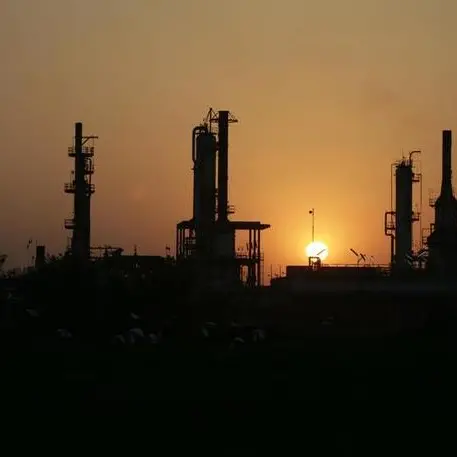
WASHINGTON, May 12, 2008 (AFP) - As he travels to the Middle East this week, President George W. Bush is expected to press US ally Saudi Arabia to do more to contain runaway oil prices which threaten to depress both the US and world economies.
Bush departs Tuesday on his Mideast travels, with a return set for May 18.
His visit to Saudi Arabia commemorates the 75th anniversary of the formal establishment of US-Saudi relations.
The White House has said Bush will stress US concerns about soaring oil prices when he meets King Abdullah in Saudi Arabia on May 16, and is expected to press the Saudis to boost their oil production as a way of curbing spiraling fuel prices.
"I have made the case that the high price of oil injures economies. But I think we better understand that there's not a lot of excess capacity in this world right now," Bush told a press conference late last month.
"Hopefully high prices will spur more exploration to bring excess capacity on, but demand is rising faster than supply. And that's why you're seeing global energy prices rise."
The US leader, a former oil company executive, is said to be especially eager to avoid spiraling oil prices in the months leading up to the November presidential election, which could scuttle presumptive Republican candidate John McCain's hopes to succeed Bush in the White House.
"I think that if there was a magic wand, and say, okay, drop price, I'd do that," Bush said last month. "But there is no magic wand to wave right now."
Analysts said it was unclear that the Saudis have any more power to control the ratcheting prices than the Americans.
"If it came down to answering the question: If Saudi Arabia was able to lower prices would they, I think the answer is yes," said James Williams of West Texas Research Group Economics.
"The real question is, in this environment, are they able to do it? And the answer is, I don't know," he added.
Williams said that producing more oil may not prove effective in dropping prices. But an even bigger worry than inflating oil prices, he said, is a potentially precipitous price drop.
"If stocks build up at a time of recession, it creates the possibility of an unmanageable collapse in oil prices," he said.
"If a weak US economy was contagious and it hits Asia, oil could drop like a rock," he said.
Oil prices retreated slightly Monday, but still remained at near historic highs. At Monday's close they were at 124.23 dollars a barrel, down one dollar from Friday, although crude prices still remain close to historical highs.
John Alterman of the Center for Strategic and International Studies issued a caveat of a different sort, warning that the US president should not be too hopeful about winning Saudi cooperation.
"In past years, the Saudis have really put themselves out to help American presidents," Alterman said, adding that "they're not really going to put themselves out to help this president."
Washington, he said, will be hampered by the legacy of its massive missteps in Iraq and elsewhere around the globe over the past few years.
"There is suddenly a need to hedge against US incompetence. That changes the whole way these meetings go, and it changes what happens when the US president says I really need you to do this," Alterman said.
The president's Mideast trip will celebrate America's close ties with Israel on the occasion of the 60th anniversary of the Jewish state, and will highlight US cooperation with its Mideast allies in the fight against global terrorism.
Bush was to meet with Israeli President Shimon Peres and Prime Minister Ehud Olmert in Israel before heading to Saudi Arabia for talks with King Abdullah.
The US leader was also to meet Egyptian President Hosni Mubarak, Palestinian president Mahmud Abbas, and deliver remarks at the World Economic Forum on the Middle East, at the Egyptian Red Sea resort of Sharm el-Sheikh.
lal/sg/fgf
US-Mideast-Israel-Saudi-oil-diplomacy