PHOTO
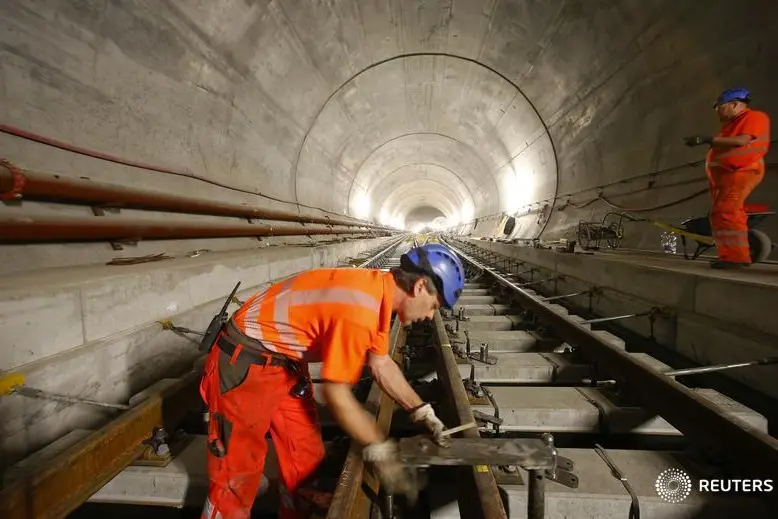
The latest plans for the proposed metro rail system, estimated to cost anything between $1 billion and $2bn, have been presented to councillors.
Senior Transportation and Telecommunications Ministry official Hussain Yaqoob revealed at the Muharraq Municipal Council meeting that the first phase of the project will focus on a 28.6km segment out of the total 109km-long line.
Eventually the project will feature 20 stations across Bahrain. The rail lines will link into a new King Hamad International Station and join the GCC railway network.
Work will start from Bahrain International Airport to the Educational Area in Isa Town covering Salmabad, Juffair, Seef, Bab Al Bahrain Area and Al Farouq Junction.
Mr Yaqoob said the four stations in Muharraq will all be located on the Airport Highway.
The main station location at the airport is currently under review with Bahrain Airport Company (BAC).
The three other station locations are King Hamad University Hospital, Muharraq Health Centre and Oasis Mall.
The GDN earlier reported that the first phase would cost around BD500 million to BD600m.
A consortium of consultancy firms have been assigned by the ministry in March to handle the financial, technical and legal aspects of the project’s transformation to the next phase.
“In 2016, a study by a Spanish consultancy firm addressed how we can introduce the rail system to serve residential, commercial and industrial areas besides other areas of mixed use depending on the highest of density,” said Mr Yaqoob, who is ministry land transportation projects land transportation planning and studies acting director.
“The first phase out of four will cover around 28.6km with our main starting point obviously being the airport with all four stations in Muharraq located on the Airport Highway. People will be able to move around on reliable, fast and cheap public transportation,” he added.
“There will be special rates for the elderly and students at all stages as we expect the project to be hopefully ready by 2030.
“We are now working on the prequalification of the project and whether it is a ‘build-operate-transfer’ (BOT) or operated solely by the private sector.”
Under a BOT contract, a government grants a concession to a private company to finance, build and operate a project.
“We have to clearly know the financial costs and rewards of the project and initial indicators show positivity, but again we need to continue studying international markets,” he added.
Mr Yaqoob added that the electric driver-less trains are capable of carrying 43,000 passengers per hour.
“We’re working on a sustainable transportation system and are interested in new technologies that are not yet introduced in the market to optimise the network, routes and to appeal to tourists too,” said Mr Yaqoob.
“All technologies will have to take into account that the surroundings are not adversely affected and our 90 per cent Bahraini team is working effortlessly on that.”
Council chairman Ghazi Al Murbati said limited size of the area will continue to be a challenge.
“People’s lives could be affected due to Muharraq being of limited space with a huge population, visitors and traffic, especially with the airport expansion,” he said.
“We need more details about the first phase and how work will be conducted and what impact it will have on the lives of people living in Muharraq.
“The project is fine and there may have to be further studies carried out should there be a demand to increase the number of stations once the project is operational in 2030.”
Bahrain’s nationwide monorail network was first proposed and approved by the Cabinet in 2008, but stalled shortly afterwards due to the global financial crisis.
On October 6, 2015 new bids for the construction of the light rail network were invited by the Tender Board, as part of Bahrain’s section of a pan-Gulf railway.
The GCC Railway will connect a cargo station in the Khalifa Bin Salman Port in Hidd and a passenger terminal in Salmabad to a train station in Saudi Arabia.
Bahrain’s section of the railway project, from the station in Hidd to the station in Saudi, will extend 75km, including the upcoming 25km King Hamad Causeway.
Transportation and Telecommunications Minister Kamal Ahmed said his team was working on ‘project preparation’ but there was currently no confirmed start date as financing still needed to be allotted.
Once a contractor has been assigned it would take ‘five to seven years’ to complete phase one, he added.
mohammed@gdn.com.bh
© Copyright 2020 www.gdnonline.com
Copyright 2020 Al Hilal Publishing and Marketing Group Provided by SyndiGate Media Inc. (Syndigate.info).