PHOTO
Aster DM Healthcare, a major private sector healthcare companya based in the United Arab Emirates, plans to invest 250 million dirhams ($68.1 million) in new projects in its home market over the next two years, as well as expanding its hospital in Saudi Arabia, the company’s chairman and managing director has said.
Speaking to Zawya in a phone interview last Thursday, chairman Azad Moopen said his company is currently not considering entering the Egyptian market due to fears over the fluctuation of the Egyptian pound, and the ability to freely move foreign currency out of the country.
“Egypt is (a) country which has got a significant investment opportunity... ‘Why we haven’t gone there?’ It is mainly because of the currency fluctuation and (the issue of) taking money or bringing money out of the country,” Moopen said.
Asked if Aster has plans to enter the Egyptian market in the next one or two years, Moopen answered: “Immediately, no, we are not entering”.
Aster DM Healthcare runs a chain of hospitals, pharmacies and health facilities in Saudi Arabia, the UAE, Qatar, Bahrain, Oman, India and the Philippines, according to the company’s website. It undertook an initial public offering (IPO) of its shares on the Indian exchanges last year. It raised 9.80 billion rupees ($153.34 million) and was subscribed 1.3 times on the last day of the sale, according to Reuters.
Moopen said Aster’s plans in the coming few years is to focus on the Middle East, mainly Saudi Arabia and the UAE, the Arab world’s two biggest economies.
“UAE and Saudi Arabia are very good markets for growth for hospitals, pharmacies and clinics and all the healthcare related-issues,” Moopen added.
UAE and Saudi Arabia
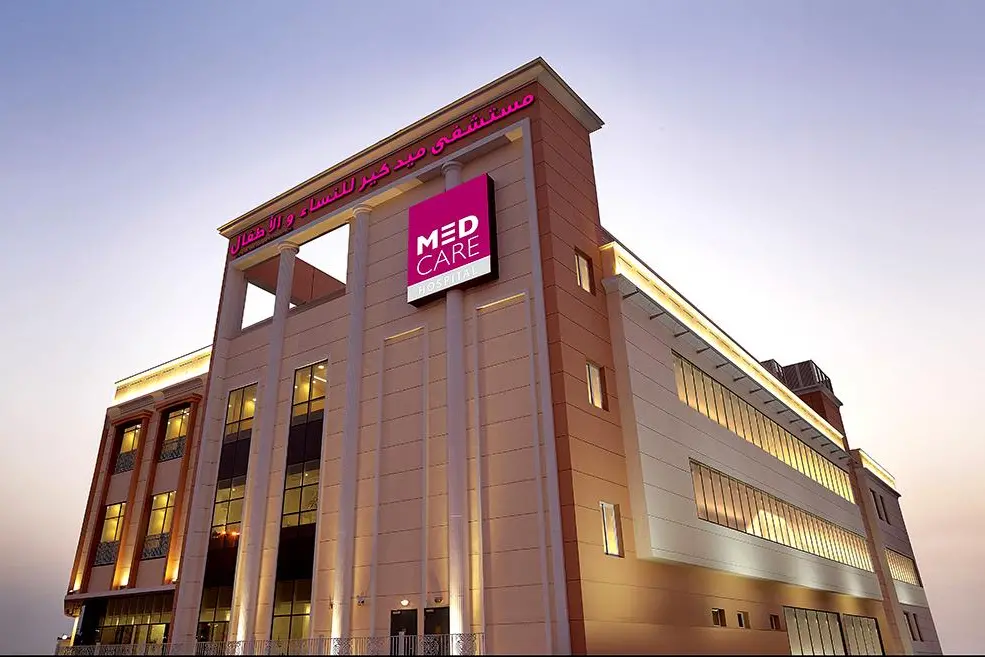
Aster plans to spend 250 million dirhams in the UAE over the coming two years from the company’s internal accruals from profits, according to Moopen in response to follow-up questions sent by email. He said the money will be spent on new projects, including a new Aster hospital in Sharjah. Aster already has one hospital – Medcare Hospital - in Sharjah.
Over the past three years, according to Moopen in the follow-up email interview, the company has already spent 750 million dirhams on its medical facilities in the UAE, which includes six hospitals, 84 clinics and 183 pharmacies.
On Saudi Arabia, Moopen also said that the company plans to add 70 more beds to its only facility in the kingdom, the Aster Sanad Hospital in Riyadh, this year. The hospital currently has 230 beds.
Egypt
Moopen said the company will continue to look at “opportunities” in Egypt but does not have any current plans for the market yet.
Egypt is the Arab world’s third-biggest economy and the most populous Arab nation of over 98.2 million people. It has for decades been suffering from tough economic problems caused by high rates of poverty, illiteracy and unemployment. The economic situation worsened after the eruption of the Arab Spring revolt in Egypt in 2011, which drove many investors and tourists away.
Last August, the Egyptian cabinet approved a new investment law, aimed at easing business regulations and offering incentives such as reduced taxes or utilities in return for investments made in certain areas of the economy. The country had floated its currency in November 2016 and introduced a number of tough austerity measures aimed at cutting its fiscal deficit. It also secured a $12 billion loan deal from the International Monetary Fund.
But the country’s recent history of issuing restrictions on the transfer of hard currency, which has happened several times over the past few years, remains fresh in the investors’ mind. Late last year, Sabah al-Binali, a prominent Arab investor and the chief executive officer of UAE-based consultancy firm Universal Strategy, told Zawya that Egypt has a weak investor protection system and many investors still worry about their ability to move money out of the country.
One of the recent rules on cash flow restrictions was issued in 2012 by the Egyptian Central Bank. It limited deposits for importers of non-essential goods, which do not include wheat and medicine, to $10,000 per day or $50,000 per month and withdrawals to $30,000 per day. The rule on importers was revoked last November. In 2015, the Central Bank issued a cap on overall dollar deposits in banks to$10,000 a day or $50,000 a month, then cancelled this decision one year later in March 2016.
(Reporting by Yasmine Saleh; Editing by Michael Fahy)
Our Standards: The Thomson Reuters Trust Principles
Disclaimer: This article is provided for informational purposes only. The content does not provide tax, legal or investment advice or opinion regarding the suitability, value or profitability of any particular security, portfolio or investment strategy. Read our full disclaimer policy here.
© ZAWYA 2019