Friday, Dec 09, 2011
Gulf News
Dubai The Arab Spring has severely affected foreign direct investment (FDI) in the Middle East and North Africa (Mena), according to a new report by the World Bank’s Multilateral Investment Guarantee Agency (Miga) released on Thursday.
However, the report, World Investment and Political Risk, notes that investors are more optimistic about the region over the medium term.
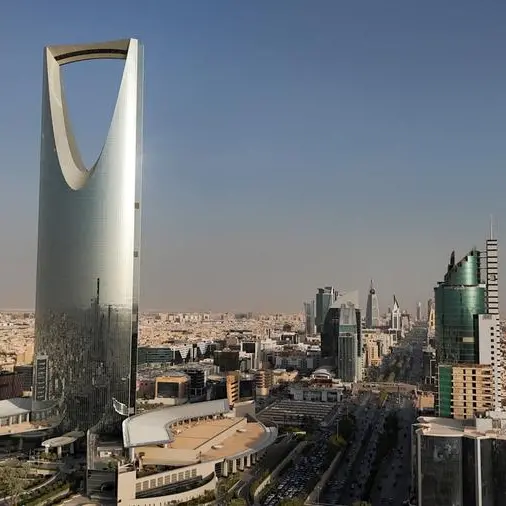
Saudi Arabia topped the list of FDI recipients with $150 billion (Dh550 billion), followed by the UAE with over $75 billion between 2000-2010, the report shows.
“The UAE and Saudi Arabia have also been the biggest sources of FDI in terms of both flows and stocks. Among developing Mena countries, Libya and Egypt, both of which were significantly affected by recent events, had been the biggest investors overseas,” it says.
The financial crisis of 2008 led to declines in FDI flows into the Mena region, and as political events unfolded in 2011, these plummeted further in the countries directly affected. In the first quarter of 2011, FDI inflows turned negative in both Egypt and Tunisia, while greenfield investments in Egypt declined by 80 per cent in the first four months of 2011 compared with the same period in 2010.
“Prospects will depend on the speed of resolving the political situation, since investment takes longer to recover than economic growth,” it says.
Nael Shehadeh, Associate Researcher, Gulf Research Center Foundation, says, “Throughout 2011, the Gulf Cooperation Council (GCC) countries have responded to the unprecedented challenge mainly with a number of economic and financial policies. These policies differ from one country to another, but all aimed primarily at avoiding potential unrest.”
Decline
The World Bank has forecast that FDI flows into the Mena region will decline in 2011 and 2012, but it expects them to grow again in 2013. “Over the medium and longer term, economic and demographic factors — a combined population of 450 million people, 90 million of whom are between the ages of 15 and 2534 — will continue to attract market-seeking foreign investors, even more so under conditions of improved governance and less cumbersome frameworks for doing business,” Miga said. A survey of global investors conducted for the report finds they are “cautiously optimistic” about their investment plans in the next 12 months.
They are more confident over the next three years: nearly 75 per cent of corporate respondents have plans to expand in developing countries over this period.
Miga’s survey shows that events in the Middle East and North Africa (Mena) have had a negative effect on foreign direct investment (FDI), but a significant majority of global investors said they have not changed their investment plans.
“The turmoil led to disruptions in economic activity, plummeting tourism and FDI flows, all of which have negatively affected economic growth,” the report shows.
Projects
Eisa Al Ghurair, Vice-Chairman of Al Ghurair Investments, which has a major refinery project currently on hold in Libya, said, “We have to now wait and see for the new government to be elected and new investment laws to be formulated before we go ahead with the project.
“Similarly, I’m sure other investors are also going to wait till the new government opens up various sectors for investment.”
In Egypt, the economy shrank by 4.2 per cent on an annualised basis during the last quarter of 2010 and the first half of 2011, while in Tunisia the decline in the first quarter of 2011 from the previous quarter was 3.3 percent on an annualized basis.29
For developing countries in the Mena region, estimates for 2011 have been revised downwards.
“However, while investors appear willing to ride out this period of turmoil and uncertainty, they are also ready to downsize plans should political instability intensify and become prolonged,” the report says.
The report was released a day after Christine Lagarde, Managing Director of International Monetary Fund (IMF), warned the Mena region is in the middle of a delicate transition between rejecting the past and defining the future.
Referring the Arab Spring as a ‘Beacon of Hope’, Lagarde said that with the right economic and social policies, short-term challenges can be addressed and the foundations laid for inclusive growth and job creation. “While each country in the region must find its own path to change, the over-arching economic goals of the Arab Spring remain clear — higher growth, growth that creates more jobs, and growth that is shared equitably among all strands of society,” Lagarde said.
Stability
To achieve that, macroeconomic and financial stability remain absolutely essential. Without this secure foundation, any efforts to respond to people’s aspiration can simply not be realised.”
Overall, the report notes that the recorded growth of private capital flows to developing countries, including FDI, is moderating, but is expected to regain speed in the medium term — corroborating the sentiment found in the investor survey. “This uncertain economic landscape aside, developing countries are expected to grow more than twice as fast as high-income economies over the next few years,” notes Miga’s Executive Vice President Izumi Kobayashi.
“The continued growth, together with stronger and more business-friendly environments, should enhance their appeal to savvy investors worldwide.”
The report notes developing countries now attract two-fifths of global FDI and originate close to one-fifth of overseas investment. Nonetheless, political risk remains a significant constraint to investment in these countries, and will become more prominent over the next three years as current concerns about the global economy subside.
By Saifur Rahman?Business Editor
Gulf News 2011. All rights reserved.