Ever since Iran's President Mohammad Khatami launched his slogan of "reform" eight years ago, the idea of reforming Islam has generated an industry employing quite a few people across the globe.
Western journalists have travelled the Muslim world in search of "the Muslim Luther", and have found several from Jakarta to Nouakchott and passing by Tehran and Cairo.
The quest for a Muslim Luther is based on a double misunderstanding. The first is the belief that the present crisis in Muslim countries is rooted in Islam as a belief system rather than as an existential reality.
The second is that reforming the belief system would automatically translate into moderate, if not actually liberal, politics.
The history of Islam, however, shows that the same belief system, interpreted and practised differently, could produce different types of political regimes. More often the political regime determines the theological expression of the faith than the other way round.
The history of both Christianity and Islam also refutes the claim that theological reform will necessarily foster moderate and liberal politics.
The Christian Reformation provoked more and bloodier wars of religion in Europe. It was a reformed church that sanctioned apartheid in South Africa. Even today the most militant sects of Christianity are the so-called "reformed" churches.
What Muslims need is political, not religious, reform. The problems Muslims face are rooted in lack of political liberties, the systematic violation of human rights, and absence of institutions answerable to the people.
In fact, the pace of theological change in Islam has been faster, and more consistent, than that of political evolution.
In the past century or so Islam has absorbed many changes. Let us start with education. Today, more than 99 per cent of Muslim schoolchildren attend schools based on Western models.
The quality of education may be low by Western standards and, in some cases, a perverted view of other faiths is taught. All in all, however, the curricula that dominated Muslim education for over 1,000 years are gone.
Even the one per cent of children still caught in the madrassahs are taught a good bit of Western sciences and cultural perspectives.
Islam has accepted the Western-model of the nation-state. And, wherever reasonably clean, Western-style elections, are allowed, Muslims have taken to it like a duck to water.
Wherever possible, Western-style institutions such as political parties, trade unions, and non-governmental organisations have replaced old-style guilds, fraternities, and tribal structures.
More importantly, all Muslim states are signatories to the Universal Declaration of Human Rights and its addenda, and are bound by secular international law.
The fact that they often violate their signature as well as their own Western-style constitutions is a political rather than a religious deviation.
Reform has also affected the perception of the place of women in society. Several countries, including Bangladesh, the second most populous Muslim nation, have already had woman prime ministers.
In Iran women were sworn in as judges in 1973, although this was reversed by the clerics in 1979. Woman judges and lawyers are now present in 44 of the 57 Muslim countries.
Today in all but two Muslim countries women are allowed to take part in elections. (That most of these elections are not free, is another matter).
Changes have also affected other traditional rules concerning women. Polygamy was made illegal in Tunisia and Iran almost 40 years ago and is becoming rarer and rarer everywhere.
Working routine
Today in only one of the 57 Muslim countries does the government intervene to break the daily working routine to make sure everyone prays the five mandatory times. Everywhere else the matter is left to individual and private arrangements.
There has been a similar change with regard to the fasting month of Ramadan. Although the pace of life slows down and productivity takes a dip, not a single Muslim country allows a complete shutdown of industry and administration during Ramadan.
Practical reality has also impacted the Haj pilgrimage. Today every Muslim country, and countries with Muslim minorities, has a quota of pilgrims, with the grand total fixed at just over two million.
No one takes issue with this because it is clear that it is impossible for even one per cent of all Muslims, that is to say 130 million people, to gather at Makkah on the same day.
Another important reform that has happened quietly concerns the presence of Muslims in countries ruled by non-Muslims.
Traditionally, Muslims were not allowed even to visit such countries except to negotiate the release of hostages and the exchange of war prisoners. In the 19th century permission was extended first to diplomatic emissaries and then to merchants.
A century later, visits for medical treatment and/or education were also allowed. Today, Muslims may, and often do, settle wherever they can.
Even in the 1950s there were hardly any Muslims in Western Europe and North America. Today, there are almost 30 million, accounting for five to six per cent of the population in the United States, Canada and the European Union.
In several suburbs and towns in France and Britain, Muslims are either already in the majority or will be soon.
In the past decade Muslims have accounted for more than 60 per cent of all immigrants in the world. Living under non-Muslim rule is no longer regarded as "oppression" (jowr), and the world's single largest Muslim community lives in India, a secular republic.
The natural process of reform has also accepted, absorbed, and in some cases encouraged cultural and artistic work that traditionalists would have regarded as sinful.
Music, cinema, theatre, opera, painting, sculpture, ballet and other Western-style arts are now part of the fabric of life in many Muslim societies, along with Western-style modern mass media.
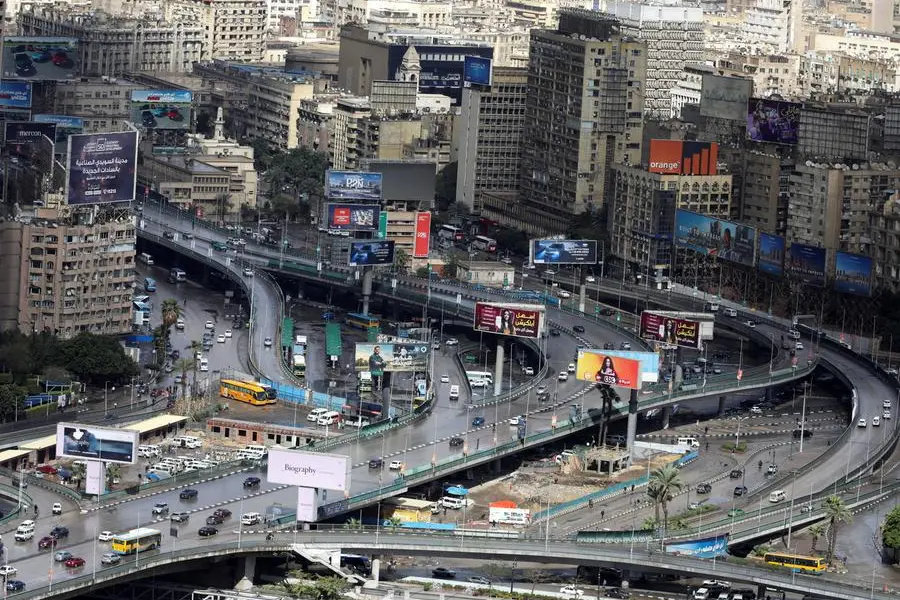
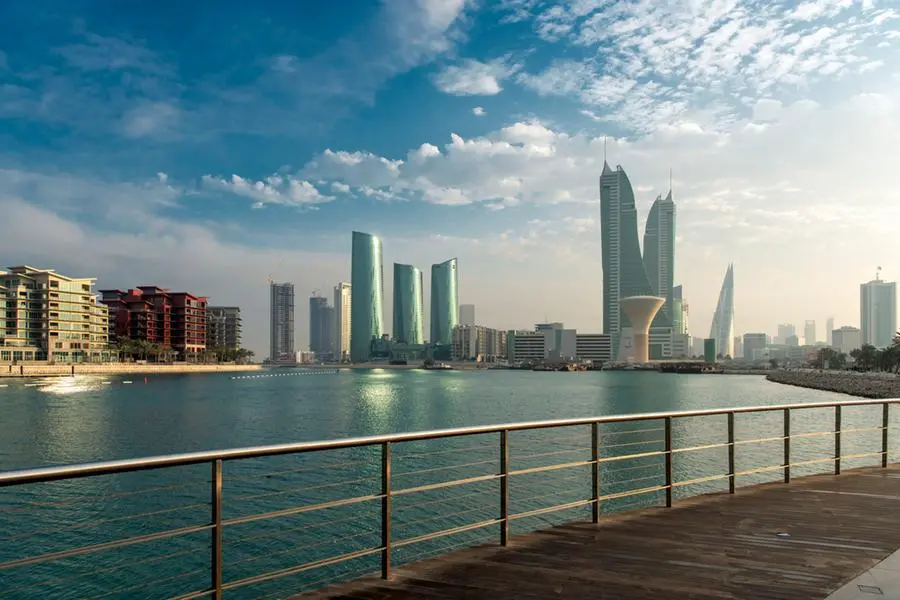
A visitor to any major Muslim city would quickly realise that traditional architecture has all but disappeared with new buildings often designed by Westerners and, at times, even built by non-Muslim workers from across the globe.
Despotic regimes in the Muslim world have a vested interest in presenting any demand for political reform and social change as an attack on Islam as a belief system.
But the real debate in Islam today is not theological reform. The real debate is political reform expressed through a simple question: how could Muslims secure a meaningful say in running their countries?
Amir Taheri is an Iranian author of ten books on the Middle East and Islam. He's a member of Benador Associates.
Gulf News