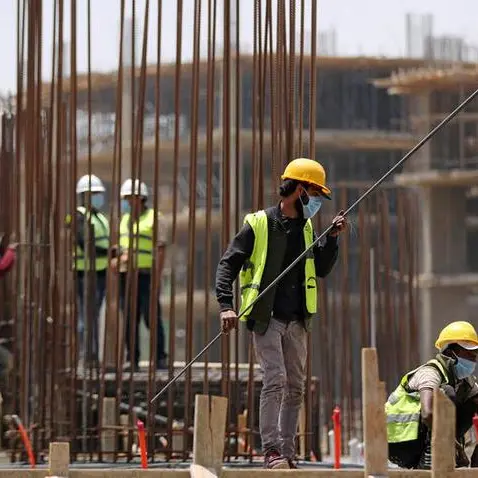
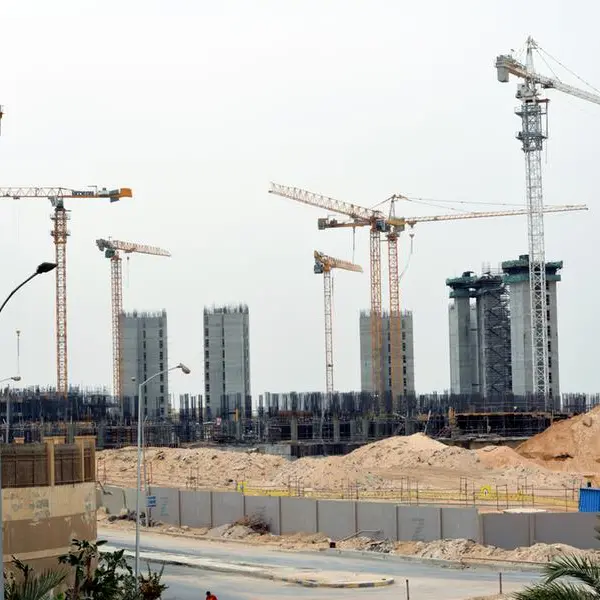
The aluminium industry in the Middle East is on a high, with investments pouring in and major players going all out for capacity expansion to cater to the building boom.
The buzz is already on for ALUMEX 2005, the Middle East Aluminium Exhibition. A little surprising on the surface, considering that the event is to be held many months away, from March 27-29, 2005. But the early excitement leading to the event, to be held at Dubai's World Trade Centre, is understandable considering the impact that aluminium has had as a building material of choice the world over.
Organised by Trans Continental Fairs Management with full support from the largest aluminium smelter in the Middle East - DUBAL (Dubai Aluminium Company Ltd) - the event is slated to attract a wide range of visitors and professionals from the aluminium industry. The international conference to be organised as part of the exhibition will offer visitors an excellent opportunity to witness the latest technological advancements in the field, meet global trading partners and interact with end users. They will all be bound by one factor: a metal that has made rapid inroads in modern construction.
The aluminium advantageIndeed, aluminium, with its attributes of durability, corrosion resistance, high strength-to-weight ratio and high reflectivity (it helps to keep interiors cooler by 5-6 Celsius), is a preferred metal for building and construction applications worldwide.
Aluminium sheets have a longer life (50-60 years) compared to GI sheets (8-10 years); negligible maintenance cost; save fabrication cost (the supporting structure can be lighter since aluminium is one-third the weight of steel); and enjoy high salvage value - it is about 70 per cent of the initial cost as compared to the low scrap value of GI. Little wonder then, that the metal is so popular.
The GCC perspectivePrivatisation is today the chosen path for the GCC countries to enhance their national economies and give a fillip to development strategies. Heavy investment in basic industries and greater private sector participation are pumping up industrialisation across the board. The danger of relying on volatile oil export earnings has been recognised a long time ago. GCC countries have embarked upon a process of investing huge funds into basic industries. Thus, over the past decade, industrial investments in the region have nearly tripled - some estimates put the figure at $ 100 billion. This number will only skyrocket over the next few years. Among these basic industries, the most promising one is the aluminium industry, which has witnessed a sudden increase in investments.
During 1999-2000, GCC investments in industrial projects totalled US $ 13.44 billion, out of which US $ 6.01 billion (4.5 per cent of the total investment) was invested in aluminium and other base metal industries. It is estimated that gross investment for aluminium industries in the GCC is US $ 5 billion. The trend predicts a steep increase during 2005-2010 in the production of aluminium to 10.5 per cent and the consumption rate to 4 per cent.
The first aluminium smelter in the region was launched in 1971 in Bahrain. DUBAL, which started operations in 1979, is the first aluminium smelter in the UAE. These two smelters paved the way for the profitability of the aluminium industry in the Gulf region, leading other gulf states to plan for setting up new smelters, in addition to expanding existing smelters.
"Although price volatility has increased in the past few years, prices will stabilise," states Bruce Hall, CEO, Aluminium Bahrain (Alba). Talking about reduction on the use of power, Hall feels it is a continuous process, but taking place in small steps. "Big gains are to be made at the point of power generation rather than at the point of power use or consumption," he says.
"As the construction industry within the Gulf region is booming, the quantity of aluminium has increased during the last few years," says Robert Holtkamp, Director - Sales & Marketing, Gulf Extrusions, UAE. The company's product range mainly consists of aluminium extruded profiles. "Our main market is the UAE and 50 per cent of the market demand is catered to by us, including projects such as Burjuman Shopping Mall, Royal Mirage Hotel, Reef Mall, etc."
Players and projectsBahrain is now the largest aluminium producer in the Middle East and the fifth largest worldwide. Bahrain's most prominent non-oil industry is the Alba plant, which supplies various downstream manufacturing plants as well as the Gulf Aluminium Rolling Mill Company (Garmco). Aluminium exports are one of Bahrain's biggest earners. Alba dominates the manufacturing sector with a production capacity of 500,000 tonne per year.
Alba commissioned its 450,000 tonne per annum coke calcining plant and 41,000 cu m per day seawater desalination plant in 2001. More than 50 per cent of the aluminium produced at Alba is sold on the local and regional market, while the remainder goes mainly to the Far East. Alba's $1.7 billion Line 5 project will soon be ready and operational, helping to push up the 527,000 tonne produced last year.
DUBAL added its sixth pot line at its smelter complex in Dubai and exports about 90 per cent of its production. The largest industrial venture in Dubai is the aluminium smelter at Jebel Ali, run by DUBAL. The highly successful project, taking raw bauxite from Australia and converting it to high grade aluminium, is currently under-going an expansion which will raise production capacity to 710,000 tonne.
Meanwhile, DUBAL produced 560,000 tonne of aluminium in 2003, a 5 per cent increase on 2002. The company also sold more than 616,000 tonne of metal alloy products in 2003, up 7 per cent on 2002. In May 2003, an agreement for a new JV was signed between DUBAL and Qatar's United Development Company (UDC) to build, own and operate a primary aluminium smelter at Ra's Laffan Industrial City in Qatar. The smelter will initially produce 516,000 tonne of primary aluminium with the potential to expand in phases to over 1 million metric tonne. The smelter's primary electrical energy require-ments will be met by a dedicated power plant with natural gas supplied from Qatar's huge North Field.
The Abu Dhabi General Corporation of Industry is also planning to set up an aluminium smelter with an annual capacity of 220,000 tonne, which will include a power station and a desalination plant. For its part, Oman is going ahead with a $2.5 billion aluminium venture with Oman Oil Company (OOC) and Abu Dhabi Water and Electricity Authority (ADWEA) going into partnership with Canadian major Alcan (which will have a 20 per cent stake) with a production capacity of 330,000 tonne. The venture will also have a dedicated power station to fuel the project. Construction is expected to commence in the second half of 2005 and result in first metal production by the end of 2007.
Future watchSpeaking at the 11th International Arab Aluminium Conference (Arabal 2004), Alba Calcining Operation Superintendent Behnam Dawani said the aluminium industry will expand at a similar rate to the past, but with a marginally higher demand from China and the Middle East.
"Analysts expect a marginally higher demand from China and Middle East and a growth rate of 3.4 per cent in the coming five years," according to Dawani. "It is expected that regional expansion in the next five years will increase the existing aluminium capacity by another 3 million tonne mainly due to the abundant and inexpensive energy and low labour cost." Industry majors predict that demand for aluminium increases by 3 per cent yearly in the Middle East, enough reason for major players to shine on!
© Construction World 2004