JEDDAH, 10 May 2007 -- Custodian of the Two Holy Mosques King Abdullah arrived in Sakaka yesterday from Arar on the second leg of his tour of the north. He will open and lay the foundation stone for several health, education, water and electricity projects worth SR15 billion, including a SR1 billion university project.
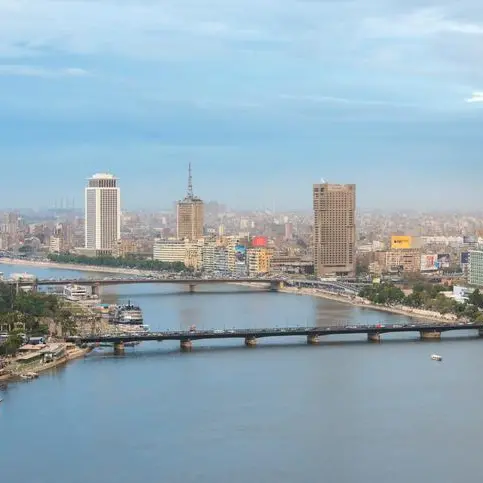
The royal visit will also witness the launch of the $3 billion Saudi-Egyptian Causeway which will not only link the Asian and African continents but also boost economic development of the Kingdom's northern regions.
According to sources, King Abdullah will lay the foundation for the causeway, linking Ras Humaid in Tabuk with Sharm El-Sheikh in Egypt in the presence of Egyptian President Hosni Mubarak.
The historic project will be completed within the next three years by a consortium of Saudi and international companies including Saudi Binladin, Saudi Oger, Al-Khorafi of Kuwait and Arab Contractors of Egypt.
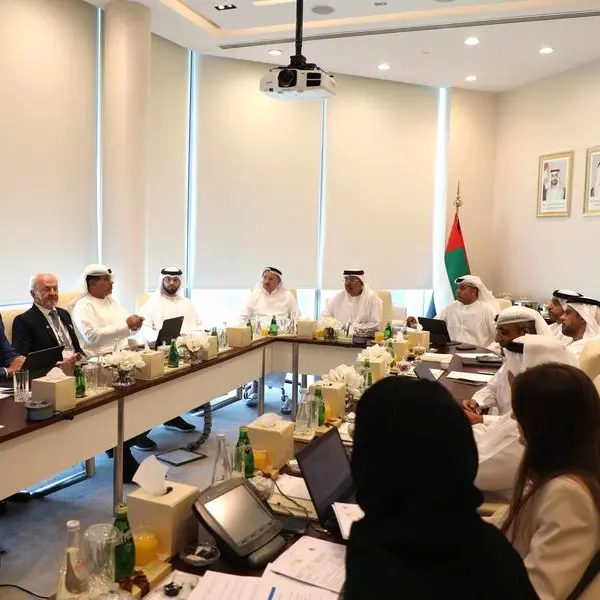
Meanwhile, the Council of Ministers, which met in Arar yesterday, decided to establish an independent authority for housing. The objective is to help Saudis have appropriate housing facilities, to build more houses to meet population requirements and to construct houses for the poor.
Culture and Information Minister Iyad Madani said the authority would also work to increase house ownership of Saudis and encourage the private sector to carry out more housing projects. "The authority will work for establishing suitable houses for the needy by making use of public and private loans and other finances," he said quoting the Cabinet decision.
King Abdullah, who presided over the Cabinet, urged ministers to establish contacts with citizens in all parts of the Kingdom in order to find out what their requirements are. He also commended the unity of the Saudi people in different parts of the country. The Cabinet decided to lift the customs tariff on cement imports from outside the GCC for one year and provide a 50 percent discount to cancer patients and those who accompany them in their air, land and marine transport charges.
On arrival at Al-Jouf airport King Abdullah was greeted by Crown Prince Sultan, Prince Salman, governor of the Riyadh region, Prince Fahd ibn Badr, governor of Al-Jouf, other princes and senior officials. He was accompanied by Prince Miteb, minister of municipal and rural affairs and Interior Minister Prince Naif.
The launch of three new universities in Arar, Sakaka and Tabuk during the king's current tour reaffirms the Kingdom's efforts to make higher education available to its citizens all over the country and prepare them to take part in the development process.
King Abdullah began his tour of the north on Monday and emphasized the government's determination to achieve balanced growth for all regions of the Kingdom. He launched a large number of projects, valued at more than SR6 billion, in the Northern Border Region. Included among the projects was the Northern Border University.
Al-Jouf Gov. Prince Fahd ibn Badr said the people of the region had been awaiting the royal visit for a long time.
The new projects to be opened by the king include Al-Jouf University, a college of science, a medical college, several schools for boys and girls and a number of technical colleges and vocational training centers.
The higher education sector alone will get 11 new projects worth SR1.33 billion. Other projects to be launched by the king in Al-Jouf are: 206 school projects (SR955.4 million), 10 technical institutes and vocational training centers (SR514 million), 19 health projects (SR1.25 billion), municipal projects (SR1.86 billion), a railway project linking the Jelamaid mineral region (SR3.7 billion), three mosques (SR125 million), seven road projects (SR1.5 billion), eight electricity projects (SR1.2 billion), three water projects (SR1.58 billion), Al-Jouf Cement Factory (SR929 million), an investment project for Disabled Children's Association (SR16 million), and the first phase of a low-cost housing project (SR25 million).
Dr. Ali ibn Suleiman Al-Attiyah, adviser at the Ministry of Higher Education, said Al-Jouf University would have an engineering college, a college of applied medical sciences, a college of science, a community college and a college of medicine in the first stage.
The university campus has an attractive design, leaving space for gardens and greenery. He said the university would play a big role in the educational and cultural development of Al-Jouf and the surrounding areas.
A number of ministers yesterday commended King Abdullah's efforts to promote balanced development all over the Kingdom. "Following his accession to the throne in August 2005, King Abdullah visited Eastern Province cities, Hail, Qasim, Madinah, Taif, Baha, Najran, Asir and Jizan. During these visits he launched a large number of projects in order to promote the welfare and prosperity of citizens all over the Kingdom," said Higher Education Minister Dr. Khaled Al-Anqari.
Agriculture Minister Dr. Fahd Balghuneim highlighted the progress achieved by the Kingdom's agricultural sector since the king took over power. "The contribution of the agricultural sector to the gross domestic product grew by 5.1 percent to reach SR38.3 billion in 2005," he said.
Speaking about Al-Jouf, he said the region supplies one third of the Kingdom's wheat production. "There are four million olive trees in the region producing 3,000 tons of olive oil. The region also supplies 84,000 tons of vegetables annually," he added.
By P.K. Abdul Ghafour
© Arab News 2007