14 January 2011
By Massoud A Derhally
Bloomberg
BEIRUT: Lebanon’s Central Bank will ensure that the country’s currency remains stable and the government stays solvent after national unity Cabinet collapsed Wednesday, Governor Riad Salameh said.
“We will be present in the market whenever our intervention is needed,” Salameh added in a phone interview Thursday. “The Central Bank can act and will act to maintain stability.”
The Central Bank has kept the Lebanese pound at about 1,500 to the dollar for more than 10 years, ensuring that higher interest rates attract a steady flow of funds into the country.
The bank has the resources needed to defend that policy, with foreign currency reserves of $30.8 billion as of Jan. 11, and another $12.7 billion in gold, Salameh said.
Hizbullah and its allies pulled out of the government Wednesday on concern that a U.N. tribunal will implicate them in the 2005 murder of Rafik Hariri, father of the current prime minister, Saad Hariri. Hizbullah has demanded an end to the U.N. inquiry, saying it is biased.
The political crisis threatens to rekindle violence in a country that emerged from a 15-year civil war in 1990 and has seen frequent recurrences of sectarian strife since then.
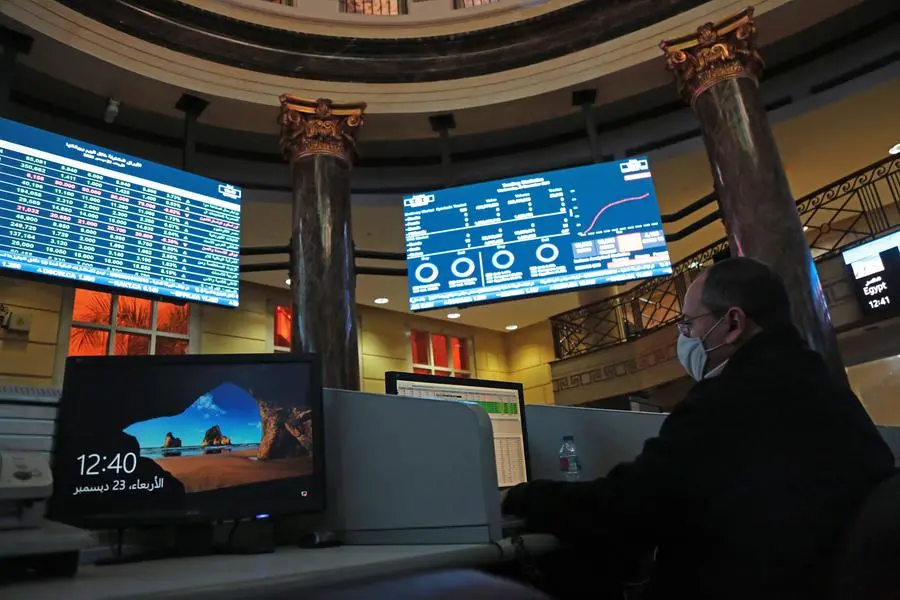
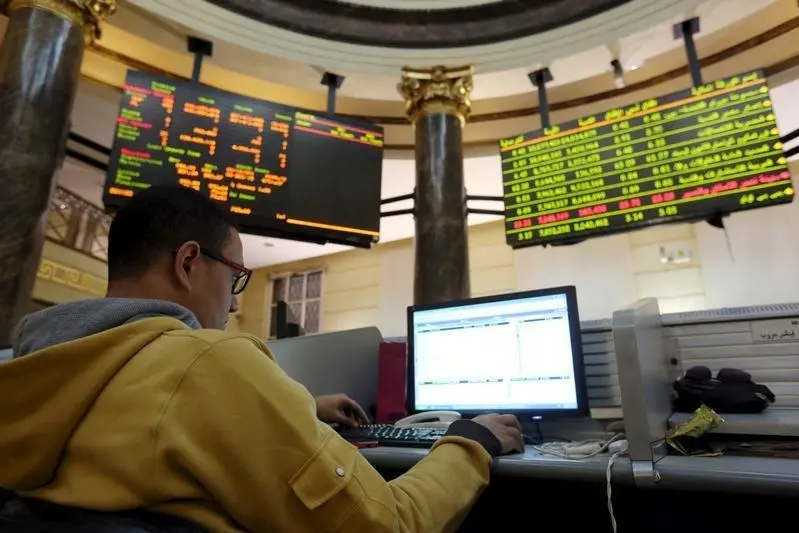
The benchmark BLOM Stock Index dropped for a second day, falling 0.3 percent to 1,484.90 at the close in Beirut.
The measure tumbled 3.2 percent Wednesday, the most since July.
“Any financial concerns are unfounded as the Central Bank has plenty of reserves, bank deposits have grown and inflows of capital are still strong,” said Mazen Soueid, chief economist at BankMed SAL.
Bank deposits in Lebanon grew 10 percent last year to $110 billion, Salameh said.
Still, Hizbullah’s withdrawal from the government may set back an economy that performed “remarkably well” through the global economic crisis, according to an October report by the International Monetary Fund.
The I.M.F. projected growth of 5 percent this year, slowing from 8 percent in 2010 and 9 percent in 2009.
Salameh said it was too early to determine the impact of the political crisis.
Credit-default swaps on Lebanese debt jumped 9 basis points Wednesday and gained 1 basis point today to 315, the highest level since July 1, CMA prices show.
Credit-default swaps, contracts conceived to protect bondholders against default, pay the buyer face value in exchange for the underlying securities or the cash equivalent should a borrower fail to adhere to its debt agreements.
A rise indicates deterioration in the perception of credit quality.
Complications in forming a new government could “delay indefinitely the agreement on the 2011 budget and put on hold much-needed fiscal reforms both on the expenditure and revenue side, including plans for privatization,” Alia Moubayed, a London-based senior economist at Barclays Capital, said in an e-mailed report.
The sale of the country’s two mobile operators MTC Touch and Alfa, which previous governments had hoped would raise as much as $7 billion, has been held up by years of political wrangling.
A restructuring of Electricite du Liban, which provides more than 90 percent of the country’s power and costs as much as $1.5 billion a year in fiscal subsidies, has also been delayed.
A lack of a budget will “likely keep the fiscal deficit in check by limiting spending to the mere payment of the wage bill and interest payments,” Moubayed said. “More broadly, a political deadlock marred by rising tensions is bad news for economic growth.”
“We hope that things will be settled quickly which is good for the economy and markets,” Salameh said.
“Political stability and security is essential to produce a high level of growth. Let’s wait and see.”
Copyright The Daily Star 2011.