Nazif's economic team returns, ready for continued reform and privatization as the banking industry suffers a rough month
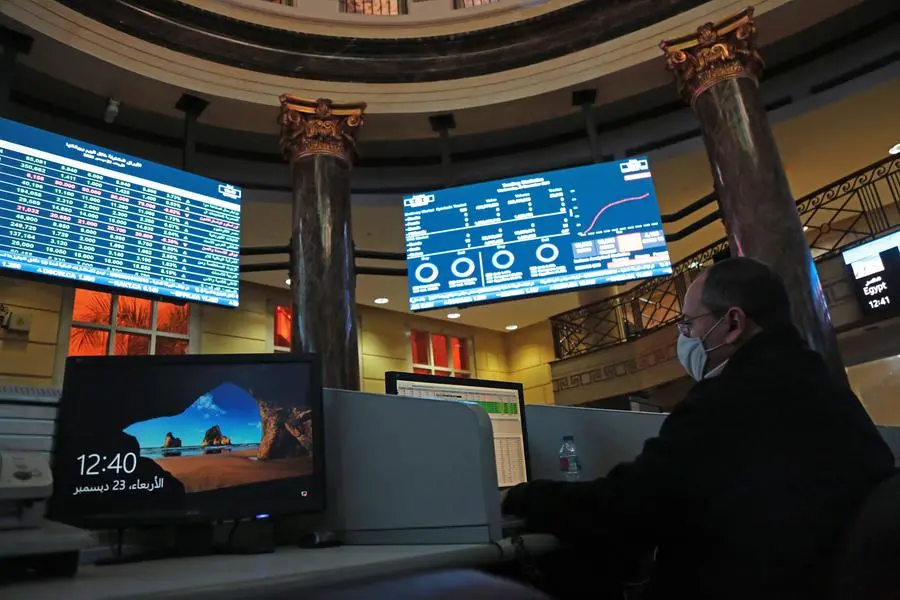
The CASE posted another record-breaking performance in 2005 with the exchange as a whole up 150% and the benchmark CASE 30 Index up 146% over the year before.
With most CASE-traded shares no longer bargain-priced, investment was fueled by strongly improving macroeconomic fundamentals. Early numbers show foreign direct investment topping $2.6 billion on the strength of an 11% increase in investment flows to the petroleum sector, while non-petroleum investment soared 500%. Also last month, the Central Bank of Egypt (CBE) put Egypt's foreign reserves at $21.89 billion at the end of 2005, up fractionally from $21.21 billion in November and a 42% increase from $15.4 billion in December 2004.
The cabinet shuffle that saw the Nazif government largely reappointed and new business leaders enter government service boosted investor confidence and set high expectations. The economic team reaffirmed its commitment to economic reforms and cutting unemployment amid word that Suez Canal receipts were again up in the last quarter of 2004 and the recovery of tourism from double-digit declines after last summer's terror attacks.
Meanwhile, the Ministry of Investment's privatization program shows no signs of flagging as the Central Bank of Egypt announced late last month that it had given the green light to the National Bank of Egypt's acquisition of the Bank of Commerce and Development and the sale of Egyptian American Bank to Calyon Bank. More than 10 local and international brokers have submitted offers to act as IPO book runners in the sale of a 20% stake in MIDOR (the Middle East Oil Refinery, the largest of its kind in Egypt), and the terms for the sale of the Bank of Alexandria (BOA) are expected in late February. Bank officials say they expect BOA's privatization to wrap up by June.
Privatization rumors also hit Misr Hotels and three leading mill stocks (including North Cairo, Alexandria and East Delta) hard as investors cashed out gains. The Ministry of Investment later confirmed it is planning to offer nearly all of its milling companies for sale, raising serious questions about their attractiveness to the private sector in light of their commitment to supporting the state's commodity subsidization program.
In a final privatization note, persistent rumors that the state's majority share of the Eastern Company would, indeed, go on the auction block this year propelled the cigarette maker's shares to an all-time high of LE 345 as investors anticipated one of the international majors -- Altria and British-American Tobacco -- paying a premium for the still-undervalued company.
January was a rough month for banking and finance shares, with most leading constituents closing the month down. Blue-chip Commercial International Bank (CIB) began its fall after the week-long Eid El-Adha vacation, tumbling from its high of LE 64, while Egyptian American Bank (EAB) slipped all month long as investors sold their stakes on news of the bank's sale to France's Calyon in a deal valued at some LE 2.916 billion, or LE 45 per share.
Al-Watany Bank of Egypt also had a turbulent month: Its share price seesawed despite news that the bank's annual general meeting had agreed to raise paid-in capital to LE 750 million from LE 500 million through a rights issue at LE 15.
Bucking the trend was regional investment bank EFG-Hermes, which soared last month to an all-time high of LE 240 per share on news that its board of directors had approved the acquisition of at least a 20% stake in Lebanon's Bank Audi while increasing EFG's authorized capital to LE 3.2 billion from LE 700 million.
Meanwhile, regional telecom giant Orascom Telecom (OT) finally crashed through the LE 700-per-share barrier to peak at LE 724 on the eve of a one-for-two stock split that saw its number of issued shares increase to 220 million from 110 million after the Eid vacation. OT announced last month that its subscriber base now tops 30 million across its Middle Eastern, African and South Asian networks, adding later in the month that its bid to acquire 51% of Nigeria's Nitel had not been finalized. Nigerian officials subsequently announced they were calling off the Nitel sale because no buyer had matched the reserve bid.
MobiNil peaked at LE 229 early in the month before slipping as investors came back from the Eid vacation. The company announced in January that it was launching a battery-recycling program, but otherwise had little news at month's end. Arch rival Vodafone's shares climbed throughout the month to close at a new high at LE 109. Newcomer Raya Holding saw its shares rise as it announced it would be buying 25% of local call-center services company C3 (www.c3.com.eg), adding to its core capacity in the area and bringing it to within striking distance of market leader Xceed (a division of Telecom Egypt). Despite the good news, Raya shares later followed OT and MobiNil on the downward trend even as it was added to the list of CASE shares able to trade without price limits as of January 29.
Telecom Egypt, the bourse's newest blue chip, remained largely stable, selling flat at month's end on volumes that kept it among the ranks of the CASE's three most actively traded shares last month. As January drew to a close, the partially privatized giant announced it would soon apply to the National Telecommunications Regulatory Authority (NTRA) for permission to restructure its long-distance tariff system in anticipation of new competition in the sector later this year. A ruling from the NTRA is unlikely in the coming weeks after word surfaced that the authority's chairman, Alaa Fahmy, was being tapped to succeed Aly El-Moselhi as head of Egypt Post. El-Moselhi was named Minister of Social Security in the new Nazif Cabinet.
Sister company Orascom Construction Industries (OCI) broke the LE 300 barrier as investor confidence peaked following an announcement that it would increase its capital to LE 5 billion from LE 2 billion either through a public offering or by increasing its number of spare shares. OCI, an emerging global construction and construction materials giant, announced consolidated net profits worth LE 1.67 billion for 9M05, a 49% year-on-year increase. Also boosting its shares' performance was news that it had acquired the Egyptian Sack Company in a deal worth LE 43 million, adding to its existing bag capacity a facility with an annual production capacity of 60 million bags. Egyptian Sack had revenues of LE 38.6 million in 2004.
OCI later announced that it had snapped up an integrated cement plant in the lucrative Turkish market in a deal worth $54 million. The small-scale plant (annual production capacity of just 600,000 tons) near Eastern Turkey's city of Van should be poised to exploit the new Egyptian-Turkish free-trade deal and gives OCI a production facility within striking distance of Eastern European, Iraqi and Central Asian markets.
OCI announced at the same time plans to increase its capacity in Eastern Turkey to 3 million tons a year "through a local partnership that will be subject to regulatory approval." The company recently completed the acquisition of a 20% stake in the 3-million-ton-per-year Baticim Cimento in Western Turkey. Both companies are listed on the Istanbul stock exchange.
"OCI has earmarked a total of $250 million for its investment in both regions of Turkey," said company chief Nassef Sawiris. "We view Turkey as a natural extension to our core geographic markets around the Mediterranean rim."
In other cement news, Misr Beni Suef Cement also hit an all-time high last month, gaining 1.5% to close at LE 103 on heavy volumes. Competitor National Cement peaked in the first week of January at LE 53 before closing the month at LE 44 amid profit taking, while Sinai Cement hit a record high of LE 59 per share. Torah Cement was hit hardest by profit-taking in the sector as it fell to LE 145 from a high of LE 165.
In other news likely to have an effect on the market in the weeks ahead, Egypt Aluminum announced in late January that it would conduct a five-for-two stock split to prepare to float 17% of the largely state-owned company. Minister of Investment Mahmoud Mohieddin said last year that he was looking to sell at least 12% of the company, but Egypt Aluminum's notification to the CASE included no further details of how or when the split and subsequent float were likely to take place.
Meanwhile, Kuwait's AREF investment group has offered tender to purchase 100% of Engineering and Development Consultants. The partially privatized builder of state-subsidized housing recorded losses of LE 5.97 million during 9M05 against LE 5.22 million in the same period last year. Shares dipped nearly 5% following the announcement.
Fatima El-Saadani
© Business Today Egypt 2006