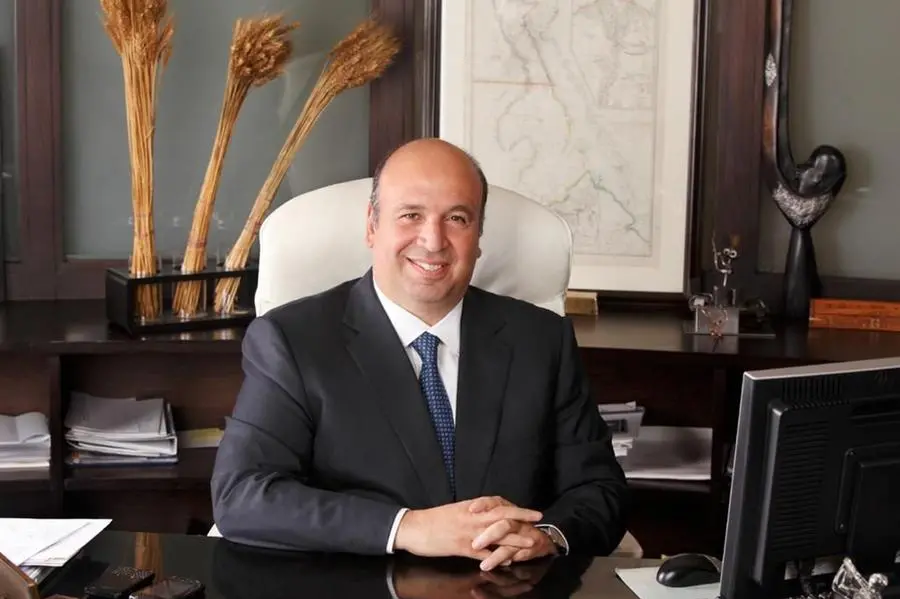
The business and investment community in the Middle East needs no introduction to ABQ Zawya - the business information website and newswire focusing on the Gulf. Ritwika Chaudhuri speaks to Ihsan Jawad, the young CEO of the company, who came up with the idea for Zawya nine years ago.
How did Zawya start?
I had the concept in 1999 when I was with an investment bank in London covering the Middle East market, doing M&A and corporate finance transactions. It was during my regular association with the region that I noticed there was a lack of business information services targeted towards the professional and investment community. The internet was sweeping the globe at that time, and I realised that the way to overcome the problem was to create an internet-based powerful information resource platform focusing entirely on the Middle East. We did not think of starting an internet company, but were keener on solving the local business information problem. So I left my job. Today, everybody believes in and talks about the Middle East and its growth story, but we realised its potential when the region was nowhere in the radar of the business world back in 1999.
You were with Merrill Lynch before Zawya?
Yes, I started with Merrill Lynch, but I also worked with Schroder for about two-and-a-half years before I started Zawya. In January 2000, Husain Makiya, who was also with Schroder handling major projects and business development in the Middle East, joined me. Between the two of us, we managed to put a business plan together within a month and secured the backing of Dialogue Operation, a US-based group. We managed to raise seed finance of US$1 million. My brother Zaid Jawad then joined us as the third partner and technology provider of the company. He wanted to come back to London from his Schlumberger assignment in the Middle East. He is today our chief technology officer. Kunal Wadhwani, one of my MBA friends, then joined us as our first investor. Kunal was, in fact, the seed investor, and within the first few months after starting the company, he decided to join us and started looking at the commercial aspect of the company. With capital and a concrete business plan in hand, we moved into our office in March 2000 and started building our website. We launched the first platform in October 2000.
So the idea was to offer business information to start with?
Yes, we started by offering free information, just focusing on the region. We started working with Reuters and realised that the Middle East was the only place where one could not look up the region's stock prices onscreen on the website. Now, of course, there are a number of sites, but in 1999-2000 we were the only one to start providing onscreen stock information.
Why did you decide to move to the Middle East in February 2002?
Setting up an office in London was easy with the existing established laws. Luckily enough, after a year and a half, ABQ Investment from the Middle East was attracted by our efforts and wanted to invest in us. They suggested that we relocate to the Gulf, where things were beginning to happen. We agreed to their proposal, as we needed the funds to go to the next level. Part of the funding was to set up the base in Dubai. It was a difficult time because of 9/11, the recession and the internet crash all coming together. The move helped us in cutting down our costs, apart from bringing us nearer to our clients.
You still have an office in London?
We have closed down our London office. We have some 90 researchers and content developers working from Beirut today. Zawya employs a total of 130 people.
Why did you choose Beirut?
By 2005, Dubai was increasingly becoming an expensive place to do business. We moved out of London to cut costs, and for the same reason, we set up the office in Beirut three years after coming to Dubai.
Beirut has a pool of talented university graduates who speak three languages: English, Arabic and French.
What sort of subscription base does your website have?
We have just 5,000 paid users; professionals from the investment community and business development professionals. On the free service, we attract around 450,000 unique users globally.
Can you tell us something about your tie-ups with information providers?
We have 50 providers and they provide information through our website as well. One can access their information from our platform. The tie-up with Dow Jones is different because it is a separate joint initiative. The idea is to create the first homemade or Middle-East-made financial news organisation or financial newswire. Business reporting is not very matured in the region. It is mostly manipulated and public-relation-driven. That's exactly why we have tied up with Dow Jones. The news that we have broken in terms of corporate transparency has moved the market; it moved the Dubai Financial Market.
Do people really depend on internet-based information here?
Professionals for sure depend on internet-based information. As far as our clients are concerned, they depend on it heavily. I think the growth here is the highest globally. There are 60 million people in the Middle East who are on the internet. However, there is an issue with accessibility, and that is not cheap in the GCC - even in the UAE. From our perspective, we have a different clientele. Our audience is very high-end, so for them, it might not be an issue. For the common man, though, paying AED300 or AED400 per month is not easy.
Now that you are in your ninth year of operations, do you feel you've come as far as you hoped you would?
To a certain extent. Back in 2000, we set a goal, which is being pushed today. Even now, there is a great lack of information in the region, and as the pace of development since 2004 has been incredible, we find it difficult to keep pace with our information coverage. To give you a small example, we have a database of the biggest companies in the region and those of the company officials. However, the frequent movement of officials in and around the region puts greater strain on our confirmation update and data stream. And this is over and above the major projects coming in, or the big investment companies setting up offices and the major infrastructure announcements being made. Given this reality, the more we are trying to solve the information problem here, the problem itself is getting bigger.
Does the existence of Maktoub Research, MEED or AME Info pose any threat to you? What about newswires like Reuters and Bloomberg?
Well, we started off as an information company, but today we are not only an information provider. You can get Reuters and MEED services from us. We see ourselves playing an empowering role for the business and investment professionals across the Middle East. We have a mission; we want to make a difference to the overall business environment here. We think this is central to whatever we do. If we can help bankers, investors and entrepreneurs with our information and analytical services to create great companies, increase employment or better assess and identify risk, they will in turn help and contribute to the development of the entire economy. We consider ourselves part of this chain. It is such a big goal to achieve and we have just started. Dubai might be a story of success, but the rest of the region also needs this kind of economic and sustainable development.
Will you get into an advisory role in the future?
Our services are evolving and are taking different forms and shapes as we progress. I can't tell you how the business will look two or three years from now. Our intention now is to reach out to the wider region, replicating what we have done in the UAE. We have achieved quite a bit of what we wanted to achieve. We are one of the main drivers of the latest Dubai government initiative against anti-corruption. We are one of the many that have provided information on the issue.
In what way?
Our Zawya-Dow-Jones newswire, in most cases, has broken a number of these stories, starting with Deyaar, then Dubai Islamic Bank and then Tamweel. This has been possible because of independent and impartial media, which is very important in the overall economic development in the region.
Are you a profitable business?
Of course! The very fact that we have moved from being a four-member team to 130 people is evidence enough that we have made some money. Our cash flow has been positive since 2005 and we have been profitable for at least two years. We have been growing 100 per cent year-on-year for the past three years.
What is the valuation of the company today?
That's a tough question. To me, it is a billion-dollar company, but someone else could value it differently.
Can we take Zawya as a successful example of a venture capital initiative in this region?
Certainly, yes. Our company is good proof of what a combination of brains, sweat and sheer determination and hard work can produce. Of course, the oil boom has helped us, and we are lucky to that effect. We have proved that even without big connections, one can succeed.
Can you share your future plans for improving Zawya?
I do not know at this point where our mission will take us from here as an organisation. We have been able to build a respectable brand and we want to be known as the company making a difference, as far as the business and investment world is concerned. We are trying to be more focused in our content, and you will see more action in the services we provide. We will also need to build up our financial strength to be able to pursue our mission. As far as improving Zawya is concerned, we want to set up a social network where our 5,000 professional members can share information and contact each other.
Many of our members on the network are already sharing information with each other. We are also into video content, and we have just launched a Beta Arabic version of the site. It is a diluted, basic version, though. We are constantly improving our research team and trying to improve our relationship with the Dow Jones newswire. Currently, we are just providing to the GCC region; we want to extend that and cover Egypt and all.
Do you have plans to exit Zawya?
For us, Zawya is there to meet a long-term mission, which might take 20 years to accomplish. So, there is definitely no plan to exit until the mission is fulfilled. There is no reason for exiting unless we stop believing in the mission itself.
What's your advice to budding entrepreneurs who want to pursue their dreams?
First of all, it is a commitment and very hard work. Entrepreneurship is not a walk in the park; however, if you have a good mission and a good vision and you know you are passionate about it, then you should go for it, as in that case you will not feel the hard work. One thing is for sure; you must be clear of the purpose as to why you are setting up a business and the rest will follow, as long as you are committed and passionate about it.
© MONEYworks 2008