Tuesday, Aug 16, 2011
   By Oliver Klaus
   Of ZAWYA DOW JONES
DUBAI (Zawya Dow Jones)--A petrodollar-driven investment splurge by Gulf Arab states on key infrastructure such as power plants and transportation, as well as renewable energy initiatives, are expected to help Germany's Siemens AG (SIE.XE) maintain growth momentum in the Middle East despite turmoil in some parts, the company's top executive for the region said.
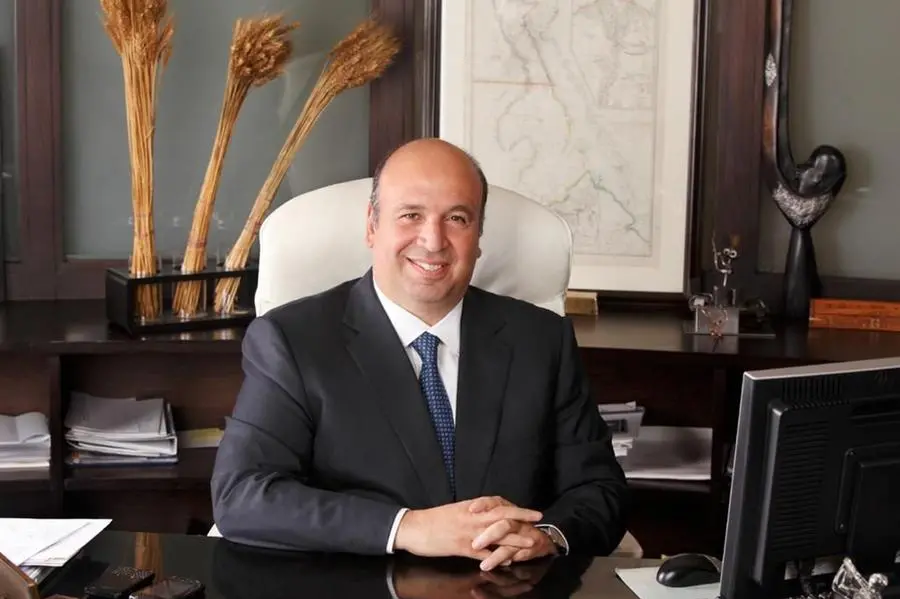
Siemens Middle East Chief Executive Officer Erich Kaeser told Zawya Dow Jones in an interview that the company's present target was to increase revenue in the region at about 8-10% annually--in line with the group's global target of growing at double the gross domestic product growth rate in its reporting areas.
"We have a strong growth agenda in the region," Kaeser said. "There are still huge investments ahead in terms of infrastructure. In addition, the population is growing and structural developments are taking place in terms of changing economic structures like more industrialization. All these developments, in particular in the Gulf area, are supported by continuously high oil prices and high oil production."
Siemens, which employs about 405,000 people worldwide, reported new orders to the tune of EUR22.9 billion in the quarter ended June 30, with the largest reporting region--Europe, Middle East, Africa and Commonwealth of Independent States--accounting for EUR13.4 billion, a year-on-year increase of 32%. Siemens doesn't provide break-out figures for the Middle East.
The group operates in the industrial, energy and healthcare sectors worldwide, building power plants, manufacturing medical equipment and supplying automation technologies.
Engineering contractors such as Siemens have benefited from Gulf Arab states such as Saudi Arabia, Qatar and the U.A.E. pumping billions of dollars in oil revenues into their economies in a bid to develop infrastructure and industries as they seek to diversify local economies, transfer international know how and create jobs.
Income from oil exports have helped Saudi Arabia, the region's biggest economy, keep a $400 billion five-year infrastructure development program on track and enabled King Abdullah earlier this year to announce another spending program worth at least $129 million to address a housing shortage and unemployment problems.
"There is a need to invest in the region and many governments addressed it. A prominent example is Saudi Arabia, but also in the U.A.E. more investments are coming up than originally planned. In Qatar, the (2022) football World Cup is an investment project as such," Kaeser said, adding that he expected Siemens' performance in the Middle East for the 2011 financial year to be as good as last year's.
REGIONAL UNREST
Siemens targets growth in the region at a time of unrest and violent conflict in some parts, including Libya and Syria. The political situation in other countries like Egypt, where former President Mubarak was toppled earlier this year, remains fluid but developments across the area haven't had much of an impact on Siemens' business so far, Kaeser said.
"Yes, there is a regional, very individual impact. But on the other side, more investments and more money is now being pumped into the economies here in the region, and we see the effects now. So there's a counter activity," he said, speaking at his office at Dubai Internet City, a free zone in the United Arab Emirates, the Arab world's second-biggest economy.
The energy sector--led by power generation, transmission and distribution--remains a key driver for Siemens in the region. Arab Gulf states have seen electricity demand rise rapidly in recent years on the back of governments' spending on new industries and infrastructure, and to accommodate growing populations.
Siemens earlier this year won a turnkey contract in Abu Dhabi to build the $1.4 billion Shuweihat 3 power and water desalination plant jointly with South Korea's Daewoo Engineering and Construction Co. In May, it was awarded a EUR100 million deal to build a large substation in the emirate. Siemens is also one of several competitors bidding for the contract to build the region's largest photovoltaic solar power plant with 100-MW capacity at Masdar City, the planned carbon-neutral city that's part of Abu Dhabi's Masdar green initiative.
Large-scale transportation projects such as Saudi Arabia's new railway lines and Qatar's multi-billion-dollar Doha metro system are also "a big focus" for Siemens, which builds high-speed and commuter trains, Kaeser said.
As the region's spending drive continues, Siemens has begun shifting more resources to the area, also to tap a small but growing renewable energies sector. In 2010, the group announced that it would move both its global oil and gas headquarters, and its regional headquarters to Masdar City.
The move also aims at developing closer cooperation with the Masdar initiative, including cooperating on a study on carbon capture and storage, as Siemens targets revenue worth EUR40 billion from its global environmental portfolio by 2014--from close to EUR27 billion in 2009--Kaeser said.
As part of its strategy to expand its regional footprint, Siemens is also spending "hundreds of millions of U.S. dollars" in Saudi Arabia on a gas turbine manufacturing and repair facility that will serve the local market from end-2012, he added.
Siemens shares closed trading Monday 0.5% higher at EUR74.46.
-By Oliver Klaus, Dow Jones Newswires; +9714 446-1693; Oliver.Klaus@dowjones.com
Copyright (c) 2011 Dow Jones & Co.
(END) Dow Jones Newswires
16-08-11 0530GMT