Tuesday, Jul 05, 2011
   By Mirna Sleiman and Nicolas Parasie
   Of ZAWYA DOW JONES
DUBAI (Zawya Dow Jones)--Most Gulf Arab banks are expected to report a rise in second-quarter profits due to higher income from their retail banking operations and after booking lower provisions, but weaker investment banking fees and the level of non-performing loans continue to be a cause for concern, analysts and bankers say.
"We see good growth in second-quarter net profits for GCC banks similar to the average 8% increase we saw in the first quarter of the year," said Adnan Ahmad Yousif, president of the Union of Arab Banks. Growth is "mainly driven by the government expenditure plans which are having a positive impact on the region's banking sector and the overall economy," he said.
Concerned over political turmoil in some parts of the Middle East, governments in the oil-rich Gulf region are stepping up major spending programs pouring billions of petrodollars into infrastructure projects and industries such as oil, gas, petrochemicals and aluminium, giving banks unprecedented financing opportunities in areas such as corporate banking. The spending plans come at a time when the region's lenders are still replenishing balance sheets in the aftermath of the global financial crisis and the real-estate downturn.
"2011 is a year of gradual recovery for most of the banks in the Gulf," said Goeksenin Karagoez, credit analyst at Standard & Poor's. "The dust has almost settled if not fully and the banks are on the way of recovery, be it gradually," he said.
In the U.A.E., analysts will focus on the level of provisioning at the main banks and the impact of recently-introduced consumer finance regulation by the country's central bank. U.A.E. banks suffered in recent years following a plunge in real-estate values and some multi-billion-dollar restructurings against which lenders had to take provisions. Among other things, U.A.E. banks have been trying to reduce costs to offset the current weak lending environment.
"As far as the U.A.E. is concerned, we think the pace of asset quality deterioration will drop, but we haven't reached the peak yet. Provisioning levels could vary widely among banks," said Mohamad Hawa, head of Middle East and North Africa equity strategy at Credit Suisse.
The country's two largest banks by assets, National Bank of Abu Dhabi (NBAD.AD) and Emirates NBD (EMIRATES.DFM) are expected to post mixed results, according to previews by Egypt's EFG Hermes and Bahrain-based Securities and Investment Co., or SICO. ENBD will see a rise in second-quarter profit, while NBAD will see a slight drop.
A number of U.A.E. banks will face top-line pressures due to recently implemented consumer finance regulation that caps personal loans at 20 times a borrower's monthly salary and the repayment period at 48 months. The circular is expected to affect all banks but lenders with greater retail exposure, such as First Gulf Bank (FGB.AD), will bear the brunt, analysts at Kuwait's Global Investment House said.
"Albeit these rules will benefit the U.A.E. banking system in the long run, in the short term it will stifle credit growth and comes at the worst time when banks are already struggling with corporate defaults and restructuring eating into the bottom-line," it said in a research note earlier in June.
Elsewhere, profits at Bahraini banks will likely be affected by the recent political turmoil in the tiny Gulf state. Qatari banks, on the other hand, are expected to post higher profits in the second quarter due to lower provisioning, according to analyst estimates. Qatar National Bank, Qatar's biggest lender, is expected to see a 17% rise in second-quarter net profit, EFG Hermes said.
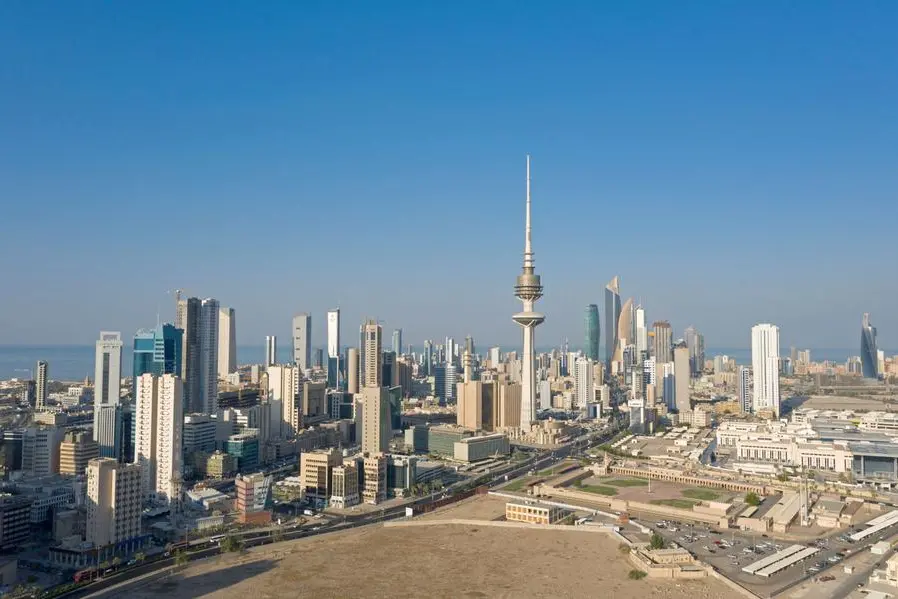
Most Kuwaiti banks are expected to report higher second-quarter earnings as they book less provisions compared to previous quarters and overall revenues improve, said Global Investment House. National Bank of Kuwait (NBK.KW), Burgan Bank (BURG.KW) and Commercial Bank of Kuwait (CBK.KW) are all seen reporting higher net profit for the period, whereas Kuwait Finance House (KFIN.KW) is expected to take a hit this quarter.
In Oman, which saw a major cabinet reshuffle after some protests demanding political reforms earlier this year, Bank Muscat (BKMB.ON) and Bank Dhofar (BKDB.ON) are expected to report higher earnings, while National Bank of Oman's (NBOB.ON) net profit is seen lower compared to last year, Global Investment House added.
-By Nicolas Parasie and Mirna Sleiman, Dow Jones Newswires; +9714 446-1698; mirna.sleiman@dowjones.com
Copyright (c) 2011 Dow Jones & Co.
(END) Dow Jones Newswires
05-07-11 0822GMT