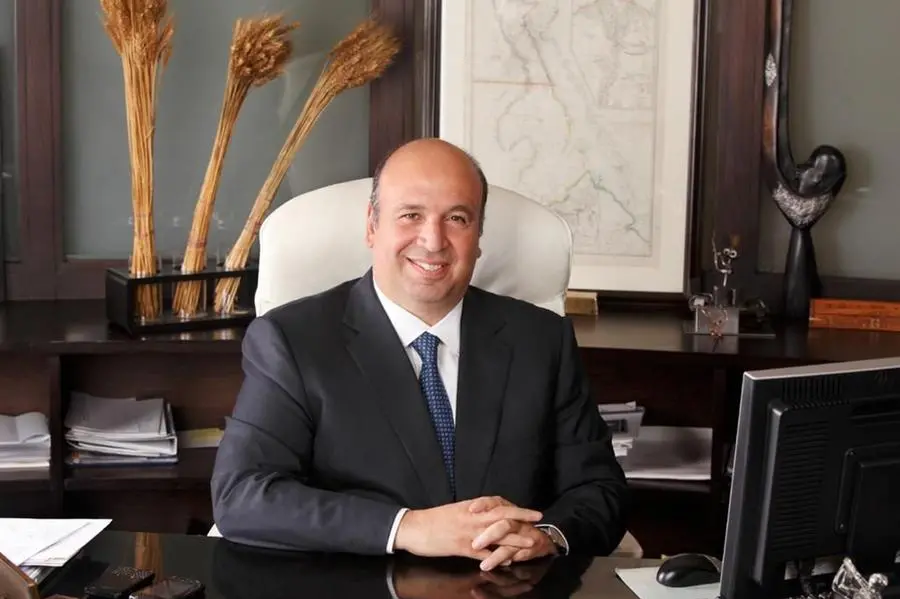
Hussain Sajwani, chairman of Damac Holding, rose up the ranks to control one of the largest conglomerates in the UAE today. Utpal Bhattacharya spent an hour questioning him about his business and factors that helped him to succeed.
How is the Damac group structured? What are its businesses?
Damac Holding is the holding company that owns and operates a number of companies. We have Damac Properties, which is one of the largest companies in the group. It has sold more than 4,500 units. It has projects under development north of US$3.5 billion. It has 22 towers in Dubai. We are in the process of launching couple of towers in Abu Dhabi.
We have already launched one in Beirut, a few are in the pipeline in Jordan and we are looking at other geographical locations in the region stretching from India to Morocco. It is already the largest privately held property company in the Middle East and the objective is to be a major regional property company.
Then we have Damac Invest, which is a company that invests in public equities, private equities, acquisitions and mergers. It also has a brokerage arm and the assets under management of this company in the region of US$2.2 billion. It has a team of analysts and fund managers and research capabilities and owns equity shares in telecom companies, banks and institutions in the region.
We also have the food company that we established 23 years ago. It is the largest catering company in the Middle East. Our catering company is sizeable and is in 14 countries around the globe. It also owns three chains of restaurants under that division. In the industries we have Al Anwar Ceramics and other ventures.
We also own 40 per cent of Al Ahlia Insurance Company in Bahrain and we own 26 per cent in United Insurance Company in Oman. We are in the process of expanding our insurance business in the region
Damac Group has operations in 16 countries in the region. It has operations in North Africa, GCC, Lebanon, Egypt, Iraq, Iran, Turkmenistan, Azerbaijan, other CIS countries, Russia and the UK.
We have more than 6,000 employees in 16 countries in the world. Our assets under management between property and finance company are in the range of US$6 billion.
You began at the bottom. What were the main factors that contributed to your astonishing growth and success?
I started in 1983 a catering company in Abu Dhabi in 1983. I was at that time an employee of Abu Dhabi Gas Industries (GASCO). My salary at that time was AED8, 000 or US$2,000 a month.
I will attribute 90 per cent of my success to God's blessing. My contribution to this growth has been my hard work. I am an extremely hard worker. I work and I enjoy working. I am also very focused. For six years I did not do anything except catering. For another four years I was very focused on investments. So what I mean to say is when I enter a new line of business, I tend to be very focused into it.
A number of businesses that I own, I built them up from the scratch, although there are those that I have acquired. But every business that I own, I make it a point to understand each one of them very well by educating myself thoroughly about the nitty-gritty of that line. I also get involved into micro managing of even the smallest detail of my businesses and this is very true especially for my large businesses, which are the food, investments and properties. I know these businesses inside out as I built them up from zero. I understand them very well. And that's the key of my success.
Do you do everything yourself?
When I start a new business, I take a lot of interest in details, much beyond what you can even think of.
When I ventured into the property business, I personally designed every apartment, every bathroom, every kitchen, the door of the kitchen, the toilet size, the sink size, the ducting, the lobby, the parking, the corridors, the lobby, the width and the length of the balcony, the landscaping, and in fact I can go on and on and on... And this is just three years ago. However, I do delegate, but only after I have learned enough about the business. Now I do not get involved with every building, but in my first building, I was involved from a to z.
Are you a building expert or an architect?
Neither. But one can always learn. I am an industrial engineer and not an architect. But nobody is born with all knowledge. Everybody learns. A doctor goes to the university and he learns his trade there and then he practices. If you think you cannot be a doctor at the age of 40 or 50, you are wrong. You can always become a doctor if you go to a university and train yourself at whatever age. The only thing you require is courage and the belief that it is never too late to learn anything new. I will never forget a fellow lady student who used to stay next door to me during my university days. She was 70 years old and the first weeks everybody was shocked. I asked her what was doing here and she said she was there to get a degree in economics.
So I may not know the structure of the building as I am not a structural engineer, but by using my common sense I can give valuable inputs for the architect and design of the apartment. For example, I can tell that if the width of a bedroom is 3.5 metre, it is small and if it is 4.5 metre, it is large. Or when they make a smaller living room and a large bedroom, I tell them to make the bedroom smaller and the living room bigger. When they design a smaller bathroom, I ask them to make it bigger. In fact, I was the one to tell the engineers and architects to provide every bathroom with a Jacuzzi tub in our buildings. You are already giving a tub and a shower cabinet. Why not make the tub a Jacuzzi spending another AED6, 000? So we are the first to offer a Jacuzzi in every single apartment. To think of it, if you are purchasing an AED1 million apartment, an additional investment of AED10, 000 is a very small amount and you can have a Jacuzzi with it. And this also helps in our marketing as customers like it.
Most of the great and successful ideas are not rockets sending to the moon. They are simple and basic.
What are the other reasons for your success?
Apart from being focused, hard working and understanding my business as I have mentioned, I am also very customer oriented. From day one I have learnt that the customer is the king and I have continuously tried to please them.
I certainly had an advantage as I embarked on business expansion as I began in the toughest industry.
Catering is the most difficult industry in the world, I can assure you.
Why do you say so?
It is a highly competitive industry where you have to get your contract through a bidding process that leaves you with a margin of just three to five per cent. In any industry where you have a margin of three to five per cent, you really struggle to make both your ends meet. You have to provide quality, and yet how can you provide quality when your margins are that thin?
In the bidding business, the client gives the business to the one who bids the lowest. Out of 100 jobs that you get, 95 are the ones where you have bid the lowest. You want to provide quality since you want to compete, but being the lowest bidder you may not be able to provide quality. So the challenge in this business is that you have to quote a lower price and yet provide better quality. We did that very successfully.
You have to understand that catering is to do with food and that means hygiene. It is not like rent a car business. You have to be extremely cautious about what you provide. Since this is a business where food can get spoiled very quickly and people may not like the taste of what you give them, it increases the challenge of meeting expectations.
The other problem is that catering is part of the service industry and which means man power management is a big issue. Then there are the challenges of logistics management as you have serve food at remote places, three hours into the desert in the month of August when temperatures soar to the high 40s, it is not easy. Besides when you are serving food to customers living in remote places without their families, their moods are not always stable and they vent out their anger on the food and the poor caterer. The worst part of this business, however, is that the people you are feeding are not judging you. It is the supervisor, who is the last say. So even if you have provided very good quality, the supervisor may not be happy with you because you have not taken care of him. He may give you a warning.
So to come back, I was lucky because I learned and trained in a very tough environment. It is like when you go to Harvard and train hard, then you pass out and go to other schools, it is easy.
What made you get into the toughest business, the first thing?
I don't know! I was dumb, probably. But it was my destiny. I never did a study of the industry. I was at GASCO and I tried to initiate three ventures, including catering. I sent kids to summer camps and did not make any money. I started a timeshare business, which made money, but I soon realized that it was not a good business as our principals in the US were not delivering the goods I was promising my clients. Catering was my third venture. The margin was very good when I entered the business, but it all changed very quickly. It was 20 to 25 per cent, but it all changed within a year because the earlier profit margins were based on old prices of the late '70s and early '80s when oil prices were very high. But in 1984, after a year in business, the market became extremely competitive.
What has the catering business taught you?
I always put myself in the customer's seat. I am a difficult customer and I am a demanding customer and I am a perfectionist. I always go to Damac's sales office and restaurants and ask friends to go and get their comment. I hate to see a tissue on the floor of the bathroom of my restaurant.
As you grew in your business, what were the key challenges that you encountered?
The biggest challenge has been the management of people because the standards that I have set, in my view, are among the highest in terms of quality, delivery, commitment, attention to detail and meeting deadlines. Finding the right people in this part of the world who have the passion to meet these standards is not easy. Our culture in this part of the world is very different. I have learnt these things in the US as a student. You don't do a job half hearted, you do it right. I have learnt that when you submit a report, the look of it, the neatness and the presentation is as important as the content.
In our part of the world, in my opinion, people tend to get the job done to 70 per cent or 80 per cent of what it merits. They do not respect deadline and the attitude is that if something cannot be done today, it can be done tomorrow. I hate that! And that is the challenge in my management.
Has that problem remained all along or is it getting better now?
No question about the quality of people having improved compared to what it was some years ago. But to answer you in a different way, one of the key factors to my success has been my ability to select, put together and lead the right management team to run the businesses. No matter, how focused, hard working and intelligent one may be, you cannot manage 16 countries and 6,000 employees and billions of dollars on his own. It is impossible! So it is the team that you put together. So I am very particular when it comes to selecting the team and yes, I drive the team very hard and I am on top of them. Today we have one of the best teams in the Middle East!
What does being particular mean?
I tell people that this is Harvard. Getting in is difficult. I will quantify this for you. Last year we received more than 100,000 CVs. Out of that we interviewed 4,000 potential candidates and ended up employing only six per cent of that. In other words, out of 2,000 CVs we receive, we interview only 100 people and employ just six. That's how difficult we are. But it is also difficult to continue working with us.
What is rate of attrition?
Well it is better that many other companies, since our selection process is robust and tough. If you look at Harvard, those who get an entry hardly fail or leave. The process is tough, but once you are in you tend to continue.
What are expansion plans of Damac?
We have bought some land in Abu Dhabi and we plan develop properties similar to Dubai. In Lebanon we have launched one tower and in the process of looking at couple of more projects. In Jordan we have bought two pieces of land in the heart of Amaan and we plan to launch the projects sometime this year. We have some more in the pipeline.
In the other countries, including the subcontinent we are in various stages of feasibility, study and negotiation.
Any plans to take Damac public?
At the moment we do not have plans to take the Group public. But we have subsidiaries that are already publicly listed. Our insurance company and our ceramic tiles company are public. We may take some other subsidiaries public, but not the Group or Damac holding no.
How do you see the property prices in Dubai?
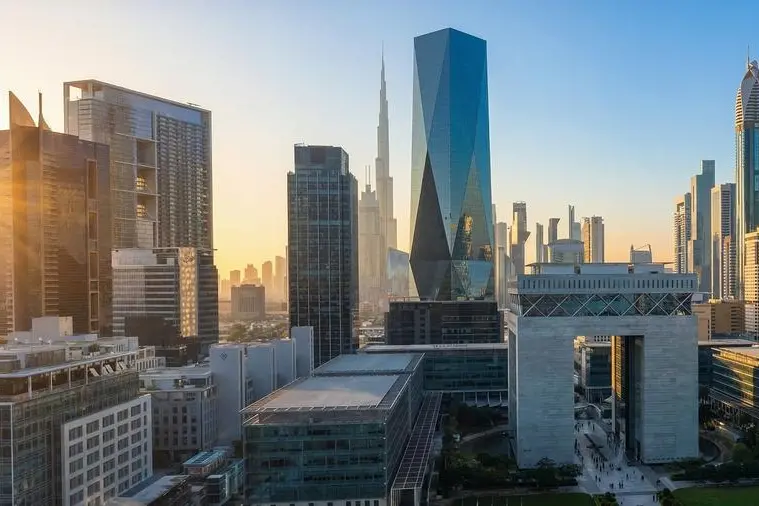
The Dubai property market very strong fundamentally. Dubai is seen as an international city, as a hub for people all the way from India to Egypt and Nigeria to Moscow. Either it is the minus 20 degree centigrade temperature of Moscow or the Iranian problems with the Western world, or security issues of Nigeria or bombing in Lebanon, people want to come and stay in Dubai.
Dubai has not yet scratched the surface of the growth. Outside of this region, in Europe alone there are 300 million people reaching the older age. Lot of them are now coming to Dubai to make the emirate their residence.
I am concerned about the fact that land prices and construction prices are going up. Dubai is already expensive and it is going to be more expensive. Rents will continue to go up. But I don't see a solution.
Dubai is today comparable to London, Hong Kong and New York and when you are in that category you become expensive and you pay the price.
The region has been undergoing some major changes. How does it impact Damac?
We are lucky to be in a region that is growing very fast. We are in a region that is very wealthy. My understanding as is the view of many analysts is that oil price will continue to be very strong in the next three to five years. The benefit of the strong oil price in the last two years is yet to kick into our economies fully. The money that has gone to the government treasury has been used by some of the governments to pay off debts. We expect a number of new projects to come to the market in the next two three years that will keep the momentum going.
We are also witnessing the opening up of the economies like Abu Dhabi. I think Kuwait economy is going to open up next and Saudi economy is changing fast. Opening up these economies will bring in a lot of opportunities in the region.
One of the important factors of change is that the younger generation is taking over. It is exactly 30 years from the time when the earlier generation made their oil wealth. At that time they were in the age bracket of 35 to 40 years. They are now leaving us or have left us. What it means is that younger boys and girls who are western educated and more sophisticated having seen the world, are inheriting that wealth. We thus see a change in the pattern of doing business and expenditure: we are now becoming large consumer markets.
I must also mention here the wave of political changes in the region as we see democracy growing its roots.
As more democracy comes to the region, it will be healthier for the region as it will have positive impact on the economy and add to the stability. We will be hopefully benefiting from these changes.
The other good thing is the WTO and the breaking of the monopolies. I have been always against the monopolies, against the agency laws, opposed to protection of businessmen against customers. With WTO the monopolies will break, the agency laws are going to change and restriction on businesses will go and free trade will become the norm of the day, allowing foreigners to do business more freely and buy properties.
UAE is, of course, much ahead in this game, but it is happening in other countries in the region. It will be benefiting the region.
What do you advise young entrepreneurs, who want to make it big?
I have seen quite a few of them, relatives and friends, I am sorry to say that some of them think that to do business is some sort of fun. If you want to be in business, you have to work very hard. You have to be on the move 24/7. You cannot say that today is the Eid holiday and I am not going to work or a Friday or Ramadan or my wife' s birth day and I am not going to work or travel. If you are in business you have to compromise on all these to succeed. Business has no time, it is a commitment; it has a customer and timing and deadline that you have to constantly meet.
What about the family?
You have to convince your wife, your daughter, your family about the commitment needed for businesses and that's how I succeeded. You have to have the commitment and passion for it.
You must be one of the toughest bosses to be working with
Success has a price. You want to buy Rolls Royce and you want to pay AED50, 000. Is this possible? Can you buy Mercedes at the price of Corolla? If you want to be rich and wealthy and managing billions of dollar you cannot take one month holiday and switch off your mobile. If people want to have easy life, someone else will be ahead of them.
Don't you take holidays?
I do, but I do not switch off my mobile phone. Every year I take a month of holiday, but I am on the phone, faxes and we have meetings happening. The kids want to sleep till 10 AM, but I wake up early and manage my time. I get to my phone and fax machine. By the time it is ready for breakfast, I have done my work in two hours that I have had.
Are your kids taking to you or they are like the rest of us?
I don't think they will take on me. They have seen and lived the luxury of life, I haven't. We used to sleep five in a room, until I was 18 years old. I used to walk to the school until I was 18. It is different for them.
They don't want to go to the school in a Corolla, they want the BMW or the Mercedes.
Blurb 1: Success has a price. You want to buy Rolls Royce and you want to pay AED50, 000. Is this possible? Can you buy Mercedes at the price of Corolla? If you want to be rich and wealthy and managing billions of dollar you cannot take one month holiday and switch off your mobile. If people want to have easy life, someone else will be ahead of them
Blurb 2: I am concerned about the fact that land prices and construction prices are going up. Dubai is already expensive and it is going to be more expensive. Rents will continue to go up. But I don't see a solution. Dubai is today comparable to London, Hong Kong and New York and when you are in that category you become expensive and you pay the price.
Blurb 3: Most of the great and successful ideas are not rockets sending to the moon. They are simple and basic.
© UAE MONEYworks 2006