For your information from Lebanon and the region
Lebanon:
LCB in US crosshairs
Lebanese Canadian Bank was accused by the United States Treasury Department of money laundering in connection with a drug operation with ties to Hezbollah, on February 10. The department released a 14-page notice of finding, which concluded, "Lebanese Canadian Bank SAL is a financial institution of primary money-laundering concern." Stuart Levey, the US treasury undersecretary for terrorism and financial intelligence, said he believed the fault lay with the bank's "management complicity, failure of internal controls, lack of application of banking standards" and other "vulnerabilities" in Lebanese banking standards. In response, The Association of Banks in Lebanon put out a statement stating its support for the bank. Riad Salameh, governor of Banque du Liban (BDL), Lebanon's central bank, travelled to Washington, DC, on February 24 to discuss the matter with US officials.
Salameh and others have suggested that the investigation could be the result of Western dissatisfaction with the recent shift in power in Lebanon's government. A statement from Salameh was broadcast on the popular television show "Kalaam Al Nas" in order to discourage Lebanese depositors from withdrawing their money from the bank, as some experts have suggested was happening. "We wish to assure Lebanese markets, and those who are dealing with [LCB], that their dealings with it are secure," Salameh said in a BDL release. Though BDL management has made no comment on the issue, the bank has posted a statement on their website saying, "[LCB]...is committed to fully cooperate and coordinate with the relevant regulatory authorities in an effort to demonstrate the integrity and transparency of its operations and accordingly denies knowledge of any involvement in any manner whatsoever in illicit transactions or wrong doing."
BDL posts full 2010 figures
Lebanon's banking sector showed a slowdown in deposit growth and a relatively robust year for lending according to Banque du Liban (BDL), Lebanon's central bank, which released full financial figures for 2010 performance. Deposits represented 83 percent of the sector's total balance sheet. Customer deposits grew 11.9 percent to reach $107.2 billion by end-2010; this growth is 37 percent lower than the growth posted in 2009 when the financial crisis encouraged depositors to seek out the safe haven of Lebanese banks. Loans grew by 23.1 percent in 2010 to reach $34.9 billion at end-2010. Dollarization of lending was 64.1 percent. The expectation at the start of 2010 was for the ratio of dollar lending to decrease based on relative political calm and encouraging policies from BDL in lifting reserve requirements on the majority of Lebanese lira lending; political unrest in the fourth quarter slowed this trend, leading to comparable figures to 2009.
Bank of Beirut heads to Oz
Bank of Beirut announced on February 21 that they had acquired an 85 percent stake in Australian Laiki Bank. Laiki Bank was majority-owned by the Cypriot Marfin Poplar Bank, which put out a joint statement announcing the sale. Regulatory bodies from all three countries have approved the deal, which has been reported to be valued at $420 million. "Entering the Australian banking sector is a direct materialization of our strategy to expand outside Lebanon and serve our customers wherever they are. After highly successful operations, whether in the United Kingdom, Germany, Cyprus, Oman and other overseas markets, the acquisition of a majority ownership in Laiki Bank will allow us to further improve our performance and offer our customers an expanded international platform that caters to all their needs," said Salim Sfeir, chairman and general manager of Bank of Beirut. Including Laiki Bank, Bank of Beirut now has 65 branches worldwide with 50 in Lebanon and 10 in Australia. The Lebanese bank also has two branches in the UK and Germany, one branch in Cyprus and one in Oman. These locations combined give the bank a total consolidated balance sheet of $9 billion with $6.88 billion in deposits.
GCC & MENA region
Libya unrest hits banks
The United States Treasury Department announced on February 25 that it would be monitoring transactions for possible links to the unrest in Libya. The treasury department's Financial Crimes Enforcement Network requested that financial institutions "apply enhanced scrutiny" to accounts which could be held by Libyan officials or Muammar al-Qadhafi himself. "Financial institutions should be aware of the possible impact the events in Libya may have on patterns of financial activity when assessing risks related to particular customers and transactions," said the statement. A WikiLeaks cable released in late February containing a message from the US Embassy in Tripoli valued Libya's sovereign wealth fund at $32 billion and said that "several American banks are each managing $300 million to $500 million."
According to US State Department spokesman Philip Crowley, Libya's finances had become so entwined with the US that the country suffered significant losses with the fall of Lehman Brothers and was also approached by now debunked ponzi-schemers Bernard Madoff and Allen Stanford. Libya announced that it would be accepting bank license applications from foreign players in February of last year. The country's central bank only ended up issuing one license, however, with Italy's UniCredit SpA the now perhaps not-so-lucky recipient. Three Gulf Cooperation Council banks had entered the running -- it was reported that Mashreq Bank, Emirates NBD and Qatar Islamic Bank were put on the short list for licensure but in the end none was granted. Byblos Bank and Fransabank have representative offices in Libya.
Shaky start for Egypt's banks
Egypt's net foreign reserves at the country's central bank fell by $1 billion in January down to $35 billion, leading to a balance-of-payments deficit for the month. Deputy Central Bank Governor Hisham Ramez said in early February, upon the reopening of the country's banks, that the foreign reserves would be used to cover withdrawals and transfers in an effort to stabilize the Egyptian economy. Foreign holdings of treasury bills dropped as well in the first month of the year, decreasing by $2.8 billion as foreign investors were spooked by unrest in the country. EFG-Hermes expects reserves to continue to decline in 2011, compounded by the Central Bank of Egypt's efforts to weaken the Egyptian pound.
Arab stock market losses
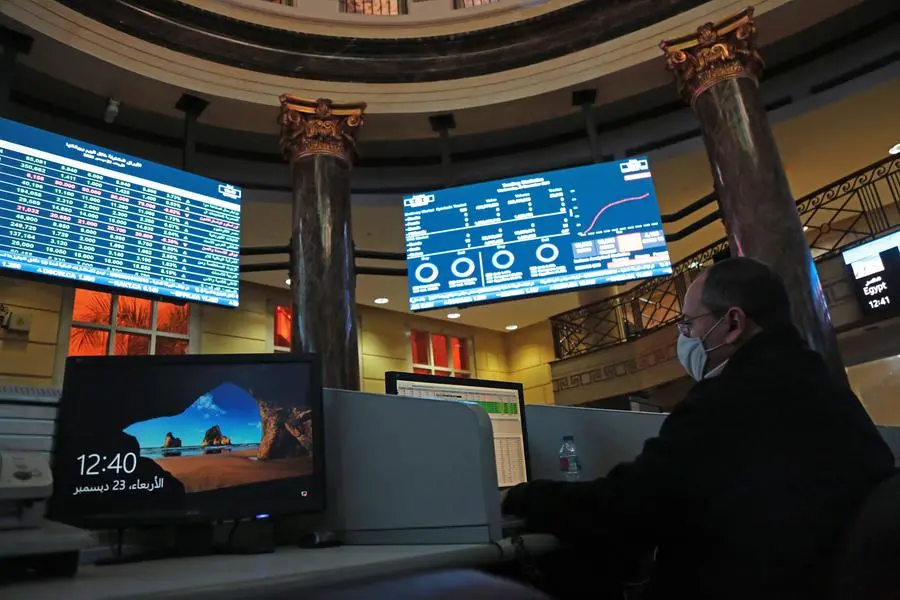
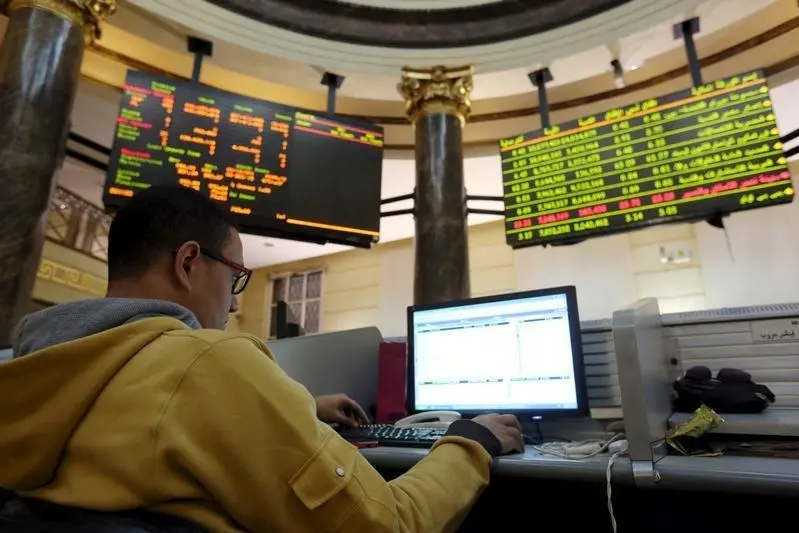
General unrest in the Middle East and North Africa led to losses totaling approximately $24 billion in February on regional bourses. The majority of the losses were in Saudi Arabia, Qatar and Kuwait, while Abu Dhabi managed slight gains. After the $24 billion in losses, market capitalization of the region's 14 stock exchanges was left at $930 billion on February 23, down from $954 billion at the end of January.
UAE Central Bank denies shady transfers
In light of recent political unrest across the Middle East, the United Arab Emirates' Central Bank confirmed that it had not recorded any unusual or erratic financial inflows from Egypt, Tunisia or other Arab countries over the past few weeks. An unnamed central bank official told the daily Al Ittihad that reports in the international media of such transfers were completely false and had no basis. "All the news carried in the international media about unusual financial transfers from those countries into the UAE's banking system is only misleading reports and suspicious analysis." According to the official, countries facing turmoil generally enhance their control on financial transfers and on their banking sector, blocking any illegal actions. UAE Central Bank Governor Sultan Nasser al-Suwaidi also denied rumors of money transfers to the UAE from Egypt and Tunisia after the collapse of their political regimes. He told Gulf News, "In Egypt, the banks were closed and nothing has been received. With Tunisia, we don't have a strong banking relationship." He did confirm that the UAE would comply with a United Nations Security Council (UNSC) resolution demanding to freeze the foreign possessions of Libyan leader Muammar al-Qadhafi. Meanwhile, Transparency International, the anti-corruption watchdog organization, is asking Group of 20 countries and Dubai to freeze and inspect any illegal possessions coming from Egypt and Tunisia. As of now, the UAE has yet to respond to Egypt's request to freeze the assets of former president Hosni Mubarak and his family, though it has announced it would comply with a UNSC resolution to freeze the foreign assets of Libya's Qadhafi.
See-saw 2010 for Dubai banks
Emirates NBD, the United Arab Emirates' largest bank by assets, reported a net interest income for 2010 of $1.85 billion, down 8 percent year-on-year, and non-interest income of $790 million, down 13 percent. Net profit was down 30 percent at $626.3 million. Customer deposits, however, were up 10 percent to $54.46 billion, with customer loans at $53.67 billion, down 8 percent. These totals brought the headline loan-to-deposit ratio to 99 percent as of December 31, compared with a ratio of 118 percent at end-2009. The bank's shares rose 16 percent last year. Emirates NBD's Islamic finance subsidiary, Emirates Islamic Bank, reported total income at $208.8 million for the year, a decline of 9 percent from the corresponding period in 2009. Net income from Islamic financing and investment products held steady in 2010 compared to 2009 levels, at $192.2 million, while other income declined by 57 percent to $16.6 million, principally resulting from a write-down of $58.3 million in its investment properties throughout the year. Excluding the impact of investment properties, total income grew by 16 percent in 2010. Customer accounts grew strongly by 23 percent from the end of 2009 to reach $6.89 billion. Commercial Bank of Dubai (CBD) announced its earnings results for the full year 2010, with a net profit of $223 million, a 2.2 percent increase on $218.6 million in 2009. The total income for 2010 amounted to $514.5 million, a 6.9 percent increase compared to $481.33 million last year. CBD reported total assets of $10.48 billion, a 4.7 percent increase on last year. Loans and advances stood at $7.4 billion by year-end 2010, while customers' deposits were up by 4.6 percent compared to last year, reaching $7.95 billion by the end of 2010.
Abu Dhabi banks show reasonable recovery
The 2010 financial results of United Arab Emirates banks in general, and Abu Dhabi banks in particular, pointed to a slow but stable recovery in the financial sector, boosted by decreasing loan losses, portfolio impairments and rising liquidity resulting from improving deposits. The National Bank of Abu Dhabi (NBAD), the largest bank in the UAE by market value, reported net profits of $1 billion, a 22 percent increase on last year's results and the first time the bank's profits have crossed the $1 billion threshold. According to the bank, loans and customer deposits grew 3.5 percent and 6.5 percent year-on-year, respectively. Meanwhile, Abu Dhabi Commercial Bank (ADCB) managed to generate net profits of $106.45 million, in comparison to $139.6 million in net losses in 2009. Abu Dhabi Commercial Bank (ADCB) increased total loans by 2.5 percent year-on-year and its net interest income soared, growing 20.5 percent. Abu Dhabi Islamic Bank Group reported a record net profit of $278.52 million for the full-year 2010, reflecting a noteworthy increase of 1.21 percent year-on-year. Performance from the core banking business was predominantly strong as the bank's net revenues grew to $830 million on the back of robust customer, branch and financing growth. The bank's assets reached $20 billion for the first time. Global Investment House (GIH), the Kuwaiti investment company licensed by the Central Bank of Kuwait, estimated that the government-controlled NBAD would increase its net profits to $1.17 billion in 2011 and could even increase its net income five fold in the next year.
© Executive 2011