PHOTO
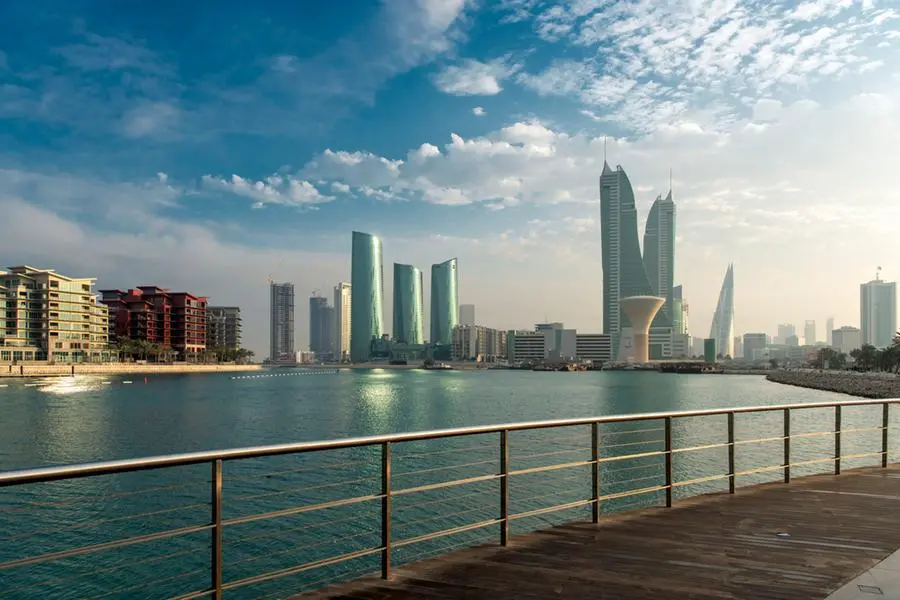
The economic outlook for Bahrain’s economy remains clouded by persistent weakness in government finances, evident by significant fiscal deficits and rising public debt levels, large external financing needs, a general slowdown in non-oil activity and limited prospects for oil sector growth. According to ICAEW’s latest Economic Insight report, economic growth in Bahrain more than halved last year, from 3.7% in 2017 to 1.8% in 2018, with further deceleration seen in 2019 to 1.6% amid a major drive to overhaul government finances, which include spending cuts, new taxes and other fiscal consolidation measures.
Economic Insight: Middle East Q2 2019, produced in partnership by ICAEW and Oxford Economics, says the Bahraini economy expanded by its slowest pace in more than two decades last year at only 1.8%. The outlook for this year is similarly challenging as the economy is expected to decelerate further, weighed down by fiscal consolidation measures, lower oil prices and only a modest rise in oil production. But continued project spending, supported by the GCC US$10bn financial package, is expected to balance out the overall impact.
The economic slowdown last year was felt across a range of sectors. The non-oil sector, which comprises over 80% of total economic activity, almost halved to 2.5% in 2018 from 4.9% in 2017. The slowdown was broad-based, but notably in the services sector, where all sub-sectors slowed from 2017 rates. The report expects growth in 2019 in the non-oil sector slowing further to 1.5%, notably below the 4.4% average between 2014 and 2017, weighed down by several fiscal consolidation measures, including the introduction of the 5% VAT earlier this year.
The oil sector on the other hand contracted by 1.1% in 2018, reflecting pre-scheduled maintenance in the first half of last year and the gradual erosion in the overall production capacity in Bahrain. On a more positive note, following Bahrain’s discovery of its largest oil field since 1932 in April last year, the country is likely to start shale oil production by the end of this year, with well-drilling reportedly started a few months ago. However, production is likely to remain slow and gradual, so only a modest 1% rise in oil activity is predicted this year.
Mohamed Bardastani, ICAEW Economic Advisor and Senior Economist for Middle East at Oxford Economics, said: “Despite Bahrain having the most diversified economy in the GCC, 2019 has proven to be a challenging year amid low oil prices and a government financial overhaul. The government’s ongoing efforts to address the fiscal deficit is crucial for the future development of the economy. We expect the introduction of VAT, paired with the $10bn support package from the GCC, should help increase non-oil revenues and better the nation’s economic prospects.”
Bahrain’s oil revenues still disproportionately dominate government finances, comprising more than 70% of government revenues. The forecast for oil prices now stands at US$67pb in 2018, some 5.6% lower than the 2018 average of $71bp. This remains substantially below Bahrain’s estimated fiscal break-even point of $113, the highest among GCC peers.
In its efforts to rein in public spending and address large and persistent fiscal deficits and spiralling public debt, the Bahraini Government unveiled in October last year an ambitious Fiscal Balance Programme that aims to balance the budget by 2022. This entails slashing public spending, a voluntary retirement scheme for government employees, more efficient distribution of cash subsidies and other measures. The report expects the range of measures to reduce the fiscal deficit from an estimated 10.1% of GDP in 2018 to around 7% of GDP in 2019. Bahrain has relied on external financing to address its persistent deficits in the past few years, leading to a ballooning of public debt as a percentage of GDP from an estimated 42% in 2014 to almost 93% in 2018, the highest in the GCC.
The US$10bn support package from the GCC is expected to help the government address its financial shortcomings and support certain infrastructure projects, balancing the overall economic trajectory over the medium term. The government has already received the first instalment of US$2.3bn late last year and is expecting another US$2.3bn this year.
Several important infrastructure projects are expected to be supportive of growth this year as well, including Alba's (major aluminium producer) new Line 6, Bapco’s (main oil producer) modernisation programme and the airport modernisation project, which includes a US$1.1bn passenger terminal due to be completed by Q3 2019.
2019: A challenging year for Middle Eastern economies
The Middle Eastern economy is expected to slow down from an estimated 1.5% last year to about 0.6% in 2019, the slowest in almost a decade. According to the report, the Middle East GDP growth forecast slowdown is primarily driven by a deeper-than-expected recession in Iran, one of the region’s largest economies. In the GCC, the burden of generating economic growth and employment is expected to fall more on the non-oil sector in 2019. Lower oil prices pose a challenge for a number of GCC countries that rely heavily on hydrocarbon receipts to balance their budgets, notably Bahrain and Oman.
Oil producers in the Middle East will also see limited growth in the oil sector, the traditional engine of economic growth and a primary source of government revenues, given the anticipated extension of the output cuts by OPEC+ to balance the international oil markets. Oil prices are forecast to average around US$67pb in 2019, down by some 5.6% from the average of US$71pb last year.
In 2019, the non-oil sector will continue to be supported by various pro-growth government initiatives, expansionary budgets and fiscal stimulus plans, especially in Saudi Arabia and the UAE, the two largest GCC economies. The non-oil sector in the GCC is expected to accelerate from an estimated 2.3% last year to 2.6% in 2019.
Michael Armstrong, FCA and ICAEW Regional Director for the Middle East, Africa and South Asia (MEASA), said: “The outlook for Middle Eastern economies remains challenging for the rest of 2019 as global developments continue to be of crucial importance to the region. Growth prospects for the Middle Eastern economy have deteriorated as geopolitical risks, involving Iran especially, have risen in the last year. Continued uncertainty in the global oil market means increasing non-oil revenues is vital for regional economies – governments in the region have been proactive, but they must continue to support their economies with pro-growth initiatives.”
The full Economic Insight: Middle East report can be found here:
www.icaew.com/technical/economy/economic-insight/economic-insight-middle-east
– ENDS –
Media enquiries:
Pedro Wisden, Mojo PR, on +971 (0)52 527 4062 or email pedro@mojo-me.com
Jude Obi, ICAEW press office, on +44 (0)20 7920 8553, or email jude.obi@icaew.com
About ICAEW
There are over 1.8m chartered accountants and students around the world – talented, ethical and committed professionals who use their expertise to ensure we have a successful and sustainable future.
Over 181,500 of these are ICAEW Chartered Accountants and students. We train, develop and support each one of them so that they have the knowledge and values to help build local and global economies that are sustainable, accountable and fair.
We’ve been at the heart of the accountancy profession since we were founded in 1880 to ensure trust in business. We share our knowledge and insight with governments, regulators and business leaders worldwide as we believe accountancy is a force for positive economic change across the world
www.charteredaccountantsworldwide.com
www.globalaccountingalliance.com
About Oxford Economics
Oxford Economics is one of the world’s foremost advisory firms, providing analysis on 200 countries, 100 industries and 3,000 cities. Their analytical tools provide an unparalleled ability to forecast economic trends and their economic, social and business impact. Headquartered in Oxford, England, with regional centres in London, New York, and Singapore and offices around the world, they employ one of the world’s largest teams of macroeconomists and thought leadership specialists.
Disclaimer: The contents of this press release was provided from an external third party provider. This website is not responsible for, and does not control, such external content. This content is provided on an “as is” and “as available” basis and has not been edited in any way. Neither this website nor our affiliates guarantee the accuracy of or endorse the views or opinions expressed in this press release.
The press release is provided for informational purposes only. The content does not provide tax, legal or investment advice or opinion regarding the suitability, value or profitability of any particular security, portfolio or investment strategy. Neither this website nor our affiliates shall be liable for any errors or inaccuracies in the content, or for any actions taken by you in reliance thereon. You expressly agree that your use of the information within this article is at your sole risk.
To the fullest extent permitted by applicable law, this website, its parent company, its subsidiaries, its affiliates and the respective shareholders, directors, officers, employees, agents, advertisers, content providers and licensors will not be liable (jointly or severally) to you for any direct, indirect, consequential, special, incidental, punitive or exemplary damages, including without limitation, lost profits, lost savings and lost revenues, whether in negligence, tort, contract or any other theory of liability, even if the parties have been advised of the possibility or could have foreseen any such damages.