PHOTO
Bahrain - An annual midday ban on outdoor work during the hot summer months has seen 99.96 per cent compliance by companies, according to a Labour Ministry official.
Only six violations were registered after more than 17,600 inspections of worksites and other locations across the kingdom, said labour relations assistant under-secretary Aqeel Abuhussain.
The ban on outdoor work between noon and 4pm which started on June 15 will continue until September 15.
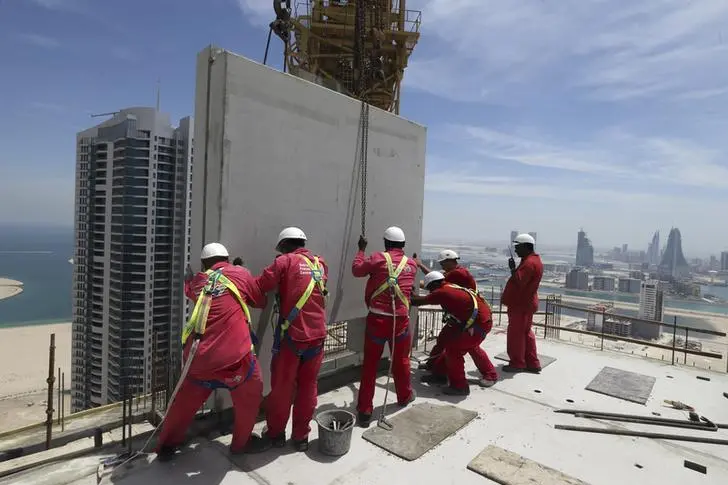
During the four-hour period, it is prohibited to engage workers in direct sunlight or open areas.
This is the first time the ban has extended to three months, from the previous two months.
Bahrain enforces this ban in line with international labour standards to enhance the protection of workers from occupational illnesses and injuries during the peak of summer, when temperatures and humidity levels are high.
Mr Abuhussain, in a statement yesterday, praised the efforts of the private sector for achieving a high compliance rate of adhering to the ban.
Mr Abuhussain
“The compliance rate to the midday work ban has so far reached 99.96pc,” he said.
“The outdoor work ban prohibits workers from being exposed to the sun during the set working hours.
“This high level of compliance that we have reached reflects the effective partnership between the ministry and employers to ensure a safe working environment for workers.”
The official added that Bahrain remained committed to international labour standards that protect the rights and safety of workers.
“The ministry’s inspection team has so far detected only six violations and the number of workers affected was 12, while a total of 17,605 inspection visits were conducted so far,” said Mr Abuhussain.
“The awareness level among employees and employers to adhere to the ban remains high; the ban protects workers from heat-related illness and occupational injuries and also improves their productivity.”
Violators are liable to be imprisoned for up to three months and/or fined between BD500 and BD1,000.
The ministry has also opened a hotline, 32265727, for the public to report any violations observed during the midday work ban period.
The GDN previously reported that a report by the International Labour Organisation (ILO) stated that Bahrain would be the second Arab nation most affected by heat stress resulting in loss of working hours by 2030.
An awareness post by the Labour Ministry about the ongoing annual summer ban on outdoor work
Rising heat due to climate change could lead to the loss of 80 million jobs by 2030 with people being unable to work due to the health risks posed by higher temperatures, said the report, ‘Working on a Warmer Planet: The Impact of Heat Stress on Labour Productivity and Decent Work’.
Heat stress occurs when the body absorbs more heat than is tolerable. It generally occurs at temperatures above 35C, accompanied by high humidity.
Extreme heat can cause heat-related illnesses such as heat stroke and exhaustion, increase mortality and worsen existing health conditions.
The report stated that in 1995 Qatar and Bahrain lost, respectively, 2.3pc and 1.9pc, of working hours (the equivalent of 6,600 and 4,600 full-time jobs) as a result of heat stress.
Projections for 2030 suggest that this percentage will more than double in both Qatar and Bahrain, reaching 5.3pc and 4.1pc, respectively.
Working hours lost to heat stress in the agriculture and construction sectors in Bahrain is projected to be around 9.5pc by 2030 compared with 5.8pc in 1995.
Overall, Bahrain will lose 4.1pc working hours due to heat stress by 2030 which, the report indicated, was equivalent to about 32,000 jobs.
Copyright 2022 Al Hilal Publishing and Marketing Group Provided by SyndiGate Media Inc. (Syndigate.info).