PHOTO
Energy disruptions due to the Iran war will weigh heavily on Gulf oil and gas exporters' economies, while the Middle East's oil importers like Egypt and Jordan face shocks from higher commodity prices and possible falls in income from remittances from Gulf-based workers, the International Monetary Fund said on Thursday. Overall, the Middle East and North Africa region is expected to record a much slower expansion this year with real GDP growth now forecast at 1.1%, which is 2.8 percentage points lower than the pre-war projection, before seeing a recovery in 2027, the IMF's latest Regional Outlook Report showed.
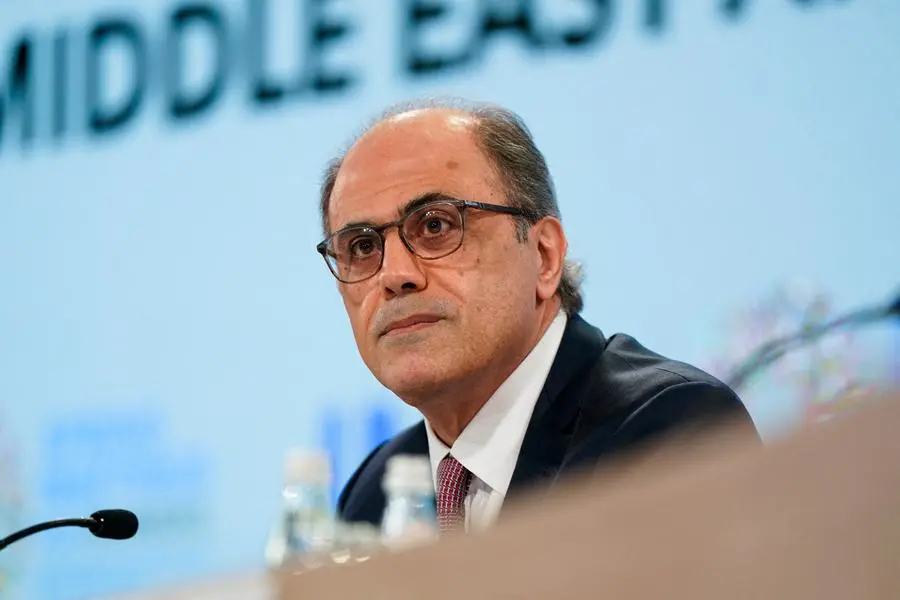
"It's not only a story of oil and gas, it's also the impact that this war has on all the other products that are produced in the region and where the region has a strategic position," Jihad Azour, the IMF's director for the Middle East and Central Asia, told Reuters, including exports of fertilisers and several chemical and other specialised products which make it a globally strategic economic corridor.
"In addition to that, the conflict affected the non-oil sector, where the countries in the GCC have a strategic global position, especially in terms of airlines and logistics."
Among regional oil importers, some are highly dependent on Gulf economies for both energy imports and financial flows, leaving them exposed if the war intensifies or becomes protracted, the IMF said.
RECOVERY PROSPECTS VARY
Growth in the six-member Gulf Cooperation Council is projected to slow significantly to 2% in 2026 from 4.3% forecast in October, with big variations between the economies, the IMF said, before accelerating sharply to 4.8% next year.
"If you have a recovery in oil production, and also if you have a full opening of the Strait of Hormuz, this means that countries will ramp up their production very quickly. And...the level of (oil) prices, that are expected to remain elevated compared to the pre-2026 levels, will allow countries - on the oil side - to regain some of the ground that they are losing currently because of the crisis," Azour said.
Saudi Arabia, the world's top oil exporter and a G20 economy, was expected to be one of the lesser-affected Gulf economies due to its capacity to redirect some exports through alternative routes to the Strait of Hormuz as well as due to its relatively more resilient non-oil industrial production.
"Therefore, the impact on the economy will be short-lived and limited," Azour said, but contingent on the duration of the conflict.
The IMF now expects Saudi growth to slow in 2026 to 3.1%, 0.9 percentage points lower than its October forecast.
Azour also said the IMF remains committed to providing support to countries across the region. Since early 2020, the IMF has approved nearly $46 billion in financing across the region, and deepened engagement with several countries including Egypt and Pakistan.
The Fund said medium-term priorities included diversifying trade routes, strengthening critical infrastructure, and deepening regional cooperation on food, water, and energy.
(Reporting by Reuters staff; Editing by Hugh Lawson)