PHOTO
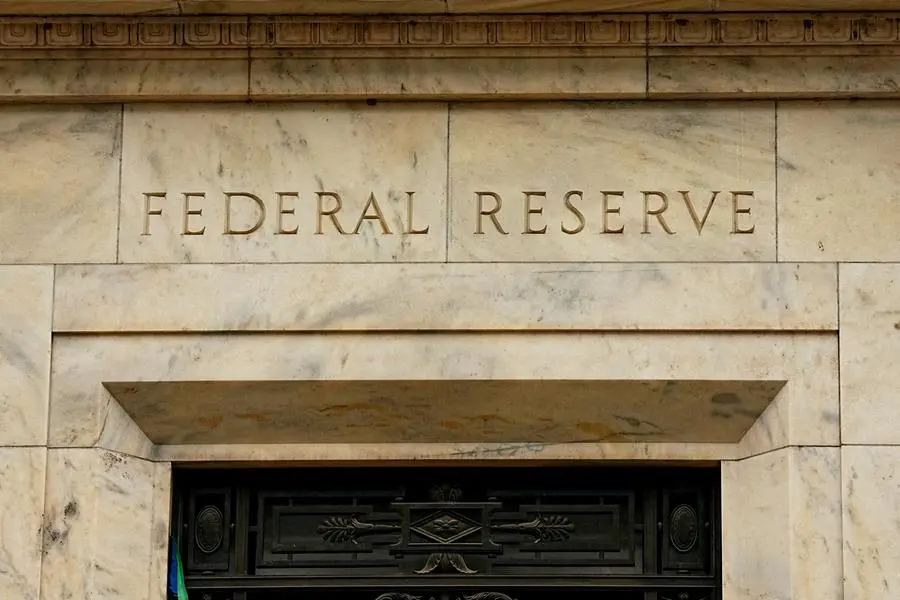
The U.S. Federal Reserve held interest rates steady on Wednesday, citing still-elevated inflation alongside solid economic growth, and giving little indication in its latest policy statement of when borrowing costs might fall again.
"Economic activity has been expanding at a solid pace," Fed policymakers said in the statement after voting 10-2 to hold the U.S. central bank's benchmark interest rate in the 3.50%-3.75% range following a two-day meeting.
Both Governor Christopher Waller, a contender to replace Fed Chair Jerome Powell when his term as central bank chief ends in May, and Governor Stephen Miran, on leave from his job as an economic adviser at the White House, dissented in favor of a quarter-percentage-point rate cut.
The statement from the policy-setting Federal Open Market Committee offered no hint about when another reduction in borrowing costs might come, noting that "the extent and timing of additional adjustments" to the policy rate would depend on incoming data and the economic outlook.
Meanwhile, inflation "remains somewhat elevated," the central bank said, while the job market has "shown some signs of stabilization."
Though the Fed noted that "job gains have remained low," it also removed language from its prior statement saying that downside risks to employment had risen - an indication policymakers as a group are becoming less worried about a rapid downturn in the labor market.
Fed policymakers ahead of this week's meeting had largely characterized the job market as roughly in balance, with smaller gains matching the slower growth in the numbers of those seeking employment as a result of the Trump administration's stricter immigration policies. The unemployment rate in December fell to 4.4%.
Major U.S. stock indexes lost a bit of ground after the release of the policy statement. The yield on the 10-year Treasury note rose to around 4.26%, while the yield on the two-year Treasury note ticked up to around 3.59%. Interest rate futures moved to price in the next Fed rate cut at the June 16-17 policy meeting.
"The FOMC statement was clearly somewhat more optimistic on the labor market, but it's also important to note that the statement indicated that the Committee sees the balance of risks as having tilted towards 'balanced' versus having 'downside risks' in December," said Omair Sharif, president of Inflation Insights.
FED REMAINS DIVIDED
The decision to maintain borrowing costs at their current level puts the Fed's current monetary easing cycle, begun near the end of the Biden administration and continued after a pause of roughly nine months during President Donald Trump's second term in the White House, on hold again after three quarter-percentage-point reductions at the central bank's final three meetings of 2025.
The rate cut at the December 9-10 meeting left the FOMC unusually divided. Three of its 12 voting members dissented, with one in favor of an even deeper cut and two in favor of no reduction at all.
Those same divisions have carried into 2026, and recent economic data have done little to change the outlook for those officials most concerned that inflation is not progressing back to the central bank's 2% target, or for those more worried about a rise in the unemployment rate if credit conditions aren't loosened to encourage more spending and investment.
It's a debate that could shape the first weeks in office of whoever is named to replace Powell in the top Fed job, a decision that Trump is expected to announce soon. Powell's successor is expected to be in place to run the central bank's meeting in June. Investors currently expect the Fed to keep rates on hold until then.
(Reporting by Howard Schneider and Michael S. Derby; Editing by Paul Simao)