PHOTO
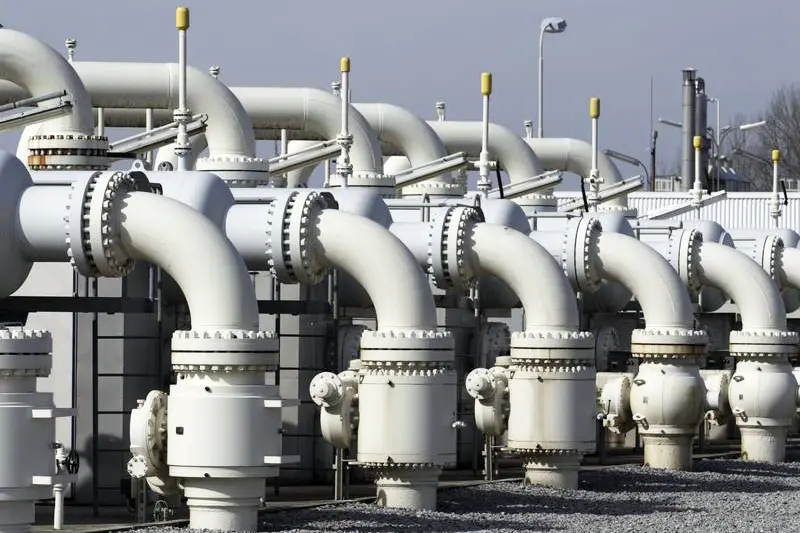
Jordan is pushing ahead with an ambitious plan to switch its position as a gas importer to exporter by linking its desert gas field to a pipeline that traverses four Arab states.
Two years ago, Jordan approved around 700 million Jordanian dinars ($980 million), to be partly funded through an Abu Dhabi government loan, for the project to build a 300-kilometre to link its eastern Risha gas field to the Arab gas pipeline.
“The updated energy strategy for 2025-2035 includes major projects, comprising the development of Risha field, hydrogen plants and renewable energy with the aim of increasing its share in the energy mix to over 30 percent by 2030,” Jordan’s energy and mineral resources minister Saleh Al-Kharabsheh said this week.
“We have already embarked on this ambitious project to develop Risha to boost its production to 418 million cubic feet per day by 2029...the project goes in parallel to another equally important project to link the field to the Arab Gas Pipeline,” Kharabsheh said in a parliament speech carried by the state TV Al-Mamlaka (kingdom).
Risha gas field
In a report last year, the energy and mineral resources ministry said the aim of linking Risha to the cross-border pipeline is to expand the national gas distribution network, phase out gas imports and export any surplus to regional countries.
The 1,200-kilometre Arab Gas Pipeline originates near Arish in Egypt’s Sinai Peninsula and was built more than 20 years to export Egyptian natural gas to Jordan, Syria and Lebanon, and includes underwater and overland pipelines to and from Israel.
The $1.2-billion pipeline has been used intermittently since its inauguration. Egyptian gas exports were dramatically reduced in 2011 initially due to sabotage, followed by domestic gas shortages which forced it to discontinue gas exports by the mid-2010s.
The pipeline was reversed to flow gas from Jordan to Egypt from 2015 to 2018, fed by imported LNG through Jordan's Aqaba LNG reception terminal.
Future exporter
Jordan approved around JOD35 million ($50 million) in its 2026 budget to boost Risha field’s output by nearly 7 times to face growing local needs and slash gas imports.
“Jordan will likely become self-sufficient in gas supplies in 2029 or 2030 after Risha development is completed,” Kharabsheh said in 2025.
The ministry’s report said that Jordan could become a gas supplier to Syria and Lebanon through the Arab pipeline to replace Egypt as a long-time exporter.
Risha contains nearly 12 trillion cubic feet of gas reserves, of which around 4.6 trillion are recoverable, according to the ministry which said these deposits could last Jordan at least 60 years.
“Risha is a major gas field and its development could ensure self-sufficiency for Jordan which has been heavily reliant on gas imports…the field has a big potential and might help turn the country into an exporter in the future,” Ahmed Al-Salaymeh, an engineering professor at Amman University, told Zawya Projects.
(Reporting by N Saeed; Editing by Anoop Menon)
Subscribe to our Projects' PULSE newsletter that brings you trustworthy news, updates and insights on project activities, developments, and partnerships across sectors in the Middle East and Africa.