PHOTO
Gulf energy infrastructure repair and restoration costs to date could reach at least $25 billion, based on an initial assessment of impacted facilities, and are expected to rise further as the full scale of damage becomes clear, according to Rystad Energy.
The Norway-based energy research and business intelligence firm said its estimates show engineering and construction (E&C) to drive the majority of spending (49 percent), followed by equipment and materials (39 percent), while logistics and operations are expected to represent about 6 percent each.
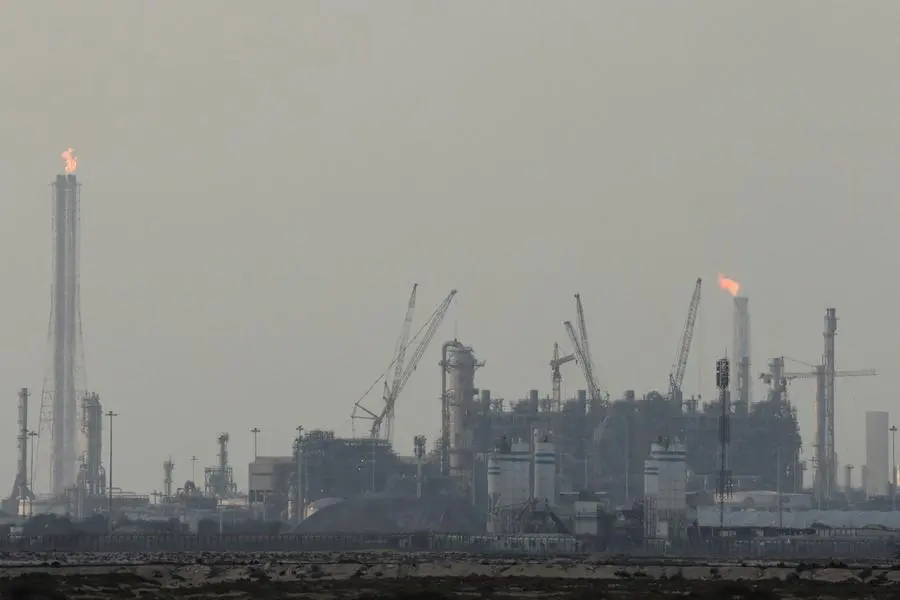
Qatar’s Ras Laffan LNG and Pearl GTL facilities, Iran’s South Pars offshore gas field and Bahrain’s Sitra Refinery appear high on repair intensity and repair time while UAE, Kuwait, Iraq and Saudi Arabia suffered moderate-to-minor disruptions, according to the company’s analysis.
Equipment shortages may slow recovery
One of the most severe impacts was reported at Ras Laffan Industrial City, where the loss of LNG trains S4 and S6 triggered force majeure and reduced capacity by about 17 percent, equivalent to roughly 12.8 million tonnes per year of LNG production.
Rystad said capital alone capital alone will not be sufficient for restoring Ras Laffan’s LNG capacity.
“The large-frame gas turbines required to power LNG main refrigeration compressors are supplied by only three original equipment manufacturers (OEM) globally, all of which entered 2026 with production backlogs of around two to four years, driven by demand from data centre electrification and coal plant retirements,” it said
Audun Martinsen, Head of Supply Chain Research at Rystad Energy, said the Gulf region’s recovery will be defined less by financial capital and more by structural constraints.
“The scale of damage and long lead times for critical equipment could result in slow recovery at Ras Laffan, while Iran’s legal exclusion from Western supply chains means it will have to rely on Chinese and domestic contractors, which is a technically feasible approach that could be slower and more expensive. Urgent repairs will have to take precedence in place of planned expansion.”
Refinery damage linked to upgrade cycle
In Bahrain, the BAPCO refinery in Sitra was hit twice, damaging two crude distillation units (CDUs) and a tank farm, with force majeure declared across operations.
The incident occurred shortly after the refinery reached mechanical completion in December 2025 under a $7 billion modernisation programme, with engineering, procurement and construction (EPC) contractors still onsite finalising ramp-up obligations.
“Here, the constraint is not equipment shortages or sanctions, but the timing of the damage relative to the asset’s investment cycle,” the firm said.
The destruction of a newly commissioned CDU block just months after first production will delay revenue intended to support the recent investment. Restoring the units will likely require international contractors to be re-mobilised at conflict-inflated costs and under uncertain war-risk insurance.
Rystad said the speed of recovery across the region will depend heavily on the density and proximity of domestic EPC ecosystem surrounding each asset. Saudi Aramco’s rapid restart at Ras Tanura was cited as an example, where maintenance teams were already onsite for a planned turnaround when debris fell inside the perimeter, allowing faster repairs.
“The speed of recovery in the region will depend on execution capacity and capital deployment timing, as repair spending ramps up,” the firm said it in its analysis.
Operators are likely to prioritise restoring existing fields instead of new developments, creating demand for EPC contractors and OEMs, especially those with regional experience and existing agreements with national oil companies.
Near-term work will most likely focus on inspection, engineering and site preparation, followed by equipment replacement and construction as procurement constraints ease.
In Iran, continued sanctions would limit access to Western contractors and technology, leaving domestic and East Asian players to capture most recovery-related activity, Rystad said.
(Writing by Anoop Menon; Editing by SA Kader)
Subscribe to our Projects' PULSE newsletter that brings you trustworthy news, updates and insights on project activities, developments, and partnerships across sectors in the Middle East and Africa.