PHOTO
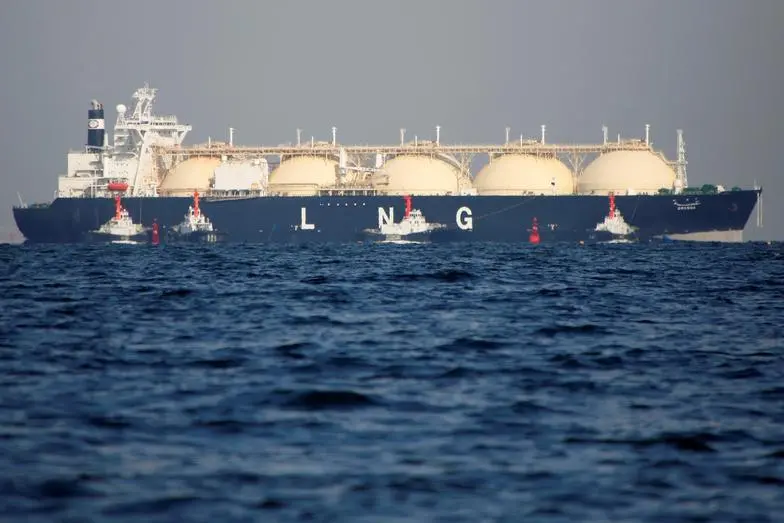
ArabFinance: Egypt's natural gas exports are at full capacity of about 1.6 billion cubic feet per day (bcf/d) from its two natural gas liquefaction terminals as it seeks to benefit from a surge in international gas prices, Reuters cited Petroleum Minister Tarek El Molla.
The countrys exports of LNG are supported by the resumption of operations at the Damietta LNG plant in February and skyrocketing gas prices in Europe.
El Molla did not say what level LNG exports had risen from, but Egypt has expanded exports after ending a long shutdown at the Damietta liquefaction plant in February.
He added that shipments are expected to fall to 1 bcf/d next summer due to rising domestic consumption.
Egyptian gas has played a role in securing Europe's energy needs The liquefaction units are now operating at full capacity as we try to maximize our natural gas exports in light of the rise in international gas prices, El Molla pointed out.
Egypt currently imports around 450 million cubic feet of gas per day (mmcf/d) from Israel for re-export, a div that Molla said it seeks to raise to 600-650 mmcf/d by the first quarter of 2022.
Further increases would require the construction of a new onshore pipeline, which could be installed in 2024-25, Molla said.
However, Egypt recently made amendments to crude oil extraction agreements, which El Molla said could result in an increase of about 100,000 barrels per day (bpd), from current production of 575,000 bpd.
The amendments could result in $5 billion in new investment over the next three years, while $6 billion in foreign investment in the energy sector is expected during Egypt's current fiscal year, which ends in June, El Molla said.
Egypt's fuel product subsidy bill increased by 76% during the first quarter of the current fiscal year, reaching EGP 6.9 billion ($440.61 million), led by an increase in the cost of butane subsidies, El Molla added.
It is worth noting that Egypt and Israel Egyptian government signed agreements with Greece and Israel in November to boost its gas export plans to Europe.
The deals could see Egypt import more natural gas from Israel and increase shipments to Greece, which have failed to pick up this year despite both Idku and Damietta LNG plants being operational.
Increased gas shipments from Israel would be used for re-export, stopping short of disclosing how much gas Egypt could purchase.
In October, Egypt and Israel discussed establishing a new $200 million onshore pipeline that would connect Israel and Egypt via North Sinai. This pipeline could allow Egypt to import an extra 3-5 bn cubic meters of gas per year.
Copyright 2021 Arab Finance Brokerage Company All rights reserved. Provided by SyndiGate Media Inc. (Syndigate.info).