PHOTO
Liwan Real Estate Development expects rising foreign ownership, policy reforms and sustained domestic demand to support Riyadh’s property market over the medium term, according to the company’s board member.
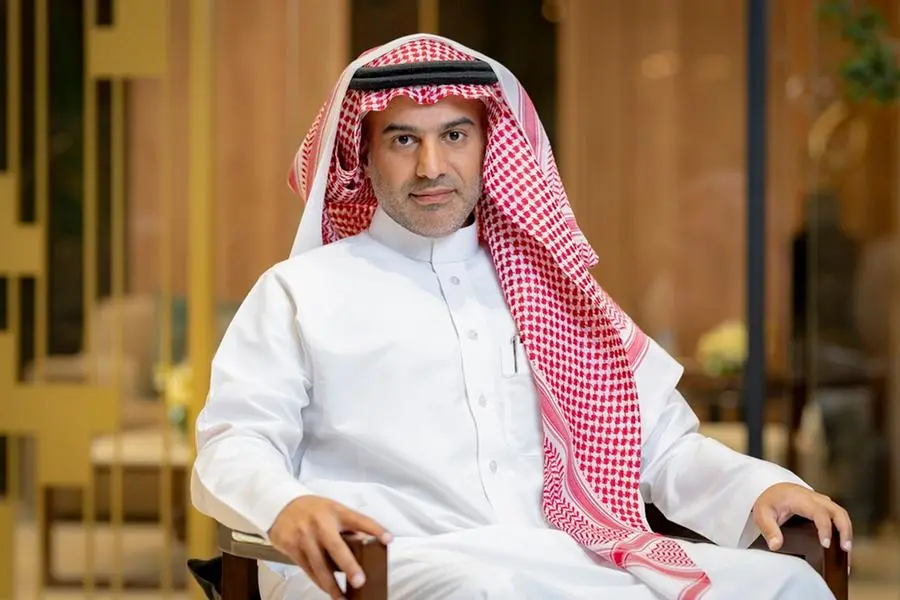
Abdulsalam Sulaiman Alrajhi told Zawya Projects that the capital city’s property market is primarily driven by domestic dynamics, particularly Vision 2030 and its focus on economic diversification and sustainable urban development.
“So prices have increased because people within and from around the world want to build their lives here,” he said. “When the government aims for a more vibrant and prosperous capital, when it aims for a population of 10 million, we support this by planning for 10,000 units in sustainable, multiuse communities that people want to live in.”
Average apartment prices in Riyadh rose by 10.6 percent year-on-year in the second quarter 2025 to reach 6,175 Saudi riyals psm [per square metre], driven by strong appetite in well-connected and centrally located districts, according to Knight Frank's Saudi Arabia Residential Market Review.
Alrajhi said the opening of real estate ownership in the Kingdom to foreign buyers from 2026 is a definite positive for Liwan. On 14 July 2025, the Saudi Arabia had issued Royal Decree No. M/14, approving a new law titled ‘Law on Non-Saudis Ownership of Real Estate,’ which allows non-Saudis to purchase and invest in real estate within designated areas of the Kingdom effective from January 2026.
“It increases liquidity, broadens investor profiles, and is a testament to the increasing maturity of Saudi Arabia’s real estate market,” Alrajhi said. “We expect this to attract diverse new sources of capital, enhance investor sentiment, and enable us to deliver high-quality, well-located developments at scale.”
The Liwan board member said Saudi developers must be ready to meet rising demand in a more competitive market.
“More competition also means developers must raise their governance, transparency, and quality standards if they want to harness this incoming wave of demand, and Liwan is more than prepared in this respect,” he said.
“Our long-standing and tested partnerships with local banks, urban planners, and construction firms ensure our projects are commercially viable and socially sustainable before we break ground,” he added.
While developers across the region continue to face supply-chain pressures and labour constraints, Alrajhi said Liwan mitigates these risks by prioritising local supply development and building long-term partnerships to limit exposure to market volatility.
He added Liwan’s model incorporates the core blocks that inspire investor confidence: strong policy alignment, diversified revenue streams, and social impact.
“Our mixed-use structure of residential, commercial, and lifestyle components creates multiple income sources while delivering measurable social and benefits, too,” he explained. “A great example is our latest partnership with UAPM, which will not only conveniently bring premium retail brands to our customers’ doorstep, but continue the well-balanced diversification of Liwan’s real estate portfolio.”
Excerpts from the interview:
How does Liwan structure the financing of its projects? Are you exploring new or innovative financing models to support future developments?
Liwan Development employs a robust, multi-phased financing model designed to instill market confidence and ensure regulatory compliance. Each project begins with direct investment from Liwan’s partners and private investors, a critical step that demonstrates project viability and commitment. This initial capital is followed by the establishment of CMA-licensed investment funds, which helps to secure institutional financing, and eventually to manage off-plan sales to investors and individual buyers. This structured approach diversifies risk and aligns stakeholder interests from the outset.
What impact do you expect from the White Land Tax increasing to up to 10 percent and its extended scope - will it accelerate development, or simply add cost pressure?
I believe it is a long-term net positive for delivering quality housing more efficiently and at scale. Developers will need to factor tax costs into feasibility studies and consider the density of their projects, which is already an important component of every Liwan project, because we prioritise the balance between comfort, density, healthy lifestyles, and convenience, which makes our developments more livable and valuable. Overall, I view the policy as an incentive for productive land use, especially if we are to help the next generation of homeowners onto the housing ladder.
The government has introduced a five-year freeze on rental inflation starting September 2025. How might this affect developer cash flow, pricing, and investor appetite?
The decision is well-timed, especially if Riyadh is to attract the talent it requires to continue its thus far impressive growth trajectory. Of course, this is something that developers must also take into account over the next five years because it may reduce their unrealised short-term rental yields. But rentals in the retail sector, for instance, are not rising in the same way that they are in the commercial and office space sector, so the effect on revenue is not uniform.
I believe Liwan is well-positioned because rentals are one component of a larger development portfolio that utilises robust financing options, off-plan sales, and includes commercial, F&B, and office space. This diversity of expertise and investments keeps Liwan a step ahead of short-term market fluctuations.
Overall, what is your short- to medium-term outlook for Riyadh’s real estate sector?
The Saudi market is moving beyond isolated units toward master-planned communities with fully realised lifestyle environments. Liwan is leading the charge. Demand for homes is strong and even as we ramp up supply, it has not kept up, so I believe the outlook is very positive in that regard, with plenty of opportunity for developers delivering a diverse range of housing.
There is also increasing demand for high-quality commercial and office space, which is something Liwan is incorporating in every development we build, so that people can live and work in well-connected, walkable communities.
Lastly, with major investments in tourism and a growing calendar of international events, I think it is safe to say that the hospitality sector will also see sustained growth. All in all, I am confident, especially as the Kingdom opens up the real estate market to foreign investment.
Looking ahead, do you plan to expand beyond Riyadh into other Saudi cities or even regionally?
We are focused on the Riyadh market, with active projects in the Central and Eastern districts, and the immediate goal is to achieve full market penetration by securing projects in North and West Riyadh.
But looking ahead, Liwan has set a clear, rational timeline for broader growth, with plans to begin studying and pursuing opportunities in other major Saudi cities by the end of 2026.
This focused, phased expansion strategy ensures sustainable growth while leveraging Liwan’s established success and name recognition in the capital.
(Reporting by Anoop Menon; Editing by SA Kader) (anoop.menon@lseg.com)
Subscribe to our Projects' PULSE newsletter that brings you trustworthy news, updates and insights on project activities, developments, and partnerships across sectors in the Middle East and Africa.