Kuala Lumpur, Malaysia – The IFSB is pleased to apprise that its Islamic Financial Stability Forum (IFSF) will be held online on 16 December 2020 (14:30 – 16:15 MYT). The theme for the 21st series is “The Implications of COVID-19 to the Stability of Islamic Financial Services Industry.”
The COVID-19 pandemic exerts significant pressures on both the regulatory and supervisory authorities (RSAs) as well as supervised firms including the institutions offering Islamic financial services (IIFS). This is especially in terms of coping with the dynamics of the consequences of the pandemic depending on its effects and duration, as well as adapting supervisory approaches and working practice respectively toward the apparent, anticipated, and obscure risks that may result due to contraction in the real economy to which the IFSI is highly exposed.
In addition, it is likely that the need to urgently address the matters arising from the outbreak of COVID-19 may have subsumed attention to other wider issues relating to how the IFSI complements the achievement of the sustainable development goals including the social development. These developments will obviously put both the stability and resilience of the IFSI to test in the later part of 2020 and perhaps beyond. The specific issues relating to these broad concerns are amongst the focus of the panel discussion session of this 21st IFSF besides the prospect of Islamic finance taken into account the lesson learnt from the pandemic.
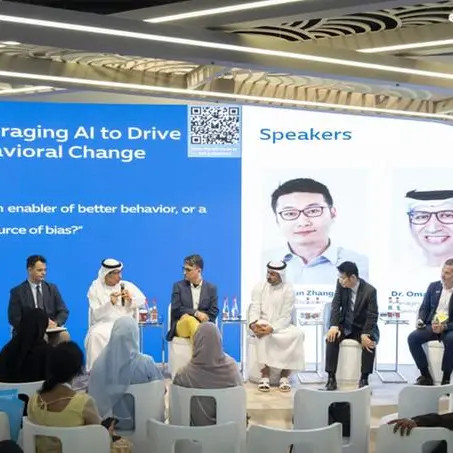
The concept of the 21st IFSF is a panel discussion to assess the effectiveness of regulatory and supervisory response to maintain financial stability upon the impact of COVID-19 and way ahead.
Among the objectives of the discussion are:
- What is the effect of the prudential regulatory and supervisory policy response to COVID-19 to maintain financial stability of IFSI in general?
- Are various stimulus packages introduced stimulating new spending and preventing job losses quickly enough as desired especially to the households and SMEs to which the Islamic banks are highly exposed?
- Are there any unexpected prudential consequences peculiar to the specificities of the IFSI that have emerged from the crisis and what are their implications?
- How can the Islamic banks deal with regulatory capital treatment of ECLs given that IFRS-9 did not specify such treatment for profit and loss sharing contract, for instance?
- What are the peculiar impediments and risks to the digital transformation of the IFSI as necessitated by COVID-19? Are there legacy infrastructure, human capital or capital budgeting constraints, for instance?
- How effective is the coordination and communication among various regulators and supervisors of Islamic finance segments in response to COVID-19?
- What factors should the regulatory and supervisory authorities consider to be of utmost importance, as countries where Islamic finance is practiced gradually ease the lockdown?
- What are the forward looking policy to be pursued taken into account the lesson learnt from pandemic?
- To what extent has the focus on the effect of the pandemic subsumed attention on other wider issues and initiatives that are pertinent to Islamic finance such as financial inclusion, climate change, etc.?
The IFSF provides opportunity to renowned IFSI leaders, decision makers and regulators to offer diverse perspectives as well as exchange ideas with industry stakeholders across different segments of the IFSI on related regulatory and policy initiatives and issues. This 21st IFSF involves a session of panel discussion that focuses on the COVID-19 related issues and their implication for the stability and resilience of the IFSI. Further, it also attempts to have forward looking policy to prevent the potential and unprecedented crisis and industry responses facing the current and future crisis.
Participation to the 21st IFSF is open to members of the public. Interested participants are invited to register at www.ifsb.org. Please contact Ms Noor Azmah Mohd Yusof (noor.azmah@ifsb.org) for further information.
About the Islamic Financial Services Board (IFSB)
The IFSB is an international standard-setting organisation that promotes and enhances the soundness and stability of the Islamic financial services industry by issuing global prudential standards and guiding principles for the industry, broadly defined to include banking, capital markets and insurance sectors. The IFSB also conducts research and coordinates initiatives on industry-related issues, as well as organises roundtables, seminars and conferences for regulators and industry stakeholders. Towards this end, the IFSB works closely with relevant international, regional and national organisations, research/educational institutions and market players. The members of the IFSB comprise regulatory and supervisory authorities, international inter-governmental organisations and market players, professional firms and industry associations. For more information about the IFSB, please visit www.ifsb.org .
© Press Release 2020
Disclaimer: The contents of this press release was provided from an external third party provider. This website is not responsible for, and does not control, such external content. This content is provided on an “as is” and “as available” basis and has not been edited in any way. Neither this website nor our affiliates guarantee the accuracy of or endorse the views or opinions expressed in this press release.
The press release is provided for informational purposes only. The content does not provide tax, legal or investment advice or opinion regarding the suitability, value or profitability of any particular security, portfolio or investment strategy. Neither this website nor our affiliates shall be liable for any errors or inaccuracies in the content, or for any actions taken by you in reliance thereon. You expressly agree that your use of the information within this article is at your sole risk.
To the fullest extent permitted by applicable law, this website, its parent company, its subsidiaries, its affiliates and the respective shareholders, directors, officers, employees, agents, advertisers, content providers and licensors will not be liable (jointly or severally) to you for any direct, indirect, consequential, special, incidental, punitive or exemplary damages, including without limitation, lost profits, lost savings and lost revenues, whether in negligence, tort, contract or any other theory of liability, even if the parties have been advised of the possibility or could have foreseen any such damages.