The law makes it necessary for all buildings in Dubai to abide by the Seismic Code
Zone 2A and 2B are used in UAE buildings to withstand earthquake tremors up to 5.5 and 5.9 on the Richter Scale
Dubai, September 16, 2014
With Dubai experiencing significant economic growth in recent years, an unprecedented high-rise building construction boom has come into picture. Even though the region is not very highly seismic, it is said that the impact of a large earthquake in southern Iran can be an issue of concern for the high rise structures in Dubai. As an outcome of the recent earthquake incidents in the region, the Dubai Municipality has ensured that property developers establish earthquake proof Seismic Code design in buildings.
During an earthquake, the concrete elements move to create a pendulum action at the base of the construction that cannot be resisted by normal developments, resulting in cracking or even collapsing of the structure. The tall structures in UAE are more vulnerable, due to the large distant earthquake sources, posing a potentially high seismic risk, hence emphasising on the implementation of Seismic Code. The basic function of Seismic Code is to ensure that the building infrastructure is safe from tremors and aftershocks in the wake of an earthquake. The code gives the building more stability and allows movement of the structure elements during the earthquake to be within the allowed safe range.
Studies have shown that countries like Dubai, Singapore, etc. do not have a tailored Seismic Design Code and buildings are being designed in accordance with the British Standards, including the seismic requirements of the US Uniform Building Code (UBC). The revised Seismic Code regulation divides buildings into two categories: zones 2A and 2B, whereas the previous code consisted of only zone 2A. According to the new set of definitions, zone 2A covers buildings that have between five to ten floors, and should withstand tremors up to 5.5 on the Richter scale. On the other hand, zone 2B covers buildings that have more than 10 floors and are now required to withstand tremors up to 5.9 on the Richter scale.
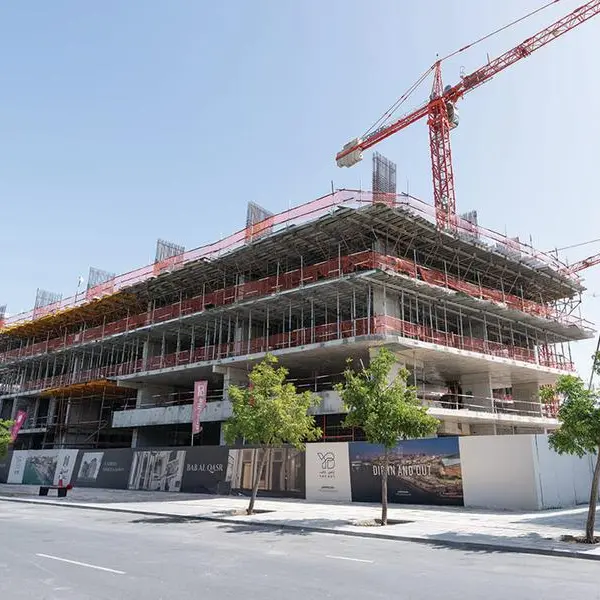
The law that pertains on all newly constructed projects in the UAE, is code 2A, which was initially for high rise buildings only. The law now makes it necessary for all buildings in Dubai to abide by Seismic Code. Keeping in line with this regulation, RSG International's residential project Qasr Sabah in IMPZ abides by the seismic design.
Based on the strength of the tectonic activity in a particular region, zones 2A and 2B are incorporated into the building infrastructure of UAE. Factors such as prediction equations and the source of the earthquake are taken into consideration while developing the Seismic Code best suited for a structure in a certain area. Furthermore, there is a list of considerations related to differences in soil, plan, shape, usage and type of structure which have to be considered when Seismic Code procedures are applied to a structure. Due to the non-uniformity of the seismic risk to the structures in different parts of the UAE, contractors and designers have to rely on estimated calculations to deduce seismic codes relevant to the structure to withstand tectonic activity. A building featuring Seismic Code design adds 5 - 10% additional cost to the original value of the property.
Sources such as the tectonic activity in the Arabian Craton contribute mostly to hazard in the southern parts of UAE, or Zargos (Iran) and Oman mountains. The threat increases as one moves towards the north. Official reports suggest more amplification in Sharjah than in Dubai and Abu Dhabi because of deep engineering bedrocks in the city of Sharjah. The response spectra of Abu Dhabi and Dubai are scattered as compared to Sharjah because of the difference in soil column depths in Dubai and Abu Dhabi. The amplification factors for Sharjah are in the range of 4 to 6 and for Dubai it is estimated to be around 3 to 4; whereas, the amplification factors for Abu Dhabi ranged from 4 to 8.
-Ends-
About RSG International:
RSG International is a progressive organisation across diverse sectors as property development, investments and automotive. The group takes pride in exemplary relationships with its customers, stakeholders and business partners, which have been nurtured by over three decades of thorough commitment and integrity. Bearing its roots in Kuwait, RSG International has spanned across the Middle East, USA and South Asia. A diligent and sensitive approach to selecting the right business at the right place has been the formula for the group's success.
For media inquiries, interviews and images:
BUZ Public Relations
Tahira Mehmood | Pavishia Nair
E: tahira@ibuz.ae | pavishia@ibuz.ae
T: +9714 3589789
© Press Release 2014