PHOTO
A new white paper identifies a USD 140 billion opportunity across leading AI companies and argues that the UAE's integrated policy architecture from the National AI Strategy 2031 to its Ethics Guidelines — uniquely positions the UAE as a center of artificial intelligence and digital infrastructure.
Dubai, United Arab Emirates: Global Millennial Capital Ltd. (“GMCL”), a research-driven venture capital firm investing in new-age technologies, today released its Progress Research and Insights White Paper on Artificial Intelligence, examining how AI technologies, emerging business models, and evolving regulation are reshaping the global economy and how the United Arab Emirates is emerging as one of the most deliberately positioned AI ecosystems in the world.
The report arrives at a defining moment for the UAE and the broader Gulf Cooperation Council (GCC), where AI has become central to national strategies for economic diversification, competitiveness, and the development of a knowledge-based, innovation-led economy anchored in advanced AI - compute and services.
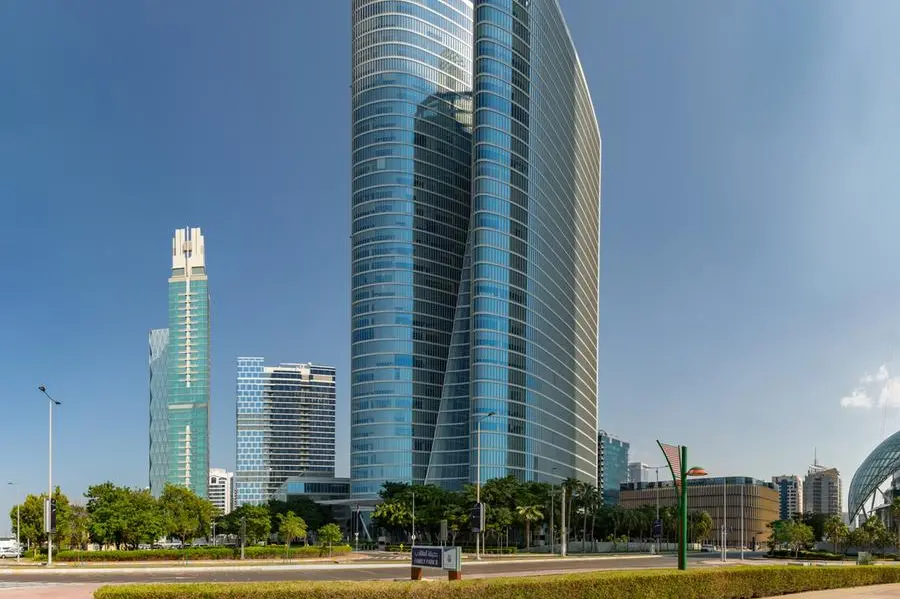
Broader context: the UAE as a global innovation hub for AI infrastructure and services
The paper concludes that the UAE is positioning itself as a global leader in AI by pursuing a coherent agenda built on innovation, governance, and the ethical use of AI technologies, supported by three structural pillars. The first is the UAE National AI Strategy 2031, a national roadmap to make the country a global hub for AI by integrating the technology across government, healthcare, transportation, and education, and by building international partnerships in AI research and implementation. The second is the Ministry of Artificial Intelligence, established in 2017 as the world’s first ministry of its kind, tasked with policy development, ethical standards, and promoting AI innovation through funding and start-up programs. The third is the UAE AI Ethics and Governance Guidelines, a principles-based framework grounded in transparency and explainability, accountability, privacy and data protection, and fairness and non-discrimination. Taken together, and combined with deep pools of sovereign and private capital, a fast-expanding data-center and compute footprint, strong digital connectivity, and a maturing venture and enterprise ecosystem, these foundations position the UAE as a global innovation hub and one of the most compelling destinations for the next generation of AI infrastructure, platforms, and enterprise services.
Economic value: A 10x growth for leading AI companies OpenAI, Anthropic, and Databricks
GMCL’s original research, published in July 2024, captured a cumulative valuation of approximately USD 140 billion across three leading AI companies based in San Francisco, California — OpenAI, Anthropic, and Databricks. As of March 2026, the same three companies command a cumulative valuation of approximately USD 1.37 trillion, reflecting a nearly tenfold increase in under two years. At a macro level, PwC estimates that AI could contribute USD 320 billion to the Middle East economy by 2030, with the UAE seeing the largest relative impact — close to 14% of GDP, or approximately USD 96 billion, while McKinsey estimates that generative AI alone could add a further USD 21–35 billion per year to GCC non-oil GDP, on top of approximately USD 150 billion from earlier AI technologies.
Leadership quote
“The near-tenfold revaluation of OpenAI, Anthropic, and Databricks between July 2024 and March 2026 is not a bubble signal — it is a repricing of AI as critical economic infrastructure, and that has profound implications for private capital in the region. Investing in the knowledge-based economy is how GCC capital converts hydrocarbon surplus into durable, compounding productivity: intellectual property, proprietary data estates, specialized talent, and the enterprise adoption layer that turns foundation models into tangible economic output across banks, healthcare systems, logistics corridors, and sovereign digital infrastructure. For sovereign wealth funds, family offices, and corporate venture arms, the strategic question has shifted from 'should we allocate to AI' to 'how do we secure privileged access through direct primaries, secondaries, structured equity, and regional co-investment to the compounding layer of this decade's most important platform shift, while simultaneously building the domestic knowledge base that ensures the UAE and GCC remain net creators, not just consumers, of the value being repriced.” Andreea Danila, General Partner, Global Millennial Capital Ltd.
The future of jobs and skills: a great reset, with the UAE moving first
AI is reshaping the labor market at a pace few economies are prepared for. The World Economic Forum’s Future of Jobs Report 2025 projects that 92 million jobs will be displaced and 170 million new jobs created globally by 2030 — a net gain of 78 million roles — with 39% of core job skills evolving over the same period, and with AI and big data, networks and cybersecurity, and technological literacy emerging as the three fastest-growing skill areas.
The UAE is moving ahead of this curve on several fronts. According to Human Capital Consulting, 80% of UAE CEOs are redesigning roles around AI collaboration, and 92% believe their organizations are ready to deploy AI responsibly — among the highest confidence levels globally. At the same time, the Mohamed bin Zayed University of Artificial Intelligence (MBZUAI) continues to graduate specialized talent in computer vision, machine learning, and natural language processing, and has trained dozens of senior executives across energy, finance, health, and government. These efforts are reinforced by Dubai’s government-wide AI training program - and federal initiatives such as Nafis, which are embedding AI fluency into both public-sector and Emirati private-sector career pathways. Collectively, these investments position the UAE workforce as one of the most AI-ready in the world, reinforcing the country’s role as a destination for enterprises deploying AI at scale.
Emerging business models: where value will be captured
The paper further identifies six exponential business models shaping AI investment: AI-as-a-Service (AIaaS), data monetization, AI-enhanced products, AI-driven platforms, customized AI solutions, and AI-powered analytics. These models align directly with the UAE’s ambitions to build sovereign data infrastructure, home-grown AI champions, and world-class compute capacity, reinforcing the country’s position as a global innovation hub and a strategic base for AI infrastructure and enterprise services.
"From a technology research lens, these five predictions map almost perfectly onto the GCC's policy thesis: AI ubiquity, Arabic-English NLP parity, automation-led productivity gains, and hyper-personalization are no longer frontier bets — they are board-level capital-allocation decisions. What makes the UAE's positioning distinctive is the fifth pillar: ethical AI and regulatory compliance are maturing into a growth driver rather than a cost center, mirroring how the region has consistently converted regulatory rigor into a trust advantage across its most strategic sectors. Investors should treat governance, data sovereignty, and Arabic-language model performance as first-order diligence criteria — the firms that institutionalize these early will define the region's next decade of AI-enabled returns." AJ Jena, Research Collaborator, Global Millennial Capital Ltd. (former Harvard Business School Research)
The role of venture capital and private equity in knowledge-based economies
The transition to an AI-driven, knowledge-based economy cannot be financed through public markets alone. Venture capital and private equity play an indispensable role in channeling long-duration, risk-tolerant capital into frontier technologies, enabling research-stage innovations to become globally scaled businesses. OpenAI’s trajectory — from USD 1 billion in early funding commitments to an enterprise value of USD 852 billion — is a clear illustration of how private capital converts scientific breakthroughs into national and global economic value. For the UAE and the wider GCC, where sovereign wealth, family offices, and a new generation of research-driven VC and PE firms are deploying capital into AI, compute infrastructure, data platforms, and enterprise software, this capital stack is becoming a core pillar of economic diversification. Strengthening the region’s venture and private equity ecosystem is, in effect, strengthening the foundation of a knowledge-based economy — funding the founders, infrastructure, and talent that will define the UAE’s next decade of growth and its leadership in AI infrastructure and services.
Investor takeaway
“The future of AI technologies promises significant advancements that will transform industries and business models,” the paper concludes. “Companies that embrace AI integration, personalization, and ethical practices will be well-positioned to capitalize on these changes … businesses must stay agile and adapt to the changing landscape to remain competitive and thrive in an AI-driven future.”
For UAE and GCC stakeholders, the conclusion is clear: AI is both a platform for national competitiveness and a defining investment theme — and the UAE’s next phase as a global innovation hub, and as a leader in AI infrastructure and services, will be shaped by how decisively the ecosystem acts on it.
About Global Millennial Capital Ltd.
Global Millennial Capital Ltd. is a research-driven venture capital firm focused on new-age technologies, including artificial intelligence, decentralized finance, autonomous systems, fintech, cybersecurity, and energy management services. GMCL publishes proprietary research and thought leadership to support investors, policymakers, and corporate leaders as they navigate the transition to an AI-driven economy.
About the authors
Andreea Danila, MBA, is General Partner at Global Millennial Capital Ltd., leading the firm’s investment strategy and research agenda across new-age technology verticals, including artificial intelligence, decentralized finance, and autonomous systems.
AJ Jena, PhD, is a Research Collaborator with Global Millennial Capital Ltd. and a former Harvard Business School Research Fellow, contributing to GMCL’s thought leadership on frontier technologies, business models, and global regulatory frameworks.
Media Contacts — Brunswick Group
For media inquiries, please contact:
Brunswick Group Email: globalmillennial@brunswickgroup.com Middle East: +971 (0)4 560 9600
Source
Global Millennial Capital, Research and Insights White Paper — Artificial Intelligence (July 2024).