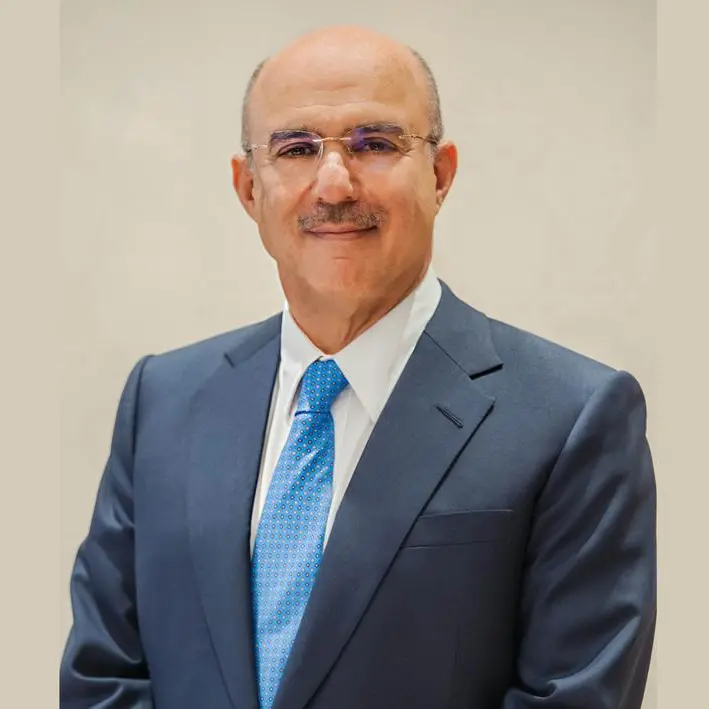
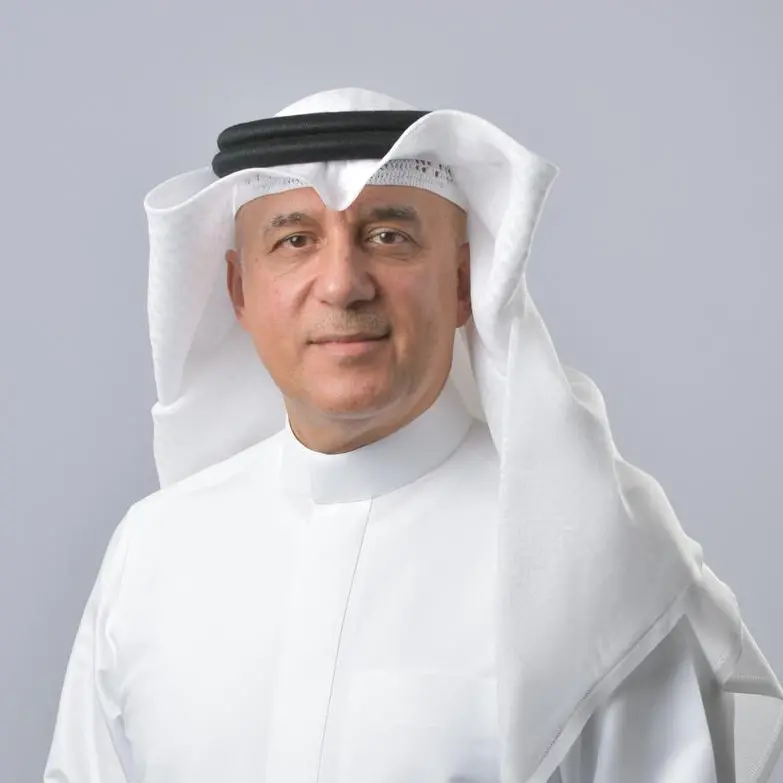
Beijing, 10 September 2006 - The collapse of the Doha Round of global trade negotiations under the World Trade Organization (WTO) was a major blow to developing economies and resumption of the talks is an urgent priority, senior government ministers from Egypt, India and Japan told participants at the World Economic Forum's China Business Summit 2006. "Developing countries will be left out of a lot of opportunities without a multilateral umbrella," warned Rachid M. Rachid, Minister of Trade and Industry of Egypt. Naokazu Takemoto, Senior Vice-Minister of Finance of Japan, said that the Asia-Pacific Economic Cooperation (APEC) forum would be a catalyst for reviving the Round. Said Kapil Sibal, Minister of Science and Technology and Earth Sciences of India: "We are trying very hard for the negotiations to resume, but the rules of the game must be for a level playing field." Meeting in Rio de Janeiro, Brazil, trade ministers from the G20 developing nations, the EU, Japan and the US also agreed on the need to restart negotiations, but failed to set a date for their resumption.
The Doha Round is supposed to be "a development round" with developing economies the main beneficiaries, Rachid reminded Summit participants. "We need to see that development is the outcome of this Round." China can play a key role in pushing the Round to a successful conclusion, Rachid said, noting China's growing trade and investment with Egypt and the Middle East. "This diversification is bringing China and Asia into our market for the long term. We are entering a new phase in our relationship." China, Minister Sibal added, is playing a constructive role in promoting Asian regional integration. Like India, he said, "China is engaged and building partnerships to send a message to the world that it will play by the rules of the game. Let the rules of the game be fair." Takemoto stressed that strong relations between Japan and China are vital for sustainable growth in Asia and the world.
Two other panellists in the session doubted that the Doha Round could be concluded anytime soon. Jean-Pierre Lehmann, Professor of International Political Economy, IMD (International Institute for Management Development), Switzerland, blamed the US, Europe and Japan for the collapse of the talks. Unless a new multilateral trading system is created, the global economy could end up fragmented. "We are standing at the proverbial crossroads," Lehmann observed. The opening up of China "is redefining the global trade paradigm," he added. "China is the huge new kid on the block but the block is in the process of disintegration." He called for the abolition of all discriminatory trade practices and conditions placed on developing economies.
The Doha Round is unlikely to be concluded by 2008, Wu Jianmin, President, China Foreign Affairs University, People's Republic of China, concluded. Warning of rising protectionism, the former Chinese ambassador to France said that the Doha Round's collapse was the result of the disconnect between reform-reluctant developed countries and reform-eager developing economies. "When you mention reform to the average Chinese, they welcome it. But in Europe, reform is a dirty word. The deeper reason for the Doha Round collapse lies there." In response, Asia must move to strengthen regional cooperation, Wu argued. He also said that China's spectacular growth should not be seen as a singular phenomenon but as part of a wave of growth spreading across emerging economies. "We are sharing our growth with the rest of the world," Wu explained. "Our policy of reform to the outside world is a long-term policy. Opening up means that we embrace globalization; we change ourselves to adapt to globalization."
-Ends-
Note to the Media:
For more information about the China Business Summit 2006, please visit our website at http://www.weforum.org/china. Print quality photos of the China Business Summit 2005, and soon of the China Business Summit 2006, can be downloaded free of charge from http://www.pbase.com/forumweb/china
The host broadcaster of the Summit is Phoenix Satellite Television.
The World Economic Forum is an independent international organization committed to improving the state of the world by engaging leaders in partnerships to shape global, regional and industry agendas.
Incorporated as a foundation in 1971, and based in Geneva, Switzerland, the World Economic Forum is impartial and not-for-profit; it is tied to no political, partisan or national interests. (http://www.weforum.org)
© Press Release 2006