PHOTO
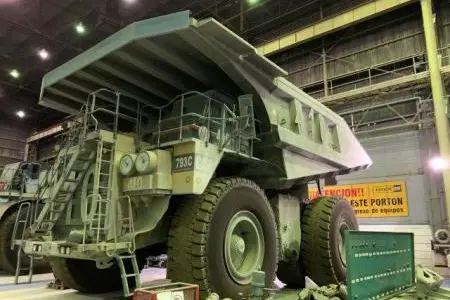
Specialising in the import and export of mining and construction equipment, MHS Plant & Equipment of Midrand, Johannesburg, has an extensive international network covering Africa, Australia and the Americas. “We have 20 years’ experience in servicing international clients, from mining houses to contractors and civil contractors,” comments owner and founder Conrad Smith. Apart from supplying both new and quality used equipment, the company also assist banks in both the valuation and disposal of any repossessed equipment, specialising in turnkey solutions for construction companies and mine closures.
Explaining how such a typical process works, Smith says MHS is initially approached by a seller like a mine, whereupon it pays a visit to the client’s site in order to best understand its specific requirements. Here the client has the choice of opting for a physical inspection or a desktop valuation.
An important first step is to request full information for each asset to be disposed of, including a component and maintenance history and the number of hours worked. The site visit involves physical inspection of the assets themselves, including verification that the full inventory is accounted for. Here meetings will be held with workshop managers, for example.
In order to determine a fair market-related value for every asset, the following important factors have to be taken into account: The supply and demand factor (the quantity of similar equipment available on the global market, which influences the value) and the actual replacement cost of the asset (the dollar-based value).
Another important factor is the build specification of the asset (different regions of the world have different requirements, with Africa, South America and Asia having lower-specified equipment. This includes the type of engine, which is important in terms of fuel quality and emissions control regulations. There is EPA certification in the US and CE certification in Europe. This is critical in determining in which areas or regions the equipment ca n be sold, and can often result in a higher value of the asset).
MHS will research the current used asset availability worldwide in order to check the overall values. The final factor that influences these values is, of course, the location. “We then take into consideration the cost of dismantling the asset and transporting it to the nearest port,” says Smith.
“Once we have the above information, we give our clients a market-related value for their approval. After this we then approach our extensive international client base to offer the said equipment. We also have the option of marketing the specific equipment to the specific region that we know where that particular asset is popular and in demand,” concludes Smith.
© Press Release 2021
Disclaimer: The contents of this press release was provided from an external third party provider. This website is not responsible for, and does not control, such external content. This content is provided on an “as is” and “as available” basis and has not been edited in any way. Neither this website nor our affiliates guarantee the accuracy of or endorse the views or opinions expressed in this press release.
The press release is provided for informational purposes only. The content does not provide tax, legal or investment advice or opinion regarding the suitability, value or profitability of any particular security, portfolio or investment strategy. Neither this website nor our affiliates shall be liable for any errors or inaccuracies in the content, or for any actions taken by you in reliance thereon. You expressly agree that your use of the information within this article is at your sole risk.
To the fullest extent permitted by applicable law, this website, its parent company, its subsidiaries, its affiliates and the respective shareholders, directors, officers, employees, agents, advertisers, content providers and licensors will not be liable (jointly or severally) to you for any direct, indirect, consequential, special, incidental, punitive or exemplary damages, including without limitation, lost profits, lost savings and lost revenues, whether in negligence, tort, contract or any other theory of liability, even if the parties have been advised of the possibility or could have foreseen any such damages.